
Is Morocco Safe to Visit? What Travellers Should Actually Worry About
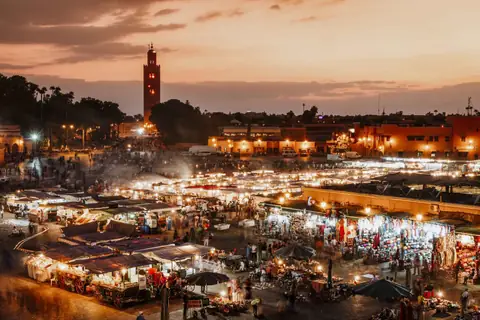
Short answer: yes, millions of people visit Morocco every year without trouble. The longer answer is that the problems you are likely to meet are annoying rather than dangerous: persistent touts, inflated prices, the odd pickpocket. Here is what to expect, and what to do about it.
At a glance
- Police
- 19 (city), 177 (gendarmerie)
- Ambulance and fire
- 15
- Biggest real-world risk
- Road traffic
- Most common problem
- Overcharging and touts
In this guide
The hassle factor
Marrakech and Fes are where most visitors feel uneasy. Not because anyone is in danger, but because the medinas are full of people who earn their living from tourists, and a first-time visitor attracts attention within seconds. You will be told the road ahead is closed. A friendly stranger will offer to show you the way, and then ask for money. Someone will press a bracelet or a sprig of mint into your hand.
None of this is aggressive in the way the word suggests, but it is wearing. The fix is boring: walk with purpose, say la, shukran (no, thank you) with a smile, and do not stop to explain yourself. Most people stop bothering you within a few days, once you look like you know where you are going. A downloaded offline map helps more than any other single thing.
Scams worth knowing
- "The tannery is that way." Unofficial guides steer you to leather shops where they take a cut. In Fes, find the tannery yourself with a map.
- Taxi meters that are "broken." Petit taxis are meant to use the meter. If the driver refuses, get out and wave down another. Agree the fare before you get in for grand taxis.
- Free henna or "gifts." Henna on your hand that you did not agree a price for will come with a bill. Black henna can also cause skin reactions; avoid it.
- Restaurant touts who promise a "special menu." Check prices on a printed menu before you sit.
- "Your hotel is closed / moved." It isn't. Walk on and check with the hotel yourself.
Theft
Pickpocketing happens in crowds: Jemaa el-Fna, busy souks, train stations, packed buses. Keep your phone in a front pocket, carry a bag you can see and keep a photocopy or photo of your passport so you can leave the original in the safe. If you are on a motorbike or scooter anywhere, hold your bag on the side away from the road: bag snatching from passing bikes does occur in cities.
Roads are the real danger
If you want to worry about one thing, make it traffic. Morocco's road death rate is much higher than in Western Europe. Mountain roads are narrow, trucks overtake on blind bends and cyclists, donkeys and pedestrians have no lights after dark. Avoid driving at night outside cities. If you hire a driver for the Atlas or the desert, pick one who does not look exhausted, and do not be shy about asking them to slow down.
Terrorism and politics
Morocco has experienced a small number of terrorist attacks over the past two decades, and security forces are visible in tourist areas and at transport hubs. Governments publish current travel advice, and it is worth reading before you book. Political demonstrations occasionally occur; avoid them. Do not photograph police, the military or royal palaces, and do not make jokes about the king.
Nature
The September 2023 Al Haouz earthquake hit villages in the High Atlas hard, and recovery continues. Flash floods can close roads and wadis in the south, mainly in autumn and after storms: ask your hotel before driving a desert track. Heat is a real hazard in July and August, particularly for children and anyone walking a medina midday.
Women and solo travel
Women travelling alone are common, and most have good trips. Expect more comments and staring than at home, particularly in big cities. We cover this in more detail in our guide to solo female travel in Morocco.
Laws that surprise visitors
- Drugs, including cannabis, are illegal, whatever the Rif's reputation suggests.
- Same-sex relations are illegal, so LGBTQ+ travellers should keep affection private.
- Drones need authorisation and are commonly confiscated at the airport.
- Do not photograph or record people without permission, especially women.
If something goes wrong
For theft, ask your hotel to help you file a report: you will need it for travel insurance. Tourist police exist in major cities. Your embassy can replace a lost passport. Keep your insurer's 24-hour number saved in your phone and do not rely on mobile data alone.
For the rest of the practical picture, see Morocco travel tips, how money works and entry requirements.
Frequently asked questions
Is Morocco safe for tourists in 2026?
Most visitors have no serious problems. Petty crime, touts and traffic are the main issues. Check your own government's travel advice close to departure.
Is it safe to walk around Marrakech at night?
The main areas around Jemaa el-Fna and the new town are busy and generally fine. In the quiet medina alleys, go with company or arrange a pickup from your riad.
Is Morocco safe for Americans or Europeans?
Yes. Visitors from the US, Canada, the UK and Europe travel there in large numbers. The same sensible precautions apply as in any popular destination.
Are the roads dangerous?
They can be. Avoid driving at night, be careful on mountain roads, and consider a driver instead of renting a car if you are not used to local traffic.