Money in Morocco: Dirhams, ATMs, Cards and Tipping
You can get by in Morocco with a card for hotels and larger restaurants and cash for everything else. The details are not complicated, but a few rules save you money and hassle.
At a glance
- Currency
- Moroccan dirham (MAD)
- Cards
- Hotels, bigger restaurants, shops
- Cash needed for
- Souks, taxis, small cafes, tips
- Tipping
- About 10 percent in restaurants
In this guide
The dirham
Morocco's currency is the dirham (MAD, often written DH). You cannot normally buy it outside the country, and you are not meant to take large amounts out. Plan to get your dirhams after you arrive. Exchange rates change, so check a current one rather than relying on a number you read somewhere.
Getting cash
- ATMs are common in towns and tourist areas. Bank ATMs (Attijariwafa, Banque Populaire, BMCE/Bank of Africa and others) are more reliable than standalone ones. Check your own bank's foreign fees first.
- Withdrawal limits are often modest per transaction, so you may need several withdrawals. Fees can add up, so take out larger amounts less often.
- Dynamic currency conversion: if the ATM or card terminal offers to charge you in your home currency, decline. Pay in dirhams to get a better rate.
- Exchange offices and banks give fair rates. Avoid street changers.
Where cards work
Hotels, larger restaurants, supermarkets, petrol stations and some shops accept Visa and Mastercard. Souks, small cafes, taxis, street food and rural areas are nearly all cash. In the south, around Ouarzazate, Merzouga and Zagora, carry more cash than you think you need before leaving the last big town.
Tipping
| Who | Typical tip |
|---|---|
| Restaurant | About 10 percent if service is not included |
| Cafe | Round up, or leave small change |
| Porter or luggage carrier | 10 to 20 dirhams |
| Hotel or riad staff | Small change per day, or a pooled tip at the end |
| Hammam attendant | 10 to 20 dirhams in a local hammam, about 10 percent in a spa |
| Guide or driver | Agree the fee first; a tip on top is appreciated if they did well |
Bargaining
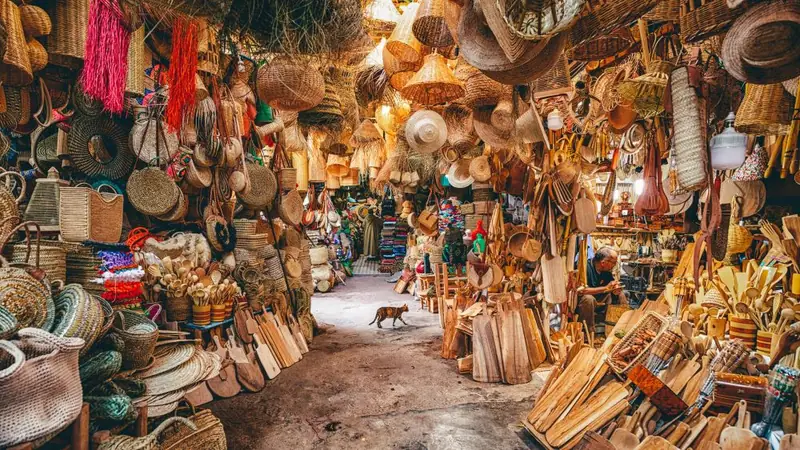
Prices in souks and for unmetered taxis are negotiable. Prices in supermarkets, pharmacies, most cafes and restaurants, and metered taxis are fixed. For how to haggle without being rude, see our souk shopping guide.
Small notes matter
Taxi drivers and small shops rarely have change for a 200-dirham note, and may claim not to. Break large notes at supermarkets or restaurants and keep a stock of 10, 20 and 50-dirham notes and some coins.
Common mistakes
- Changing money in the airport arrival hall for large sums: the rate is worse than in town. Change just enough for a taxi.
- Forgetting to tell your bank you are travelling, then having your card blocked.
- Showing a thick wad of cash in a souk.
- Not keeping a card as backup. Spread cash and cards across two places.
For more practical advice, see travel tips and safety.
Frequently asked questions
What currency do I use in Morocco?
The Moroccan dirham (MAD). Euros and dollars are not generally accepted for payment, although prices may be quoted in them.
Can I use credit cards in Morocco?
In hotels, larger restaurants and shops, yes. For souks, taxis, small cafes and rural areas, you need cash.
How much should I tip in Morocco?
About 10 percent in restaurants and small change for other services.