
Chefchaouen Travel Guide: The Blue City of Morocco
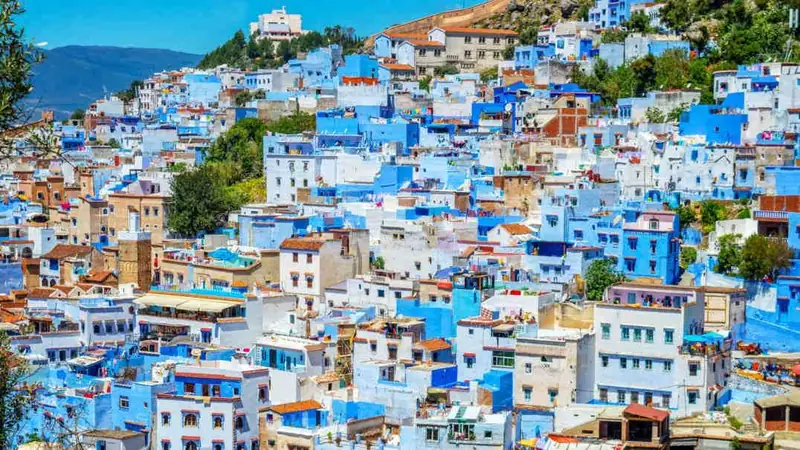
Chefchaouen is a small mountain town in the Rif, famous for the blue-washed walls that fill its medina. Founded in 1471 as a fortress against Portuguese raids, it later welcomed Muslim and Jewish refugees from Andalusia, whose influence still shapes its architecture. It is a place to slow down, wander and take photographs.
At a glance
- Founded
- 1471
- Setting
- Rif mountains, about 600 m
- Best time
- March to June, September to November
- Allow
- 1 to 2 days
- Nearest airports
- Tangier, Tetouan
In this guide
Why is Chefchaouen blue?
Nobody knows for certain. A popular explanation says Jewish refugees who settled in the town in the 1930s introduced the tradition, using blue to symbolise the sky and heaven. Others point to practical reasons, since blue lime wash keeps houses cool and is said to deter mosquitoes. Whatever the origin, the shades range from pale sky to deep indigo, and the walls are repainted regularly.
Things to do in Chefchaouen
- Wander the medina: there are no big sights, just blue lanes, doorways, steps and flower pots. Go early for empty streets and soft light.
- Plaza Uta el-Hammam: the main square, with the red-walled kasbah and its small museum and gardens beside the Great Mosque.
- Ras el-Maa: the spring at the edge of the medina, with washing areas and a small waterfall, where locals and visitors gather.
- Spanish Mosque: a short walk up the hill, with the best views over the town, particularly at sunset.
- Akchour and God's Bridge: about 30 km away in Talassemtane National Park, with hiking trails, waterfalls and a natural rock arch.
- Shop for local crafts: woven blankets, wool garments, goat cheese and honey.
Where to eat and stay
Chefchaouen has many small riads and guesthouses, with rooftop terraces overlooking the old town. Local dishes include goat cheese salads, tagines, and hearty Rif specialities. Most restaurants cluster around Plaza Uta el-Hammam. See our Moroccan food guide for dishes to try.
How to get to Chefchaouen
There is no train or airport. Buses run from Tangier (about 3 hours), Tetouan (about 1.5 hours) and Fes (about 4 hours), and CTM and Supratours serve the main routes. Shared and private taxis are also available. Our transport guide explains the options.
Visiting tips
- Summer is busy with domestic tourists, while winter evenings can be cold and rainy.
- The medina is hilly, so wear sturdy shoes.
- Cannabis is grown in the Rif and some vendors will offer it. It remains illegal to buy and use, so politely decline.
- Ask before photographing people or their homes.
A one-day plan
Start early with a walk through the empty lanes of the medina, have breakfast on a terrace and visit the kasbah and Plaza Uta el-Hammam. After lunch, walk to Ras el-Maa and then to the Spanish Mosque for sunset. In the evening, enjoy dinner on a rooftop with views of the old town.
Photography etiquette
Chefchaouen is a living town, not a film set. Respect residents' privacy, avoid blocking doorways and ask before photographing people. Some residents may ask for a small tip for photographs taken on their steps or doorways.
Frequently asked questions
How many days do you need in Chefchaouen?
One full day is enough to see the medina. Stay two nights if you want a hike to Akchour or a slow, restful stop.
What is the best time to visit Chefchaouen?
Spring and early autumn have the best weather. Summer is warm and busy, and winter can be wet and cool.
Is Chefchaouen worth visiting?
Yes, for its scenery, relaxed atmosphere and photography. It is more laid-back than Marrakech or Fes.