
Fes Travel Guide: The Medina, Tanneries & Madrasas
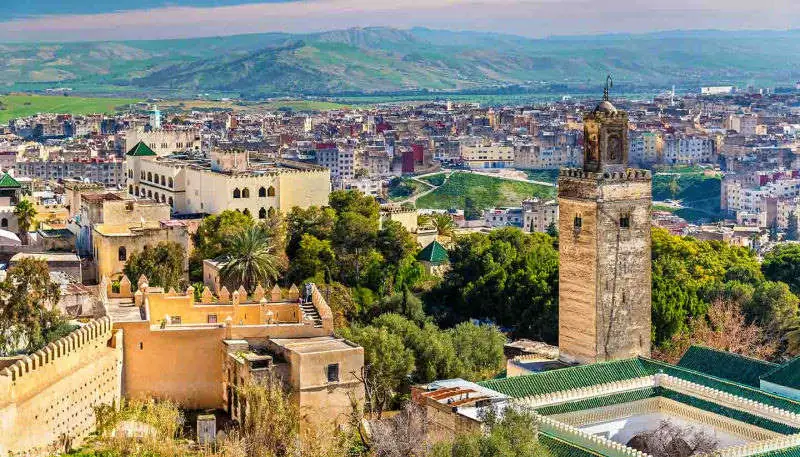
Fes is Morocco's cultural and spiritual heart. Its walled medina, Fes el-Bali, is a UNESCO World Heritage Site and one of the largest car-free urban areas in the world, a labyrinth of thousands of alleys filled with workshops, fountains, mosques and madrasas. Visiting is a journey back to the Middle Ages.
At a glance
- Founded
- 789 (Idris I), medina expanded 808
- UNESCO
- Fes el-Bali listed in 1981
- Best time
- March to May, September to November
- Allow
- 2 to 3 days
- Airport
- Fes-Saiss (FEZ)
In this guide
Fes el-Bali: the old medina
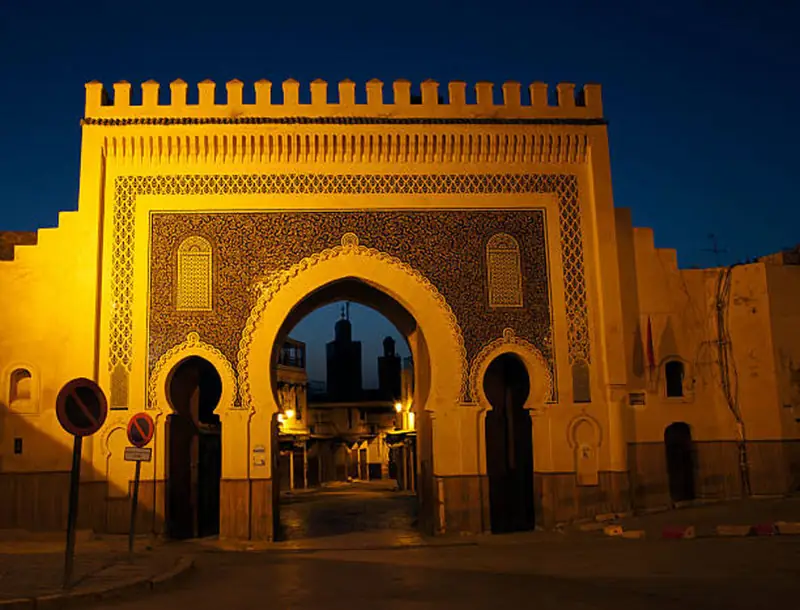
Fes el-Bali was founded by the Idrisid dynasty and reached its peak under the Marinids. It is divided into districts, each known for crafts such as brass, wood, leather and weaving. The medina has no cars, so goods still travel by donkey and handcart. Hire an official guide for the first morning: the alleys are hard to navigate, and a good guide explains what you are seeing. See Bab Boujloud for the main entrance.
What to see
- Chouara Tannery: the best-known sight in Fes, where leather is dyed in stone vats. View it from the terraces of the leather shops, which often offer mint leaves to mask the smell.
- Al-Qarawiyyin: founded in 859 by Fatima al-Fihri, often cited as the world's oldest continuously operating university. Non-Muslims can see the exterior and courtyard but not enter the prayer hall.
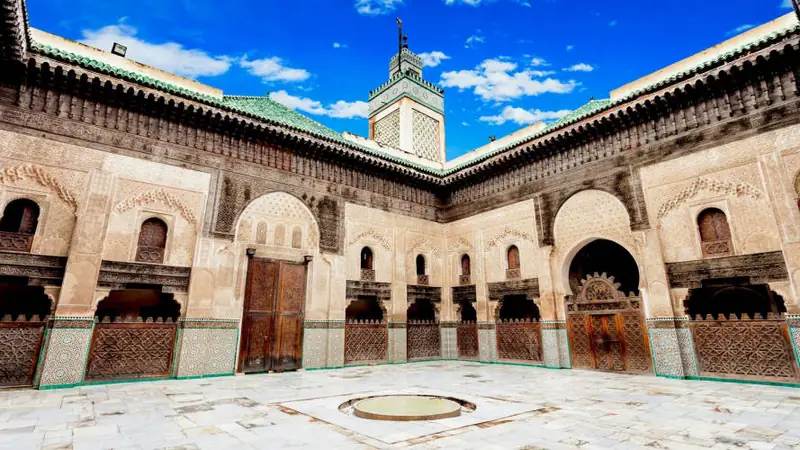
- Bou Inania Madrasa: a 14th-century Marinid masterpiece with an enormous carved-cedar and zellige courtyard.
- Al Attarine Madrasa: a smaller, jewel-like madrasa beside the spice market.
- Nejjarine Museum of Wood Arts and Crafts: a restored fondouk (merchant inn) full of carpentry.
- Fes el-Jdid and the Jewish quarter: the 13th-century royal district, with the grand gates of the Royal Palace and the old mellah.
- Borj Nord and the Merenid Tombs: hilltop viewpoints for sunrise or sunset over the whole medina.
Crafts and shopping
Fes is the best place in Morocco to buy leather goods, ceramics with Fes blue glaze, brass, embroidery and zellige tiles. Ask workshops to show how items are made, and see our souk shopping guide for tips.
Food
Fes is known for refined cuisine, including pastilla, tagines with sweet and savoury flavours, and rich bean and lamb dishes. Many riad restaurants offer set menus, and cooking classes are popular. See our guide to Moroccan food.
Where to stay and how to get here
Stay in a riad inside the medina for the full experience, though it can be tricky to find at night, so arrange a pickup. Fes has an airport, a train station on the main line with Rabat, Casablanca, Tangier and Meknes, and long-distance buses. Fes is also the usual starting point for the desert trip towards Merzouga described in our Sahara guide.
Tips for visiting Fes
- Early morning is the best time: cooler and quieter, and shops are still opening.
- Ignore anyone who offers to take you to the tannery for free; official guides are cheaper in the end.
- Wear comfortable shoes; the cobbled lanes are uneven and wet.
- Many sights close on Fridays at midday.
Frequently asked questions
How many days do you need in Fes?
Two days allows you to see the main madrasas, the tannery and the old city. A third day lets you add Meknes and Volubilis.
Is Fes better than Marrakech?
They are very different. Fes is more traditional and less touristy, with an authentic medieval feel. Marrakech is more cosmopolitan and has more upscale hotels and restaurants.
Can you visit the Fes tannery?
Yes. Several leather shops overlook the Chouara tannery and let you watch for free in the hope you will shop. A small tip is appreciated.