
Tetouan Travel Guide: Andalusian Medina & the White Dove
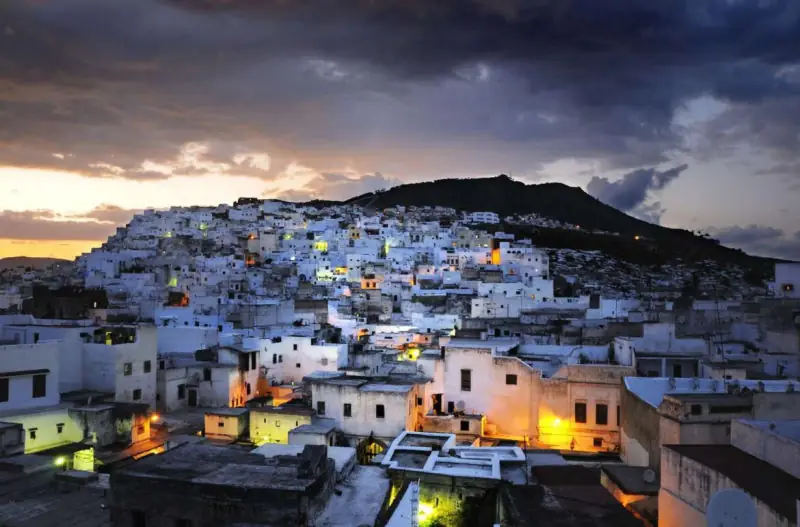
Tetouan is a white-washed city in northern Morocco between the Rif mountains and the Mediterranean. Refugees from Andalusia rebuilt it at the end of the 15th century, and its medina, a UNESCO World Heritage Site since 1997, is one of the best-preserved Andalusian-style old towns in the country. It is a calm, authentic and little-visited stop.
At a glance
- UNESCO
- Medina listed in 1997
- Style
- Andalusian
- Allow
- Half a day to 1 day
- From Tangier
- About 1 hour
- Nearby beaches
- Martil, Cabo Negro, M'diq
In this guide
The medina of Tetouan
Founded by Moorish refugees from Granada, Tetouan's medina is a labyrinth of whitewashed houses, arched passages and carved doors. It has seven gates and well-defined districts for blacksmiths, leatherworkers and weavers. Start at Bab Okla and Place Hassan II, a former royal square, and wander through the Souk el Houth.
Museums and crafts
- Archaeological Museum: artefacts from the Roman city of Lixus and the Rif region.
- Ethnographic Museum: housed in the Bab Okla Bastion, with traditional costumes and household items.
- School of Traditional Arts: workshops where students learn zellige, carving, painting and embroidery. See our guide to Moroccan architecture.
Beaches near Tetouan
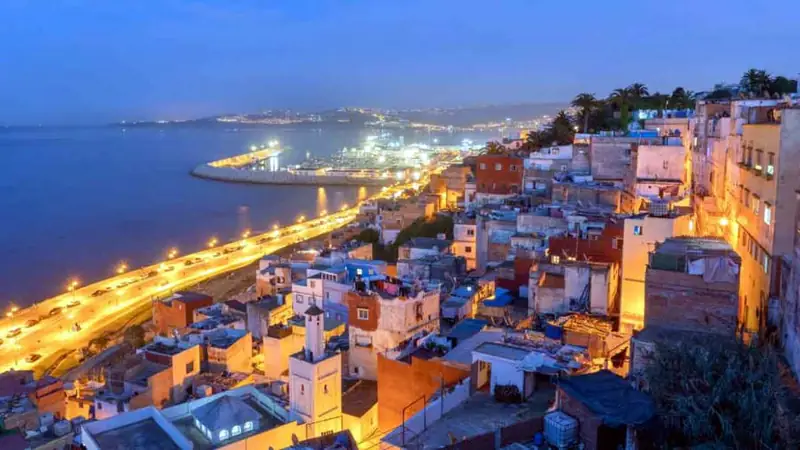
Martil, M'diq and Cabo Negro, within about 10 to 20 km, have long sandy beaches and are busy in summer. Mountain roads lead inland to Chefchaouen.
Local food
Tetouan's cuisine shows Andalusian influences, with pastries, seafood and sweet and savoury dishes. Try the local bakeries and cafes around the medina. See our Moroccan food guide.
Getting there
Tetouan is about an hour from Tangier, 1.5 hours from Chefchaouen and close to Ceuta (a Spanish enclave). Buses and shared taxis serve the region. See getting around Morocco.
A walking route through the medina
Begin at Place Hassan II and enter the medina through Bab Rouah or Bab Okla. Follow the main lanes to the Souk el Houth, then to the leather, blacksmith and carpentry quarters. Allow time for the Ethnographic Museum and the School of Traditional Arts, where students work on the same crafts their ancestors practised for centuries. Finish at a cafe near Plaza Hassan II.
Andalusian roots
Tetouan was refounded in the late 15th century by refugees from Granada, and the influence shows in the architecture, music and food. Houses have inner courtyards with fountains, the lattice windows look like those in southern Spain, and the city has its own style of Andalusian classical music.
Spanish-era city
Outside the medina, the Ensanche district from the Spanish protectorate period has wide avenues, Art Deco facades and cafes. Tetouan was the capital of the Spanish zone until independence, and Spanish is still widely understood.
Easy connections
Tetouan is close to Chefchaouen, Tangier and the Mediterranean beaches. Many travellers use it as a base to see the northern coast without the crowds. See our transport guide for bus and taxi options.
Frequently asked questions
Why is Tetouan called the White Dove?
Its whitewashed houses and hillside setting give it a bright, dove-like appearance.
Is Tetouan worth visiting?
Yes, particularly for the medina. It is less touristy than other cities and has a distinct Andalusian character.
How far is Tetouan from Chefchaouen?
About 60 km, roughly 1.5 hours by road.