
Rabat Travel Guide: Kasbah of the Udayas, Hassan Tower & More
Rabat is Morocco's capital and its calmest big city. It sits on the Atlantic at the mouth of the Bou Regreg river, with wide boulevards, a relaxed medina and monuments that span Roman, Almohad, Alaouite and modern times. In 2012 UNESCO listed the city for its shared historic and modern heritage.
At a glance
- Status
- Capital since 1912
- UNESCO
- Listed in 2012
- Highlights
- Kasbah of the Udayas, Hassan Tower, Chellah
- Allow
- 1 to 2 days
- Train
- Al Boraq to Tangier and Casablanca
In this guide
The Kasbah of the Udayas
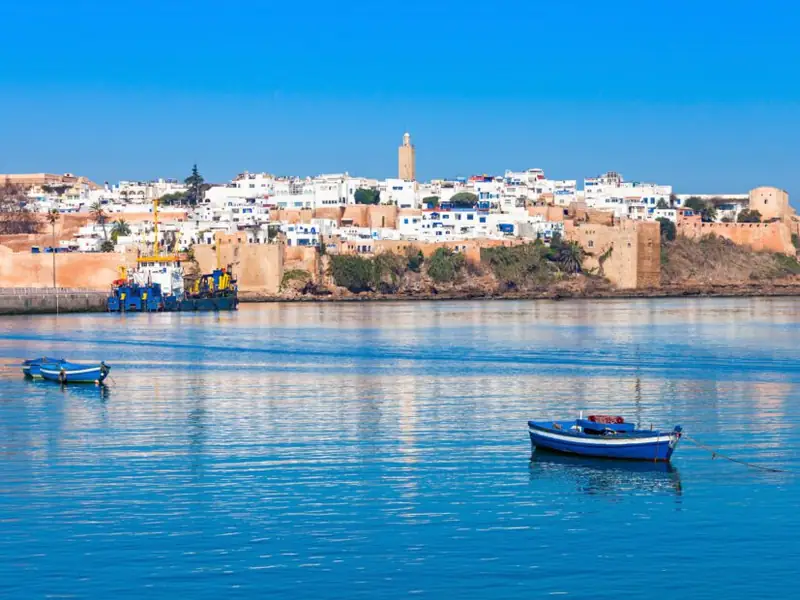
This 12th-century Almohad fortress sits on a cliff above the river. Its blue-and-white lanes, Andalusian gardens and the Cafe Maure serving mint tea have the feel of a small village. Nearby, the Oudaya Museum is housed in a former palace.
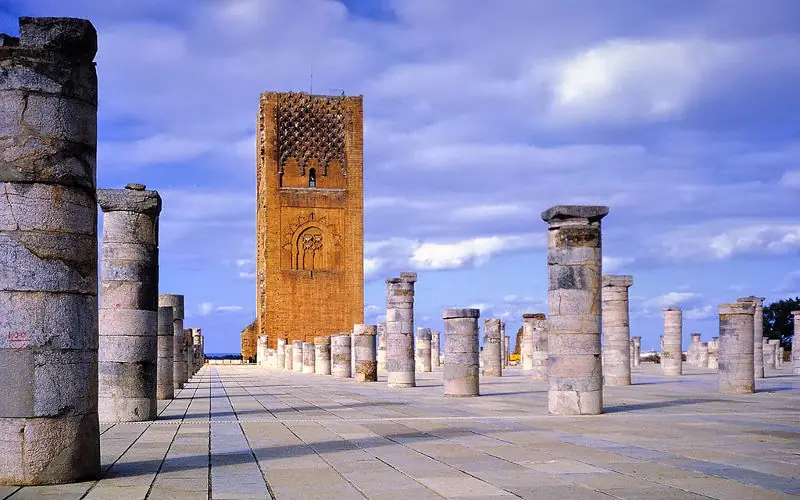
Hassan Tower and the Mausoleum of Mohammed V
The unfinished minaret was begun in 1195 by the Almohad Sultan Yacoub al-Mansour and left incomplete after his death. Opposite it stands the white marble Mausoleum of Mohammed V, which holds the tomb of the king who led Morocco to independence and his son Hassan II. Both are open to visitors.
Chellah
This walled necropolis combines Roman ruins of the ancient town of Sala Colonia with Marinid tombs and a mosque, now home to storks and gardens. Allow an hour or two.
The medina and modern Rabat
Rabat's medina is smaller and less hectic than those of Fes or Marrakech, with Rue des Consuls known for rugs and crafts. In the new town, visit the Mohammed VI Museum of Modern and Contemporary Art, the Archaeology Museum and the striking Grand Theatre designed by Zaha Hadid.
Beaches and the river
The Bou Regreg marina has cafes and a ferry across to the twin city of Sale. The city beach is popular with surfers and families on summer weekends.
Where to stay and how to get here
Stay in a riad in the medina or the Kasbah area, or in a central hotel near the Agdal train station. Rabat is well served by trains: the high-speed Al Boraq connects it with Casablanca (under an hour) and Tangier (around 1 hour 20 minutes), and regular trains continue to Meknes and Fes. See our transport guide.
Why visit Rabat?
Rabat is quieter and more orderly than other imperial cities, with fewer touts. It is a good base for day trips to Casablanca, Meknes and the coast, and a comfortable first stop if you are new to Morocco.
A one-day plan for Rabat
Start with the Hassan Tower and Mausoleum of Mohammed V in the morning, then drive to Chellah. After lunch, walk the Kasbah of the Udayas and its gardens, and cross the river to Sale if time allows. Finish with a drink at the marina or in the Agdal district.
Where to stay
Riads in the medina and Kasbah give the most atmosphere. The Agdal and Hassan districts offer hotels with good transport connections, which is helpful if you are arriving or leaving by train.
Frequently asked questions
Why is Rabat the capital and not Casablanca?
Rabat has been the royal and administrative capital since 1912, when the French protectorate made it the seat of government, while Casablanca grew as the commercial hub.
How long should I spend in Rabat?
One full day covers the Kasbah, Hassan Tower and Chellah. Add a second day to see museums and the medina at a leisurely pace.
Is Rabat worth visiting?
Yes. It combines good history, calm streets and easy train connections, and is less hectic than Marrakech or Fes.