
Taroudant Travel Guide: The Little Marrakech of the Souss
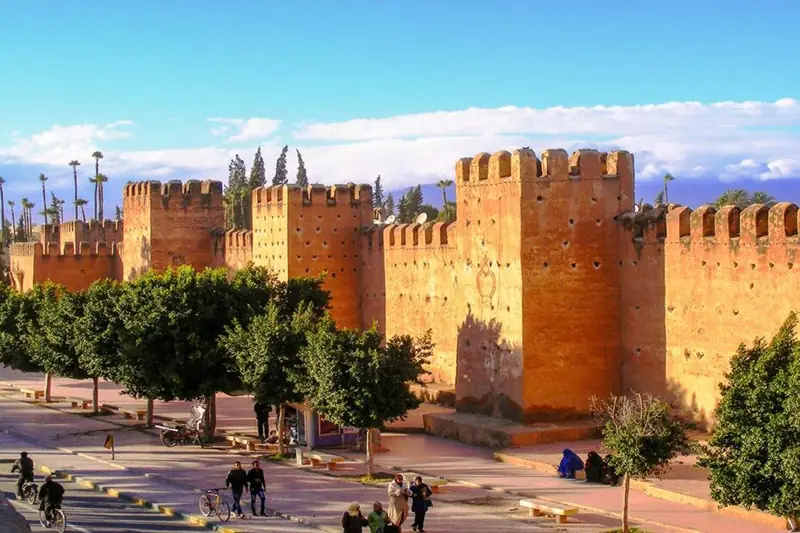
Taroudant is a walled market town in the fertile Souss valley, between the Atlas and the Anti-Atlas mountains. It is often called the little Marrakech because of its ochre ramparts, but it feels far more relaxed and has far fewer visitors. Its souks sell argan oil, saffron, leather and jewellery.
At a glance
- Region
- Souss-Massa
- Known for
- Ramparts, souks, argan and saffron
- Allow
- Half a day to 1 day
- From Agadir
- About 1 to 1.5 hours
- Best time
- October to May
In this guide
The ramparts
Taroudant's 7 km of reddish-brown walls were built in the 16th century by the Saadian dynasty, which used the town as a base before capturing Marrakech. They are largely intact, and you can walk or take a horse-drawn calèche around them at sunset. See our history of Morocco.
The souks
The two main squares, Place Assarag and Place Talmoklate, are surrounded by lively markets. Look for argan oil, saffron grown in the region, Berber jewellery, carpets and traditional leather goods. Prices are usually lower and bargaining more relaxed than in Marrakech.
Argan and saffron
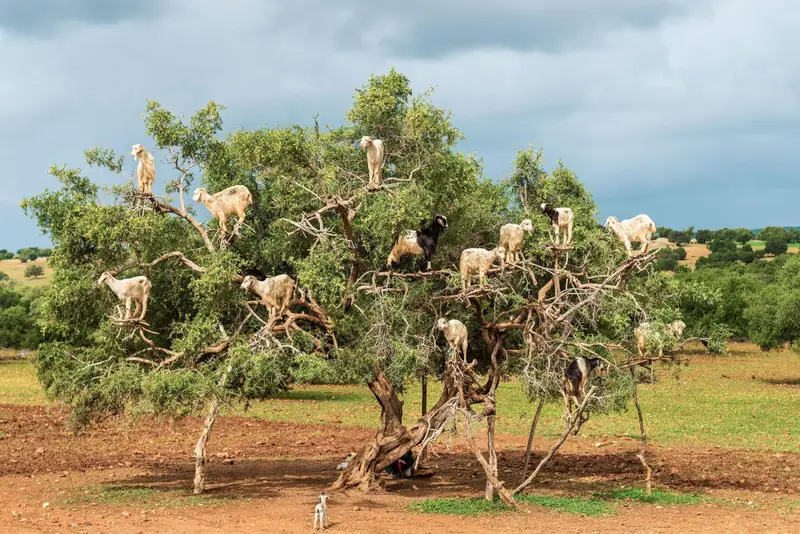
The Souss valley is the heartland of argan oil production, and women's cooperatives press and sell the oil. Taliouine, about 2 hours away, is the centre of Moroccan saffron. Use cooperatives that are clearly labelled, and ask to see how the oil is made.
Bike rides and nearby villages
The flat roads around the town are good for cycling, and bikes can be rented in the centre. In the Anti-Atlas foothills, the Tioute oasis and kasbah and Tafraoute’s painted rocks make longer excursions.
Getting there
Taroudant is about 80 km from Agadir, and buses and shared taxis run regularly. It is also on the route to the Anti-Atlas and, further on, to Zagora and the desert. See getting around Morocco.
A relaxed one-day plan
Arrive in the morning and walk the walls before the heat builds. Enter through one of the grand gates, explore the two main squares and the souks, and have lunch at a restaurant in the old town. Rent a bicycle or hire a horse-drawn calèche for a circuit of the ramparts in the late afternoon, then return to the coast.
What to buy
- Argan oil and amlou: look for cooperatives and ask to taste before buying.
- Saffron: sold by weight, so check it is real threads, not powder or dyed fibres.
- Silver and Amazigh jewellery: the old silver souk specialises in traditional designs.
- Carpets and leather: good prices, but compare shops first. See our souk shopping guide.
Staying overnight
A night in Taroudant lets you see the walls at sunset and sunrise, when the colour deepens. Several riads and palace-style hotels offer gardens and pools, and the evenings are quiet and unhurried.
Onward routes
From Taroudant you can drive east towards Taliouine, the saffron capital, and the Anti-Atlas, or north across the Tizi n'Test pass to Marrakech, one of the most scenic mountain roads in Morocco. Check road conditions before you go, especially in winter.
Frequently asked questions
Why is Taroudant called the little Marrakech?
Its ochre ramparts, souks and palm gardens resemble Marrakech, but it is smaller, calmer and less touristy.
Can you visit Taroudant as a day trip from Agadir?
Yes. It is about an hour and a half by road, and a day is enough for the walls and markets.
What is Taroudant known for?
Taroudant is known for its Saadian walls, its souks, and for argan oil and saffron from the Souss region.