
Moroccan Architecture: Riads, Kasbahs, Mosques & Zellige
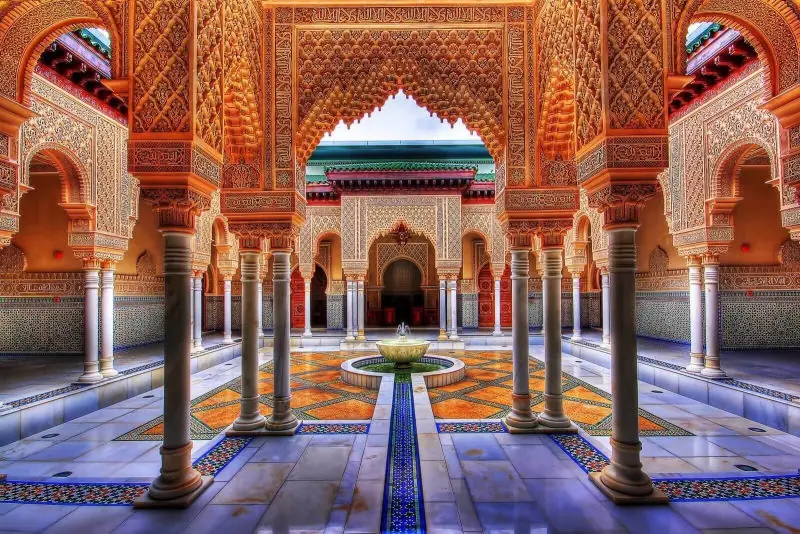
Moroccan architecture is defined by inward-looking courtyards, geometric decoration and a mastery of craft that has been passed down for centuries. Whether you stay in a riad, climb a kasbah or admire a minaret, you are looking at a style that evolved over more than a thousand years.
At a glance
- Signature style
- Hispano-Moorish and Amazigh
- Key materials
- Cedar, tile, plaster, rammed earth
- Best examples
- Fes, Marrakech, Meknes, Ait Benhaddou
- Typical home
- Riad (courtyard house)
In this guide
The elements of Moroccan design
- Zellige: mosaics of hand-cut, glazed terracotta tiles in geometric patterns.
- Gebs (carved plaster): intricate stucco on walls and arches, often with calligraphy.
- Carved cedar: doors, ceilings and balconies made from Atlas cedar wood.
- Muqarnas: honeycomb-like vaulting that decorates arches and domes.
- Tadelakt: a polished, waterproof lime plaster used in hammams and bathrooms; see our hammam guide.
Riads and the courtyard house
A traditional riad is a house built around an inner courtyard or garden, with plain outer walls that give privacy and keep the interior cool. Many riads in the medinas of Marrakech and Fes have been restored as guesthouses, which is one of the best ways to experience the architecture first-hand.
Kasbahs and ksour
In the south, communities built fortified mud-brick villages (ksour) and fortified family residences (kasbahs) using rammed earth. The best-known example is Ait Benhaddou, a UNESCO site near Ouarzazate, while Tinghir and the Draa valley near Zagora are lined with palm-fringed kasbahs.
Mosques, madrasas and monuments
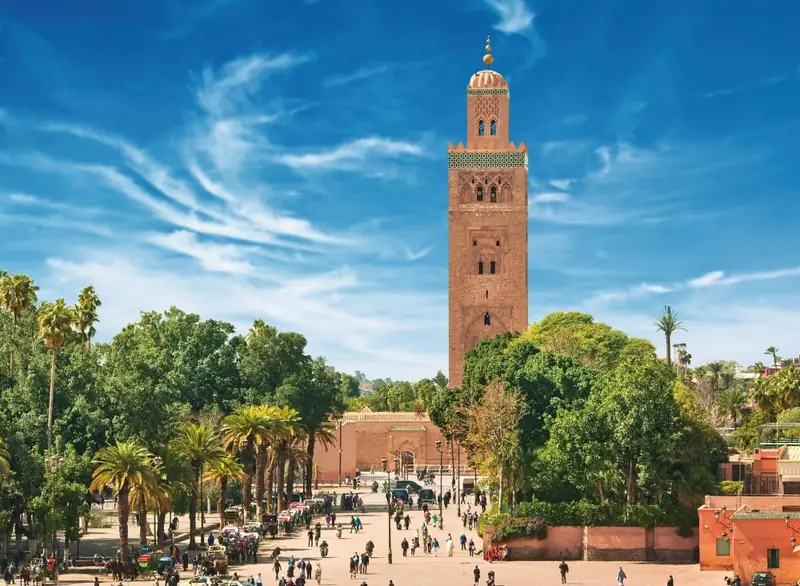
Almohad builders created the Koutoubia in Marrakech and the unfinished Hassan Tower in Rabat. The Marinids built exquisite madrasas, student residences with rich decoration: visit Al Attarine in Fes and the Ben Youssef Madrasa in Marrakech. Palaces such as the Bahia Palace show 19th-century decoration at its most elaborate.
Modern and colonial-era architecture
The French protectorate introduced planned new towns beside the old medinas. Casablanca is famous for its Art Deco and neo-Moorish buildings, and the monumental Hassan II Mosque (completed in 1993) blends traditional crafts with modern engineering. Rabat now has contemporary landmarks such as the Grand Theatre by Zaha Hadid.
Frequently asked questions
What is the difference between a riad and a kasbah?
A riad is a traditional town house built around a courtyard garden. A kasbah is a fortified residence or citadel, usually found in rural or southern areas.
What is zellige?
Zellige is traditional Moroccan mosaic tilework. Each small tile is hand-cut from glazed terracotta and assembled into geometric patterns.
Where can I see the best Moroccan architecture?
Fes and Marrakech for madrasas, palaces and riads; Ait Benhaddou and Tinghir for kasbahs; Casablanca for the Hassan II Mosque and Art Deco buildings.