
Jemaa el-Fna, Marrakech: Food Stalls, Storytellers & Tips
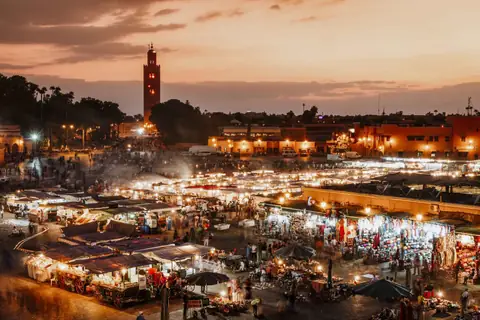
Jemaa el-Fna is the main square of Marrakech and one of the world's great public spaces. By day it is a market with orange juice stalls and traders; as evening falls it becomes an open-air theatre of storytellers, musicians, acrobats and food stalls shrouded in smoke. UNESCO recognises its living traditions as part of humanity's intangible heritage.
At a glance
- Location
- Centre of the Marrakech medina
- Recognised by UNESCO
- Cultural space, 2008
- Best time
- Late afternoon to evening
- Allow
- 1 to 2 hours
- Cost
- Free to enter; tip performers
In this guide
What to see
- Storytellers and musicians: Gnawa and Amazigh groups, and traditional halqa storytellers, although fewer than in the past.
- Food stalls: opening in late afternoon, with numbered stalls serving grilled meats, soups, salads and sweets.
- Orange juice sellers: fresh juice for a few dirhams, a good way to cool down.
- Snake charmers and henna artists: usually ask for payment for photographs, and henna can be risky, so avoid black henna.
Eating at the stalls
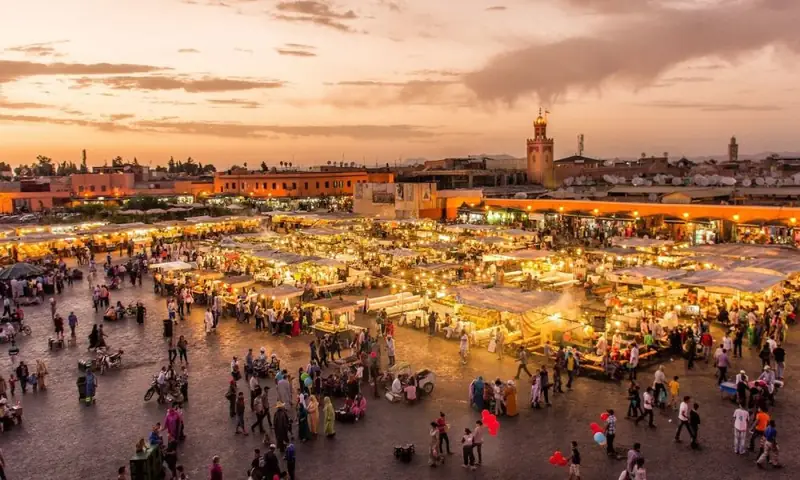
Choose busy stalls with many local customers, check prices on the menu and agree before you order. Try harira, grilled lamb or merguez, and tagines, and finish with mint tea. Pastries and dried fruit are sold nearby. See our Moroccan food guide.
Best views
For a view over the square, rooftop cafes around the edge are a good option. Order a drink and watch the scene at sunset.
Staying safe
- Keep valuables in a front pocket or bag, and watch for pickpockets.
- Agree prices before eating, taking photos or accepting henna.
- Avoid contact with monkeys and snakes, which are often kept in poor conditions.
- Politely decline offers from unofficial guides.
Nearby
The souks begin at the north side of the square (see our souk guide), and the Koutoubia Mosque is a short walk away. Continue to the Bahia Palace or Ben Youssef Madrasa, or read our full Marrakech guide.
The square through the day
Morning: orange juice carts, water sellers and early traders set up. Afternoon: snake charmers and monkey handlers are out, and the square is hot and crowded. Late afternoon and evening: the food stalls are set up in rows, storytellers and musicians form circles, and the square fills with locals and visitors until after midnight.
How to order at the food stalls
- Walk the rows first and see what is popular.
- Check the printed menu and prices before sitting.
- Ask for a few dishes to share, such as kefta, merguez, salads and bread.
- Pay at the end and check the bill carefully.
Where to watch from above
Several cafes and restaurants on the edge of the square have terraces that overlook the scene. Arrive before sunset to get a good seat, order a drink, and watch the square change as the lights come on. A drink or snack is usually expected in return for the view.
Respectful photography
Many performers expect payment for photos. Agree a small amount first, or take photographs of the general scene from a distance. Always ask before photographing people.
Frequently asked questions
When is the best time to visit Jemaa el-Fna?
Late afternoon into the evening, when the stalls open and the performers arrive.
Is Jemaa el-Fna safe?
Generally yes, although crowds attract pickpockets and touts. Stay alert and agree prices first.
Is the food at Jemaa el-Fna safe?
Choose busy stalls with high turnover, and eat freshly cooked food.