About Morocco: An Introduction for Travellers
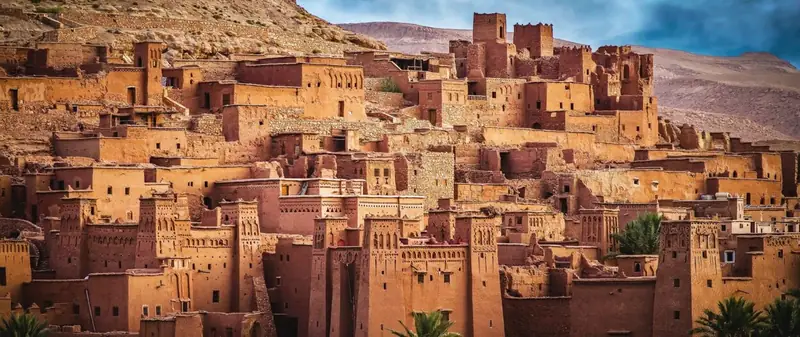
Morocco sits in the north-west corner of Africa, only 14 kilometres from Europe across the Strait of Gibraltar. It has two coastlines, four mountain ranges, the edge of the Sahara and some of the oldest living cities in the Arab world. This overview explains how the country fits together before you choose where to go.
At a glance
- Official name
- Kingdom of Morocco
- Capital
- Rabat (largest city: Casablanca)
- Population
- About 37 million
- Languages
- Arabic and Amazigh (official); Darija, French widely spoken
- Currency
- Moroccan dirham (MAD)
- Time zone
- GMT+1 (GMT during Ramadan)
In this guide
Geography: coasts, mountains and desert
Morocco is roughly the size of California, yet it packs in remarkable variety. The Atlantic coast runs for more than 2,500 kilometres from Tangier to the far south, while the Mediterranean coast and the green Rif mountains shape the north. Inland, the Middle Atlas, High Atlas and Anti-Atlas form a spine of mountains; Jebel Toubkal, at 4,167 metres, is the highest peak in North Africa. South and east of the Atlas, the land falls away into stony plains, palm-filled oases and the golden dunes of the Sahara.
People and languages
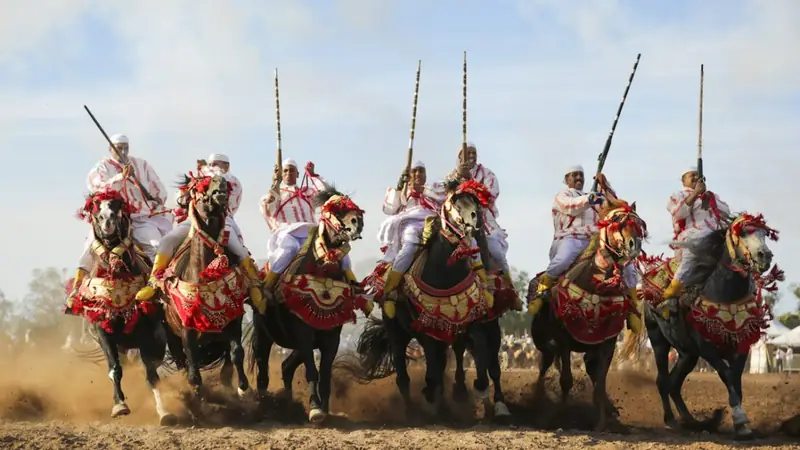
Moroccans are of Amazigh (Berber), Arab and mixed heritage, with influences from sub-Saharan Africa and Andalusia. Modern Standard Arabic and Amazigh (Tamazight) are the two official languages. In daily life most people speak Darija, the Moroccan Arabic dialect, and many also speak French. Spanish is common in the north, and English is increasingly widely understood in tourist areas, hotels and among younger people. Learning a few words of Darija, such as shukran (thank you) and salam (hello), is always appreciated.
Government and modern Morocco
Morocco is a constitutional monarchy. King Mohammed VI has reigned since 1999, and an elected parliament and prime minister handle government. The country has invested heavily in infrastructure in recent decades, including the Al Boraq high-speed train, the Tanger Med port, solar power plants and new motorways. It is also one of the three co-hosts of the 2030 FIFA World Cup, alongside Spain and Portugal. Read more in our guide to the Moroccan economy.
The main regions at a glance
| Region | Highlights | Best for |
|---|---|---|
| Imperial cities | Marrakech, Fes, Meknes, Rabat | History, medinas, palaces |
| North | Chefchaouen, Tangier, Tetouan, Asilah | Mountain scenery, Spanish-Andalusian flavour |
| Atlantic coast | Casablanca, Essaouira, Agadir | Beaches, seafood, surfing, city life |
| South and desert | Ouarzazate, Tinghir, Zagora | Kasbahs, gorges, Sahara camps |
| Far south | Dakhla | Kitesurfing, lagoon, desert-meets-ocean landscapes |
UNESCO World Heritage in Morocco
Morocco has nine UNESCO World Heritage Sites. They include the medinas of Fes, Marrakech, Meknes, Tetouan and Essaouira, the fortified village of Ait Benhaddou, the Roman ruins of Volubilis, the Portuguese city of Mazagan (El Jadida) and parts of Rabat. Jemaa el-Fna in Marrakech is also recognised for its living cultural traditions. See our guides to Jemaa el-Fna and the history of Morocco for context.
Practical basics
- Climate: Mediterranean in the north, hot and dry inland and in the south, cool in the mountains. See our best time to visit guide.
- Electricity: 220 V, with European two-pin plugs (types C and E).
- Driving: on the right. Most visitors rely on trains, buses and taxis; see getting around Morocco.
- Etiquette and safety: see our Morocco travel tips for money, scams, dress and respectful behaviour.
Frequently asked questions
Is Morocco in Africa or the Middle East?
Morocco is in North Africa. It is an Arab-Amazigh country with strong links to the Arab world, Africa and Europe.
What languages are spoken in Morocco?
Arabic and Amazigh are official languages. Most people speak Darija (Moroccan Arabic), and French is widely used in business, education and tourism.
What is the capital of Morocco?
Rabat is the capital. Casablanca is the largest city and the main economic centre, and Marrakech is the most visited.