Marrakech Travel Guide: What to See, Where to Stay and How to Plan
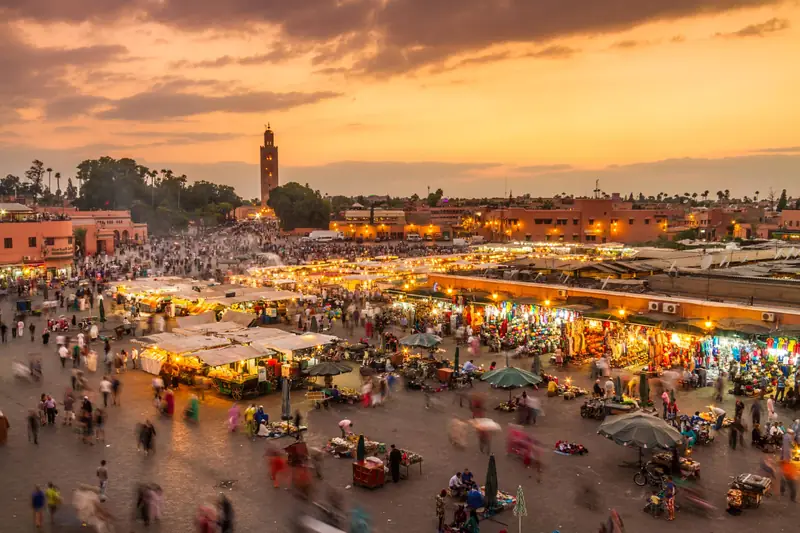
This Marrakech travel guide starts with the essentials: give the Red City two to four days, sleep in or near the medina, and see the big sights early, before the heat and the tour groups arrive. Founded by the Almoravids around 1070, Marrakech packs ochre ramparts, carved madrasas, painted palaces and the open-air theatre of Jemaa el-Fna into a walkable, UNESCO-listed old town, with the snow-capped High Atlas on the horizon.
It is loud, generous and occasionally exhausting. Below you will find what to see with current ticket prices, a two-day plan, where to stay, what to eat, day trips, how to get around and how to sidestep the usual hassles.
Arriving by taxi? Cars cannot reach most medina doors, so ask your riad for the nearest drop-off point and whether someone can meet you there. Agree the fare before getting into any taxi that will not use its meter.
At a glance
- Founded
- c. 1070 (Almoravids)
- UNESCO
- Medina listed in 1985
- Allow
- 2–4 days
- Airport
- Menara (RAK), about 6 km from the medina
- From Casablanca
- 2 h 40–3 h 20 by train
- Best time
- March–May and September–November
In this guide
- Is Marrakech Worth Visiting?
- Best Things to Do in Marrakech
- Marrakech Sights: Ticket Prices and Tips
- A 2-Day Marrakech Itinerary
- Where to Stay in Marrakech
- What to Eat in Marrakech
- Getting to Marrakech and Getting Around
- Best Time to Visit Marrakech
- Day Trips from Marrakech
- Safety, Scams and Etiquette
- Money, SIM Cards and Tipping
Is Marrakech Worth Visiting?
Yes. No other Moroccan city puts so many headline sights within walking distance, and Marrakech is also the easiest base for the High Atlas, the Agafay desert and the road to the Sahara. The trade-off is intensity: crowds, hard selling and fierce summer heat, so plan a slower pace than you think you need.
- First trip to Morocco: two or three nights cover the medina, the palaces and the gardens.
- With a day trip: allow four nights for the Atlas mountains, Agafay or Essaouira.
- Prefer calm: base yourself in Gueliz or a garden riad, and see the souks first thing in the morning.
Best Things to Do in Marrakech
Most sights cluster in the walled medina, with Jardin Majorelle in the new town of Gueliz to the west. Group them by area to save hours of walking and taxi fares; our full list of things to do in Marrakech goes further.
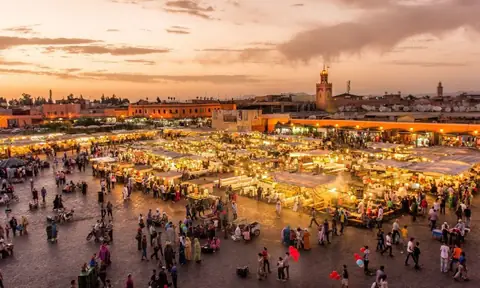
Jemaa el-Fna
The medina’s heart: juice stalls and storytellers by day, smoking grills and musicians after dark.
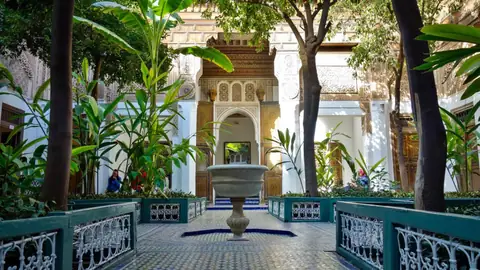
Bahia Palace
A late-19th-century palace of painted cedar ceilings, tiled courtyards and garden patios.
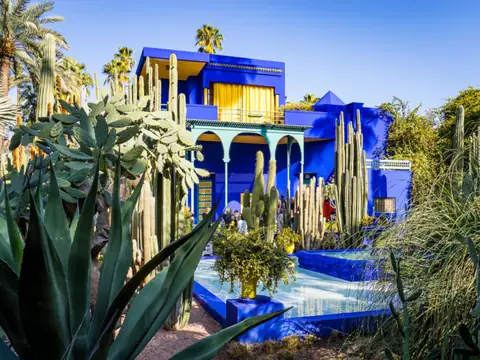
Jardin Majorelle
A cobalt-blue villa among cacti and bamboo, restored by Yves Saint Laurent and Pierre Bergé.
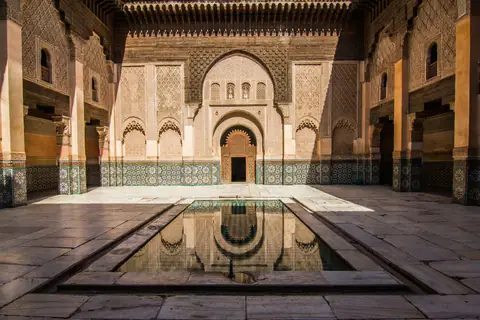
Ben Youssef Madrasa
A 16th-century Koranic school with a carved cedar and stucco courtyard.
Jemaa el-Fna, morning and night
Visit twice: in the morning, when the square is half empty and the orange-juice carts line up, and again an hour before sunset, when the grills are lit and musicians, storytellers and healers draw crowds. A café terrace around the edge gives the best view without the crush. Agree a tip before photographing performers, and keep small coins handy.
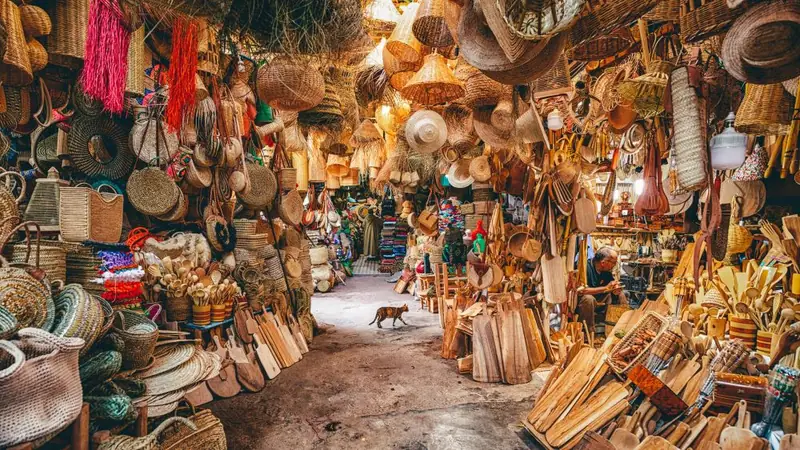
The souks
The covered souks run north from the square and are loosely organised by craft: spices and lanterns, leather and slippers, carpets, metalwork and the dyers’ quarter. Prices are not fixed, so bargain with a smile and walk away politely if you cannot agree. Mornings, when the shops are opening, are calmer.
Palaces, tombs and madrasas
Start early, because the big monuments fill up by late morning. The Bahia Palace shows late-19th-century decoration at its most lavish, the Saadian Tombs, sealed off and rediscovered only in 1917, hold a 16th-century dynasty in marble and cedar, and the ruined El Badi Palace hints at that era’s scale. In the north of the medina, the Ben Youssef Madrasa is a masterclass in zellige, stucco and carved cedar.
Koutoubia, gardens and hammams
The 12th-century Koutoubia minaret, about 77 m high, is the city’s landmark; non-Muslims cannot enter the mosque, but the gardens around it are open. Jardin Majorelle is the most famous garden, Le Jardin Secret is a restored riad garden hidden in the souks, and the olive groves of the Menara are quieter. End a long day in a hammam: neighbourhood baths cost little, while spa hammams charge far more.
Book Majorelle online. Jardin Majorelle sells timed tickets only on its official website, tickets.jardinmajorelle.com, and there is no ticket office at the gate. The Yves Saint Laurent Museum next door is closed on Wednesdays.
Marrakech Sights: Ticket Prices and Tips
Prices are for foreign adults as published in autumn 2026; Moroccan residents pay less. Monuments in the medina usually take cash only at the door.
| Sight | Ticket (foreign adult) | Tip |
|---|---|---|
| Bahia Palace | 100 MAD (≈ €9 / $10) | Arrive for the 9am opening |
| Saadian Tombs | 70–100 MAD (≈ €6–9 / $7–10) | Small site; queues move fast |
| El Badi Palace | 100 MAD (≈ €9 / $10) | Little shade; bring water |
| Ben Youssef Madrasa | 50 MAD (≈ €5 / $5) | Go early for an empty courtyard |
| Le Jardin Secret | 100 MAD (≈ €9 / $10) | Climb the tower for medina views |
| Jardin Majorelle | 170 MAD (≈ €16 / $17) | Online only; 330 MAD with both museums |
Prices may vary; always check them on site.
A 2-Day Marrakech Itinerary
This route keeps walking short and puts the outdoor stops in the cooler hours.
- Day 1 · MorningKoutoubia gardens, then the souks as the shops open, with mint tea on a rooftop.
- Day 1 · AfternoonBen Youssef Madrasa and Le Jardin Secret, then a late lunch away from the main square.
- Day 1 · EveningJemaa el-Fna at sunset: grilled meat, fresh orange juice, snail soup and storytellers.
- Day 2 · MorningJardin Majorelle at opening with a pre-booked ticket, then the Yves Saint Laurent Museum (not on Wednesdays).
- Day 2 · AfternoonBahia Palace and the Saadian Tombs in the Kasbah quarter, with El Badi if the heat allows.
- Day 2 · EveningA hammam, then dinner on a riad terrace.
Where to Stay in Marrakech
Pick the area first, then the hotel; our guide to where to stay in Marrakech compares the neighbourhoods in more depth.
| Area | Best for | Trade-off |
|---|---|---|
| Medina | Riads, atmosphere, walking to sights | Noise, narrow lanes, luggage hauling |
| Gueliz | Restaurants, cafés, easy taxis | Less character; taxi to the souks |
| Hivernage | Big hotels, pools, nightlife | Resort feel; little to see on foot |
| Palmeraie | Villas, pools and quiet | Car or taxi needed for everything |
First-timers usually enjoy two nights in a medina riad, plus a quieter base with a pool if the budget allows. Book early for spring, autumn and the late-November film festival.
What to Eat in Marrakech
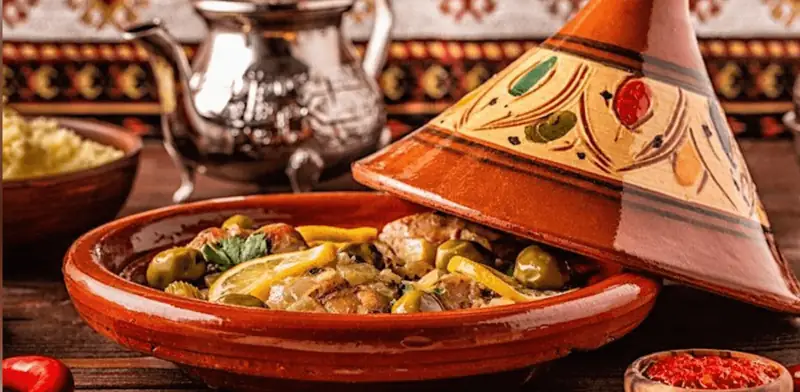
Marrakech’s signature dish is tanjia, beef or lamb slow-cooked in a clay urn in the embers of a hammam furnace. Try mechoui, lamb roasted until it falls apart, tagines with preserved lemon, olives or prunes, and harira soup, and finish with mint tea.
At Jemaa el-Fna, choose the stalls where locals queue and check prices before you sit down. A cooking class is a good way to spend the hottest part of the day.
Getting to Marrakech and Getting Around
- By air: Marrakech Menara (RAK) is about 6 km from the medina. Airport bus 19 costs 30 MAD; taxis to the medina usually charge 100–150 MAD by day, so agree the fare first or ask your riad for a pickup.
- By train: direct ONCF trains from Casablanca take 2 h 40–3 h 20, and standard second-class fares are about 98 MAD (≈ €9 / $10), less if booked ahead. Check current departures on our train times page.
- By bus: CTM and Supratours coaches link Marrakech with Essaouira, Agadir, Ouarzazate and Fes.
- By taxi: beige petits taxis must use the meter; short hops usually cost 15–50 MAD by day, with about 50% extra after 8pm.
- On foot: the medina is best walked; map apps lose accuracy in the narrow lanes, so note a landmark near your riad.
Petits taxis carry up to three passengers. For four or more, or for trips out of town, use a grand taxi or hire a driver.
Best Time to Visit Marrakech
| Season | Weather | Verdict |
|---|---|---|
| Mar–May | Warm days, green Atlas foothills | Ideal; busy around Easter |
| Jun–Aug | Around 38 °C; heatwaves above 45 °C | Sightsee early; book a pool |
| Sep–Nov | Warm, settled days; film festival 20–28 Nov 2026 | Ideal for walks and day trips |
| Dec–Feb | Sunny days around 18 °C, cold nights | Fewer crowds; pack layers |
During the film festival, free open-air screenings are held on Jemaa el-Fna in the evenings. Ramadan is expected from about 8 February to 9 March 2027; sights stay open, but some cafés close by day and hours can shorten.
Day Trips from Marrakech
Travel times are one way by road; see day trips from Marrakech for routes and what to book.
| Destination | Time | Best for |
|---|---|---|
| Agafay Desert | About 45 min | Stony desert, sunset camel rides |
| Ourika Valley | About 1 h | Waterfalls, Berber villages, cool air |
| Imlil | About 1.5 h | High Atlas walks, Toubkal base |
| Ouzoud Falls | 2.5–3 h | Waterfalls and Barbary macaques |
| Essaouira | About 3 h | Atlantic ramparts and fresh fish |
| Aït Benhaddou | About 4 h | UNESCO kasbah; better overnight |
For the Sahara, skip the day trip: Merzouga is about 560 km away, 9–10 hours of driving, so join a three-day tour or break the journey in Ouarzazate and Tinghir.
Safety, Scams and Etiquette
- Petty theft: carry only what you need and keep phones out of back pockets in crowds.
- Fake guides: politely ignore anyone who says a street is closed or offers to lead you to a “Berber market” or the tanneries.
- Henna and animals: say no firmly before a henna artist starts or a snake is draped on you, and agree a price first if you want a photo.
- Dress: cover shoulders and knees in the medina, and ask before photographing people.
- Late nights: stick to lit main lanes; most riads will send someone to walk you back.
Money, SIM Cards and Tipping
- Cash: the medina runs on cash; ATMs are common around Jemaa el-Fna and in Gueliz, and cards work mainly in hotels and modern restaurants.
- SIM cards: a Maroc Telecom or Orange SIM costs around 30 MAD with your passport from the operators’ shops.
- Tipping: 1–2 MAD in cafés, 5–10 MAD in casual restaurants and 50–100 MAD a day for a driver; agree guide fees in advance.
- Bargaining: start well below the first price and settle somewhere in the middle; the state-run Ensemble Artisanal near the Koutoubia sells crafts at fixed prices, a useful benchmark.
- Water: drink bottled or filtered water, and carry plenty in summer.
- Phrases: “Salam alaikum” (hello), “shukran” (thank you) and “la, shukran” (no, thank you), the most useful words in the souks.
- Ramadan: avoid eating, drinking or smoking in public during daylight hours out of respect.
Prices may vary. Euro and dollar figures use November 2026 rates (€1 ≈ 10.9 MAD, $1 ≈ 9.9 MAD). Ticket prices change, especially at state-run monuments, so verify locally or on official sites before you go.
Frequently asked questions
How many days do you need in Marrakech?
Two full days cover the main sights. Three or four let you add a day trip, a cooking class and a hammam at an easier pace.
Is Marrakech safe for tourists?
Generally yes, but petty theft, pushy touts and overcharging are common. Keep valuables secure, agree prices in advance and ignore unofficial guides.
Do I need to book Jardin Majorelle in advance?
Yes. Tickets are sold only online for a set date and time, at 170 MAD for the garden in 2026, and morning slots can sell out days ahead in busy months.
Should I stay in the medina or in Gueliz?
Choose the medina for atmosphere and walking access to the sights, and Gueliz for modern comforts, restaurants and easy taxis. Many visitors split their stay between the two.
How do I get from Marrakech airport to the medina?
Bus 19 costs 30 MAD, while a taxi usually costs 100–150 MAD by day. Taxis stop at the medina gates, so you will usually walk the last stretch or be met by your riad.