14 Days in Morocco: A Grand Loop Without Backtracking
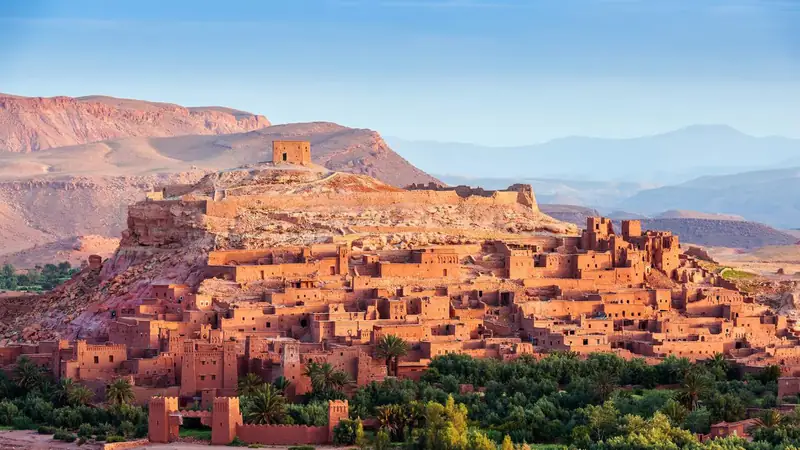
A two-week Morocco loop linking imperial cities, the Sahara, High Atlas villages and the Atlantic coast without needless backtracking, with a rest-day option and hiking notes.
At a glance
- Duration
- 14 days
- Theme
- Cities, Sahara, High Atlas and coast
- Route
- Marrakech → Aït Benhaddou → Dades → Merzouga → Fes → Rabat → Essaouira → Marrakech
- Pace
- Moderate with planned rest
In this guide
This route is a planning framework, not a guaranteed timetable. Check current opening arrangements and transport with the relevant official operator. Long road transfers need meal, rest and daylight allowances.
Day-by-day plan
Days 1 to 2: Marrakech
Arrive in Marrakech and orient yourself before the long overland section.
Day 3: High Atlas to Aït Benhaddou
Cross Tizi n’Tichka in daylight, visit the ksar with time to walk through it, and sleep in the Ouarzazate area.
Day 4: Dades Valley
Continue through Skoura or the Valley of Roses toward Dades; choose one or two stops, not every viewpoint.
Day 5: Todra and Merzouga
Visit Todra Gorge if conditions permit, then reach Merzouga. Overnight near the dunes or in a camp with confirmed transfers.
Day 6: Desert morning and staged return
Take a quiet morning, then begin west/north. Stay around a practical midpoint rather than attempting Merzouga–Fes after a night in camp.
Days 7 to 8: Fes
Use one full day for the medina and a second for Fes el-Jdid or Meknes/Volubilis. One of these can become the trip’s rest day.
Day 9: Rabat
Take the train or road to Rabat. Visit one compact area and sleep in the city.
Day 10: Rabat to Marrakech or Essaouira
Choose transport by schedule, not by map. A rail move to Marrakech followed by a separate coast transfer avoids an exhausting cross-country drive.
Days 11 to 12: High Atlas village stay
From Marrakech, travel to Imlil or another accessible valley. Add a guided half-day walk and an optional village guesthouse/homestay arranged directly through a reputable local host. Respect that home visits are not drop-in attractions.
Days 13 to 14: Essaouira and departure
Use the coast for slower walking, seafood and a final overnight. Return to Marrakech or Casablanca with a buffer before flights.
Rest-day plan
Make Day 8 or Day 12 genuinely unbooked: laundry, a hammam, short local walk and early dinner. If the trip starts to feel like a checklist, remove Meknes/Volubilis or one coast night rather than sacrificing every rest period.
Transfer times and realistic pacing
These are approximate planning ranges for a normal, uninterrupted journey, not door-to-door guarantees. Mountain roads, traffic, roadworks, weather, meal stops and photo breaks can add substantial time. For intercity public transport, verify the exact service and station before fixing a connection.
| Leg | Planning time |
|---|---|
| Marrakech–Aït Benhaddou | 4 to 5 hours driving, excluding stops |
| Aït Benhaddou–Dades | 3 to 4 hours |
| Dades–Merzouga | 4 to 5 hours |
| Merzouga–Fes | 8 to 9 hours; split with a night if possible |
| Fes–Rabat | about 2.5 to 3.5 hours by road; train is an alternative |
| Rabat–Essaouira | a long cross-country transfer; use rail/coach connections via Casablanca/Marrakech or add a night |
| Essaouira–Marrakech | about 2.5 to 3.5 hours by road |
Usable days: On this 14-day calendar plan, budget about 7 genuinely full sightseeing days after allowing for arrival, departure and the named long transfers. Late flights can recover a partial day; a full road-transfer day does not count as sightseeing.
Transport options
- Private driver: Most flexible for rural stops, luggage and custom breaks; costs more, and you should confirm licensed operator, vehicle, inclusions, driver hours and overnight plan in writing.
- Self-drive: Gives control and can work for confident drivers on paved main roads; you handle navigation, parking, fatigue, insurance, mountain conditions and camp transfers. Avoid night driving on unfamiliar rural roads.
- Train or coach: Often best value and lower-stress on served city corridors; less useful for remote valleys, medinas’ doorsteps and desert camps. Check ONCF or the coach operator for current routes, times, baggage and station/terminal location.
Fast version vs. slow version
- Fast: 13 nights, 7 bases; follow the loop but accept several one-night stops. Hotel changes: 6.
- Slow: 14 nights, 7 bases; add a rest night in Fes or Marrakech and remove a side trip. Hotel changes: 6.
Hotel changes mean packing and checking in again, not just sleeping in a different town. Count one change for every move to a new overnight base; avoid consecutive one-night stays when possible.
Practical planning by stop
- Where to stay by area:
- Marrakech: Medina for walkability and riads; Gueliz/Hivernage for easier vehicle access and modern hotels.
- Ait Benhaddou: Stay near the ksar for early/late access or in Ouarzazate for more services; check the bridge/river approach.
- Dades Valley: Choose a guesthouse near the specific gorge/valley section and confirm pickup, dinner and road access.
- Merzouga: Village-side guesthouse for flexibility; a camp for a planned dunes stay. Confirm where the car and luggage remain.
- Fes: Fes el-Bali for atmosphere; Ville Nouvelle for easier vehicle access and broader hotel choice.
- Rabat: Medina or Hassan district for sights; Agdal near rail and restaurants; confirm Rabat Ville vs Agdal station.
- Essaouira: Inside the medina for a car-free stay; near Bab Doukkala for easier coach/luggage access.
- What to eat along the way:
- Marrakech: Try tanjia, pastilla and harira; seek a busy stall or restaurant with clear prices.
- Ait Benhaddou: Try a local tagine, dates and mint tea; avoid assuming every viewpoint café is open.
- Dades Valley: Try amazigh-style tagine, barley or flatbread and seasonal dates; meals are often accommodation-based.
- Merzouga: Ask for a locally prepared tagine, madfouna (regional stuffed bread) and mint tea; camp menus vary.
- Fes: Try Fassi pastilla, bissara and harira; ask about ingredients and seasonal menus.
- Rabat: Try grilled fish, harira and chebakia; ask locally for a current neighbourhood favourite.
- Essaouira: Try grilled sardines, seafood tagine and m’hancha; check fish price and weight before cooking.
- What you can skip:
- Skip Marrakech if... you are short on time and would rather spend the week in one quieter region; the medina can be busy and hot.
- Skip Ait Benhaddou if... you have limited mobility or the heat/crowds make an exposed uphill ksar walk unsuitable.
- Skip Dades Valley if... you do not want a road-focused trip; the valley is best as an overnight stop, not a quick detour.
- Skip Merzouga if... long transfers, cold nights or a camp experience do not appeal; Agafay is closer but is not the Sahara.
- Skip Fes if... dense lanes, uneven footing or an intense medina are not a good fit; choose Rabat or a coastal base instead.
- Skip Rabat if... you prefer a more active nightlife or compact medina atmosphere; Rabat is calmer and its sights are spread out.
- Skip Essaouira if... windy beach weather is a deal-breaker and you mainly want swimming; the Atlantic can be cold and rough.
Seasonal planning note
Spring and autumn are usually the easiest all-round seasons along this route. Inland heat can be severe in summer, and Atlas passes and high trails can have snow or closures in winter. Desert nights are cold, coastal wind varies, and Ramadan changes daytime opening hours and meal rhythms. Check local conditions and holiday dates for your exact stops. Reconfirm transport, access, opening days and weather before booking.
Useful destination guides: Marrakech · Ait Benhaddou · Dades Valley · Merzouga · Fes · Rabat · Essaouira · best time to visit · transport guide.
Skip this route if... you want a low-transfer, fully spontaneous trip, or if the itinerary’s longest travel days do not fit your comfort level. Pick one region and spend the saved time there.
Frequently asked questions
Does the route really avoid backtracking?
It makes a broad loop, but transport networks do not form a perfect circle. The Rabat-to-coast segment is best planned with rail/coach connections and an overnight rather than an unrealistic direct drive.
Can I add a Toubkal summit?
Not as a casual add-on. Replace other days with a proper multi-day trek and arrange an experienced guide, acclimatization, equipment and current conditions.