Erg Chebbi Dunes: Choose Your Stay Before Your Sunset Ride
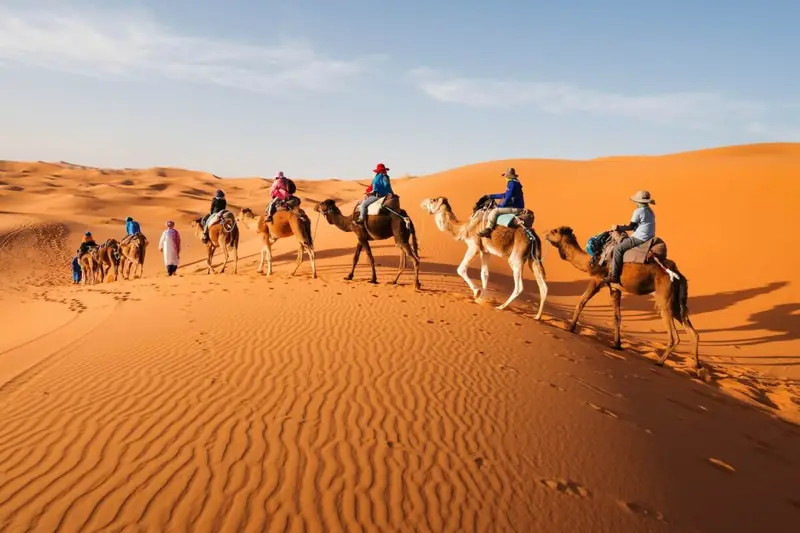
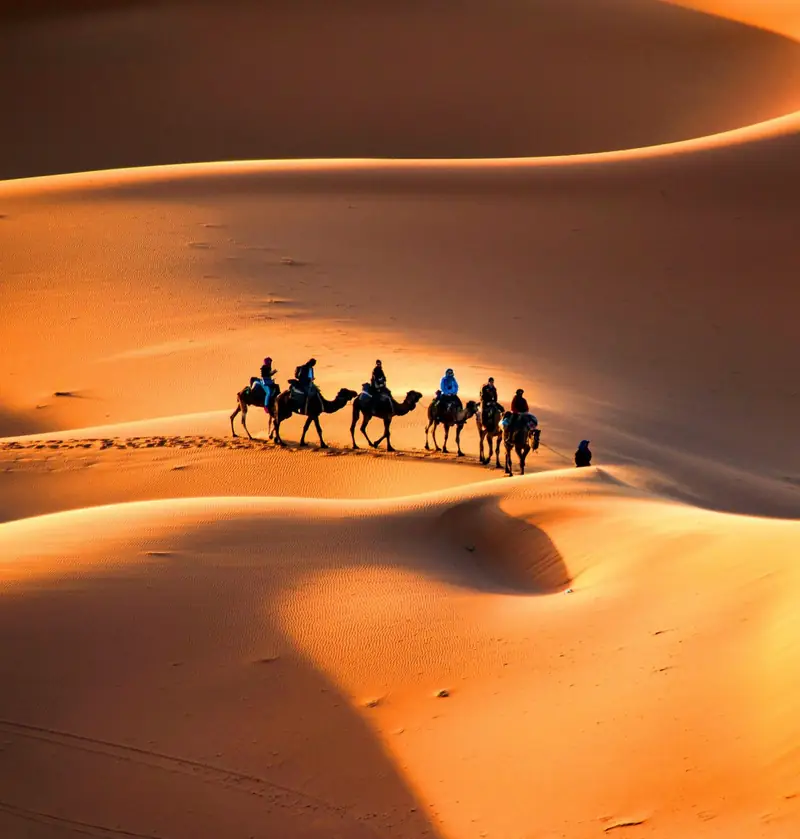
Erg Chebbi is the sand-dune field beside Merzouga in southeastern Morocco, not a campsite or the whole Sahara. You can enjoy it from a village hotel, arrange a short guided outing or stay overnight at a camp. Choose that experience first, then confirm the meeting point, transfer, weather arrangements and onward journey. A sunset photograph alone tells you little about where a tent actually stands.
One night can give you an evening and morning near the sand; an extra local night makes the long approach less rushed. Neither guarantees clear skies, silence or a particular activity. This guide explains camp choices, camel alternatives and practical questions without promising fixed road times, universal prices or easy independent dune navigation.
Confirm the actual camp and transfer before paying. Get the meeting location, latest arrival, luggage arrangements, return time and weather policy in writing. Do not drive a rental onto sand simply because a booking map points across the dunes.
At a glance
- Setting
- Dunes beside Merzouga, southeastern Morocco
- Choice
- Village hotel, short outing or camp
- Time
- Allow for a substantial road approach
- Transfer
- Confirm camel, vehicle or other arrangement
- Conditions
- Heat, cold nights, wind and changing visibility
- Priority
- Exact location, inclusions and safe return
In this guide
- Village Hotel or Overnight Camp?
- Understand Erg Chebbi, Merzouga and the Wider Desert
- Plan the Road Journey Before the Camp Schedule
- Meeting Point, Luggage and the Final Transfer
- What Does a Camp Price Actually Include?
- Camel Ride or a Non-Riding Alternative?
- Heat, Cold, Wind and a Weather Backup
- Pack for the Transfer, Not Just the Photograph
- Walking and Photography Without Getting Stranded
- Children, Accessibility and Medical Practicalities
- Quiet Stays, Optional Activities and Local Respect
- A Flexible Overnight Plan and Onward Departure
Village Hotel or Overnight Camp?
A hotel around Merzouga or nearby Hassilabied can be the simplest base if you want rest, a shorter sand outing or flexibility when weather changes. A camp puts the overnight experience first, but its location may be beside an access track rather than surrounded by empty dunes. Ask for the accommodation location, not just the office pin used for booking.
One camp night is a taste, not a requirement for visiting Erg Chebbi. Adding a night before or after in the village can separate a long road day from an early start. Two nights at the same camp only help if daytime shade, meals and comfortable resting space suit the conditions. These are planning choices, not an official minimum stay.
| Stay | Best use | Check first |
|---|---|---|
| Village | Flexible short outings | Dune access and transport |
| One camp night | Evening and morning | Arrival and return |
| Extra local night | Rest between road days | Daytime comfort |
Understand Erg Chebbi, Merzouga and the Wider Desert
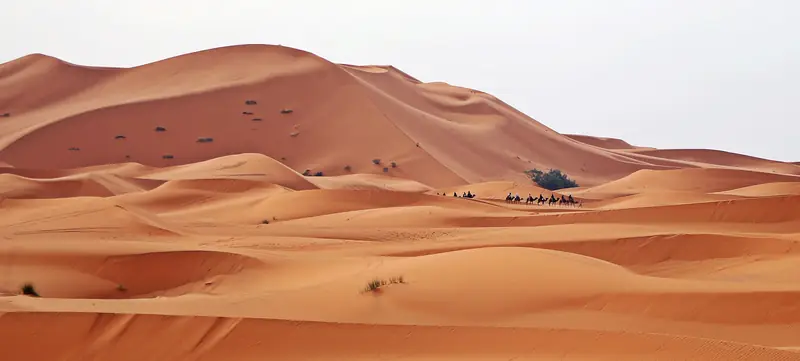
An erg is an area of wind-shaped sand dunes. Erg Chebbi rises beside flatter, stonier desert, with Merzouga serving as a familiar road base and Hassilabied another nearby starting area. The landscape is not continuous sand all the way from the Atlas. A tour around the erg may spend much of its time on rocky ground or village roads.
Erg Chebbi is different from Erg Chigaga, usually approached from the M’Hamid area, and from a rocky desert excursion near Marrakech. Check the named destination before comparing prices. A lower quote for a different desert is not necessarily the same trip more cheaply. Use the Sahara tour guide for that broader choice and the Merzouga guide for the local base.
Plan the Road Journey Before the Camp Schedule
Marrakech and Fes are long overland approaches, not nearby resort bases. Build a route with rest, meals, daylight and the condition of mountain sections in mind. From Marrakech, compare the Marrakech-to-Merzouga road plan with slower alternatives rather than treating three days as a guarantee of enough time for every detour.
With a driver or group tour, ask about daily road hours, usable stops, accommodation and the final arrival deadline. A bus or flight booking does not automatically include the onward transfer to your meeting point; check the current service directly and arrange the last leg separately. Avoid building an unverified timetable or a late-night sand transfer into a tightly connected onward booking.
Meeting Point, Luggage and the Final Transfer
Your booking may identify a village reception, roadside hotel or parking area rather than the tent itself. Obtain the exact point, a working contact, latest arrival and instructions for delays. Confirm parking, luggage storage, valuables, and what travels with you. Keep medication, water and overnight essentials accessible.
Ask how you reach the camp and return, whether the price is shared or private, and whether a non-riding transfer is available. A 4WD journey can still be bumpy and involve climbing into a high vehicle. Do not assume it is suitable for every medical or mobility need. Road access to the village does not establish that an ordinary rental is allowed or insured on the final track.
| Transfer | Trade-off | Ask about |
|---|---|---|
| Camel | Slow and physically demanding | Welfare and alternative |
| 4WD | Bumpy vehicle access | Seats and boarding |
| Short walk | Soft sand and exposure | Route, guide and water |
What Does a Camp Price Actually Include?
Compare written inclusions rather than labels such as standard or luxury. Ask about tent sharing, bed configuration, private or shared toilets, hot water, drinking water, meals, dietary requirements, electricity hours and charging. Heating, cooling and reliable power should never be inferred from a photograph of a furnished tent. A price per person may differ greatly from a price for the tent.
Clarify transfers in both directions, an optional camel ride, baggage handling, taxes and any activities charged separately. Agree the total in Moroccan dirhams and cancellation or substitution terms, including what happens in bad weather. No single admission ticket or universal camp tariff covers the dune field. The money guide helps with payment preparation, not a verified camp price list.
Camel Ride or a Non-Riding Alternative?
A camel ride can be a memorable part of the trip, but it is optional and may be uncomfortable. Mounting, dismounting and the swaying motion matter as much as the advertised duration. Discuss health concerns with a qualified clinician and tell the operator about relevant limits before booking. Agree whether you can shorten the ride or travel without riding, and what any alternative costs.
Ask about animal rest, water, loads and care. Do not ride an animal that appears injured, exhausted or distressed, and do not let an included package pressure you into doing so. Avoid crowding or feeding animals without the handler’s direction.
Heat, Cold, Wind and a Weather Backup
Summer heat can be severe, while winter nights can feel very cold. The official tourism office highlights October to April for desert visits, but a calendar window is not a guarantee of comfortable temperatures or safe activities. Check the forecast and ask specifically about conditions for the road approach, exposed walking and your sleeping accommodation. A tent may not offer the cooling you expect.
Wind and blowing sand can reduce visibility and change transfers or photography. Rain can affect access, and floodwater is not safe to drive or walk through. Follow authorities and the operator’s safety instructions rather than insisting on a sunset departure. Before paying, establish whether weather leads to a shorter activity, village accommodation, postponement or cancellation and what refund terms apply.
Pack for the Transfer, Not Just the Photograph
Bring sun protection, sunglasses, closed footwear, light covering clothing and warmer layers for after dark. Carry sufficient safe drinking water for the agreed outing and confirm resupply instead of assuming unlimited bottles at each stop. A small daypack is easier on a transfer than an open shopping bag. Protect a phone and camera from sand, and carry personal medication with you.
Pack a head torch, charging equipment and offline contact details, but do not treat electronics as a substitute for a guide or a return plan. Ask whether bedding and towels are provided and whether luggage stays at reception. For more preparation, use the packing guide. Take litter back to a proper disposal point and use water sparingly in this dry environment.
- Before departure: confirm reception, last arrival and a contact.
- Before riding: agree duration, animal care and a non-riding option.
- Before sleeping: know the toilet route and morning return.
- Before leaving: collect luggage and allow onward travel buffers.
Walking and Photography Without Getting Stranded
Soft sand takes more effort than its distance suggests, and a steep dune climb is not necessary to enjoy the light. Arrange a route and turnaround with someone who knows the area; do not wander farther because the next ridge looks close. Tracks and familiar silhouettes are not reliable navigation when light or wind changes. Avoid walking alone into the dunes after dark.
For a longer outing, arrange a competent local guide, explain your pace and agree water, shade, communication and a return time. Stay away from vehicle routes and moving animals. Ask permission for portraits, particularly of children, and do not photograph military or sensitive sites. Drone use requires Moroccan authorisation; do not assume open desert or a camp’s informal approval makes a flight legal.
Children, Accessibility and Medical Practicalities
Ask about the exact vehicle, seat belts, suitable child restraints, boarding height, sand underfoot, steps and the route to the toilet. A private bathroom does not establish step-free access, nor does a vehicle transfer remove all walking. With mobility needs, request concrete measurements or current photographs and discuss assistance rather than relying on an accessible or family-friendly label.
Plan children’s outings around rest, water and shade, not an adult’s wish to reach the tallest dune. Check the nearest appropriate medical help and the camp’s emergency arrangements before committing if health needs are significant. Keep essential medication close, tell a trusted person your plan and check insurance for the actual activities. Being close to a village does not guarantee immediate rescue or mobile reception.
Quiet Stays, Optional Activities and Local Respect
Ask about tent numbers, nearby camps, generator hours, music and vehicle traffic if quiet is your priority. A secluded marketing photograph does not promise silence or a star-filled sky. Quad biking and sandboarding are optional activities with real injury risks, not compulsory extras. Check operator standards, safety equipment and insurance; for quads, wear a proper crash helmet and do not accept pressure to ride.
Village visits and music performances involve people at work and at home. Agree permission, payment and photography rather than treating every household as a tour stop. Stay clear of cultivated plots and irrigation channels. Dayet Srij is a seasonal setting, not a guaranteed lake or flamingo encounter; ask about current conditions before making it the focus of a day. Leave wildlife and plants undisturbed.
A Flexible Overnight Plan and Onward Departure
A workable example is to reach the confirmed reception in daylight with time to rest, take the agreed transfer if conditions permit, and keep the evening simple. The next morning, choose an arranged short outing or rest, eat and return with a buffer before onward travel. Sunrise, sunset and clear stars are possibilities, not included services an operator can guarantee.
Confirm where you collect luggage, when the return vehicle leaves and who helps if delayed. Do not attach an inflexible train or flight to the advertised end of a dune activity. Keep excursions within authorised areas; the Morocco–Algeria border is closed and must not be approached as a sightseeing shortcut or crossed without authorisation. A calm village stay with a short sand visit remains worthwhile if a camp night is unsuitable.
Frequently asked questions
Is Erg Chebbi the same as Merzouga?
No. Erg Chebbi is the dune field; Merzouga is a nearby village and road base. Confirm both the reception and actual overnight location.
Do I have to ride a camel?
No. Ask about an agreed non-riding transfer or a village stay with a shorter outing. Confirm its cost and suitability rather than assuming it is included.
Can I visit from Marrakech in a day?
Not as a realistic overland return excursion. Allow multiple days and rest stops, and compare the route before committing to a camp deadline.
How much does a camp night cost?
There is no universal rate. Compare written tent, meal, water, transfer and activity inclusions, total dirham price and weather cancellation terms.
Is a winter camp warm enough?
Not automatically. Confirm bedding, heating, power and the forecast for your dates; winter nights can be cold. Choose village accommodation if the tent setup does not fit your needs.