Essaouira Travel Guide: Ramparts, Fish Grills and Atlantic Wind
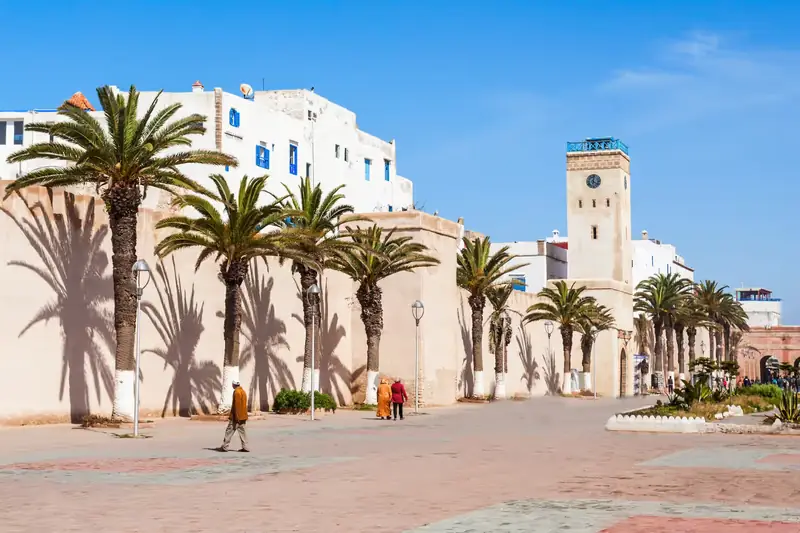
This Essaouira travel guide starts with the answer most visitors need: stay at least one night. The coach from Marrakech takes about three hours each way, and the town is at its best when the day-trippers have gone, at the morning fish auction and at sunset on the ramparts. Laid out in the 1760s for Sultan Sidi Mohammed ben Abdallah and once called Mogador, the walled medina is a UNESCO World Heritage Site, cooled by a trade wind that blows most afternoons.
It is calmer than Marrakech and cheaper for seafood, but the wind and a cool sea make it a poor choice for lazy beach days. Below: sights, current prices, a two-day plan, where to stay, food, transport, seasons and etiquette.
Book your coach a day ahead. Coaches from Marrakech often sell out at weekends and in summer, so buy tickets the day before. Pack a windproof layer: even in August the afternoon wind feels cool.
At a glance
- Former name
- Mogador
- UNESCO
- Medina listed in 2001
- Allow
- 2 nights
- From Marrakech
- About 3 hours by coach
- Airport
- Essaouira-Mogador (ESU), about 15 km
- Best time
- April–June and September–October
In this guide
- Is Essaouira Worth Visiting?
- Best Things to Do in Essaouira
- Essaouira Prices: Sights, Food and Activities
- A 2-Day Essaouira Itinerary
- Where to Stay in Essaouira
- What to Eat in Essaouira
- Getting to Essaouira and Getting Around
- Best Time to Visit Essaouira
- Beaches and Day Trips from Essaouira
- Safety and Etiquette in Essaouira
- Money, SIM Cards and Tipping
Is Essaouira Worth Visiting?
Yes, if you want a slower coastal stop after the imperial cities: a walkable medina, a working fishing port, cheap grilled fish and some of Morocco’s most reliable wind for kitesurfing. The trade-offs: that same wind spoils many afternoons on the sand, and the sea stays cool all year. Most travellers pair it with Marrakech.
- Short on time: one night gives you sunset on the ramparts and the busy port next morning.
- Water sports fans: three nights or more leave time for lessons at Diabat or the waves at Sidi Kaouki.
- Day trip only: possible from Marrakech, but six hours on the road leave only a few hours in town.
Best Things to Do in Essaouira
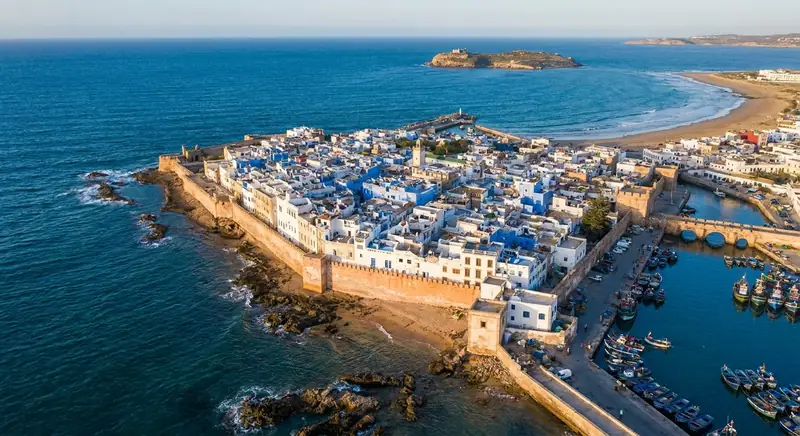
The medina fills a headland beside the harbour, with the beach curving away to the south. Its straight main streets are easy to navigate, leaving time for the port, the ramparts and long walks on the sand.
The Skala de la Ville and the thuya workshops
The Skala de la Ville, the cannon-lined sea bastion on the medina’s northern wall, is the classic place for sunset. Entry has long been free, but 2026 reports of a ticket vary, so check at the gate. In the vaulted workshops beneath, craftsmen carve fragrant thuya wood into boxes and chessboards.
The fishing port and the Skala du Port
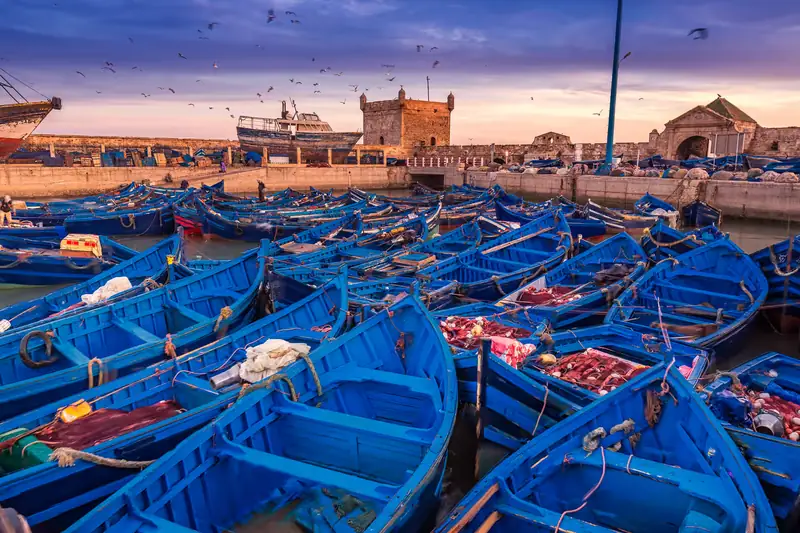
The port is the town’s working heart, all blue boats, drying nets and gulls. Come in the morning, when the catch is landed and auctioned. At the harbour entrance, the fortified Skala du Port charges a small fee and has the best view back over the walls. Boat trips circle Mogador island, a falcon reserve where landing is banned.
The medina, souks and Mellah
The main street runs from Bab Doukkala towards the port, past spice, jewellery and woodwork souks. In the quieter Mellah, the old Jewish quarter, Bayt Dakira is a free house of memory around a restored synagogue, inaugurated by King Mohammed VI in 2020. The Sidi Mohammed Ben Abdallah Museum is due to be rehabilitated under a 2026 agreement, so check whether it is open.
Gnawa music and the June festival
Gnawa is a spiritual music with sub-Saharan roots, played on the three-stringed guembri with iron castanets; UNESCO listed it as Intangible Cultural Heritage in 2019, and you can often hear it in cafés. The Gnaoua and World Music Festival fills the town every June with mostly free open-air concerts; the 2027 edition is set for 24–26 June, and rooms sell out months ahead. See our festival calendar.
The beach and water sports
South of the medina, a wide beach runs for several kilometres to Diabat. Afternoon wind and water of about 17–22 °C make it better for walks and horse or camel rides than for sunbathing. The same wind draws kitesurfers and windsurfers; beginners learn at Diabat, a few minutes south by car.
Agree the price first. With luggage porters, beach camel or horse rides and the fish grills, settle the price before anything starts.
Essaouira Prices: Sights, Food and Activities
Walking the medina, port and beach is free. These are typical 2026 prices for foreign visitors; bastion fees change and are not always posted, so carry small notes.
| Item | Cost | Tip |
|---|---|---|
| Skala du Port | 60–70 MAD (≈ €6 / $6–7) | Best view of the walls |
| Skala de la Ville | Usually free; check at the gate | Come an hour before sunset |
| Bayt Dakira | Free | Allow 20–30 minutes |
| Grilled fish at the port | 60–120 MAD (≈ €6–11 / $6–12) per person | Agree the price per kilo first |
| Kitesurf group lesson, 2 h | About €55–65 (≈ 600–710 MAD) | Book ahead in summer |
| Shared taxi to Sidi Kaouki | 10–15 MAD (≈ €1 / $1–2) per seat | From the main bus station |
Prices may vary; always check them on site.
A 2-Day Essaouira Itinerary
Keep the port for the morning, when it is busiest, and the ramparts for the late-afternoon light.
- Day 1 · MorningWatch the boats unload at the port, then climb the Skala du Port for the view over the walls.
- Day 1 · AfternoonEat grilled fish at the port stalls, then explore the souks, the Mellah and Bayt Dakira.
- Day 1 · EveningWatch the sunset from the Skala de la Ville, then find dinner and Gnawa music in the medina.
- Day 2 · MorningWalk the beach to Diabat and its half-buried fort, or take a kitesurf or surf lesson.
- Day 2 · AfternoonBrowse the thuya workshops and galleries, then take mint tea on Place Moulay Hassan.
- Day 2 · EveningDine on a roof terrace, or catch an evening coach back to Marrakech.
With a third day, add Sidi Kaouki or a boat trip around Mogador island.
Where to Stay in Essaouira
Choose the area first: the medina has the atmosphere, the seafront has the space.
| Area | Best for | Trade-off |
|---|---|---|
| Medina lanes | Riads, roof terraces, walking everywhere | No cars; damp and cold in winter |
| Near Bab Marrakech or Bab Doukkala | Easy arrival by coach or taxi | Busier, less charm |
| Seafront and new town | Parking, lifts, beach access | 10–20 minute walk to the medina |
| Diabat or Sidi Kaouki | Kitesurfing, surfing, quiet nights | You need a car or taxis |
Book early for the festival, Easter and summer, and in winter ask whether rooms are heated.
What to Eat in Essaouira
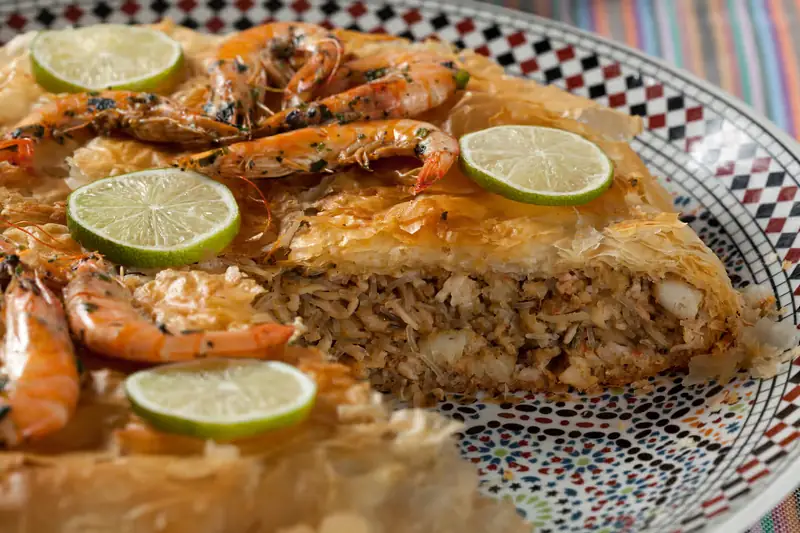
Fish is the reason to eat here. At the port grills you choose from the day’s catch, typically sardines, sea bream, squid or prawns, and it is grilled over charcoal and served with bread and salad. Ask the price per kilo, watch the weighing and agree the total before anything goes on the coals.
In the medina, look for fish tagine and seafood pastilla. Breakfast often includes amlou, a spread of argan oil, almonds and honey; buy argan products from cooperatives, as street-stall oil is sometimes diluted.
Getting to Essaouira and Getting Around
- By coach from Marrakech: Supratours, ONCF’s coach line, runs several daily departures from beside Marrakech station to a stop near Bab Marrakech, steps from the medina. CTM runs fewer buses, to its own station a short taxi ride away. Both take about three hours; see our bus times.
- From other cities: CTM takes about 3–3.5 hours from Agadir and about 6 hours from Casablanca; ONCF also sells combined train-and-coach tickets via Marrakech.
- By grand taxi or car: about 2.5–3 hours from Marrakech; use a guarded car park outside the walls.
- By air: Essaouira-Mogador Airport (ESU), about 15 km away, has a few direct flights from Europe, chiefly France, many of them seasonal; agree the grand taxi fare before you get in.
- Getting around: the car-free medina is easy on foot, and cheap blue petit taxis cover the new town and the bus stations; confirm the fare first.
There is no railway yet. A branch line from Chichaoua, declared a public-utility project in September 2026, should one day cut the trip from Marrakech to about an hour, but no opening date has been set.
Best Time to Visit Essaouira
| Season | Weather | Verdict |
|---|---|---|
| Apr–Jun | About 19–21 °C by day; the wind builds | Best all round |
| Jul–Aug | About 22 °C; strongest wind, busy | Kitesurfing; book ahead |
| Sep–Oct | About 22 °C; warmest sea, lighter wind | Excellent, fewer crowds |
| Nov–Mar | About 18–21 °C by day, 11–14 °C at night; most rain | Quiet; riads can be cold |
Essaouira stays mild all year, a welcome escape when Marrakech tops 35 °C. Ramadan is expected from about 8 February to 9 March 2027, when cafés open later and evenings come alive after sunset.
Beaches and Day Trips from Essaouira
The coast on either side of town is wilder and emptier.
- Diabat: a village about 4 km south, past a ruined fort half-buried in the sand; walk along the beach at low tide or take a taxi.
- Sidi Kaouki: a laid-back surf village about 25 km south with a long, wild beach; shared grand taxis leave from the main bus station.
- Moulay Bouzerktoun: a fishing village about 25 km north whose strong wind and waves suit experienced windsurfers and kitesurfers.
- Argan cooperatives: women’s cooperatives on the Marrakech road show how argan oil is made; the goats perched in roadside argan trees are often posed, and herders expect a tip.
| Destination | Distance | Best for |
|---|---|---|
| Diabat | About 4 km south | Ruined fort, kitesurf schools |
| Sidi Kaouki | About 25 km south | Surfing, long beach walks |
| Moulay Bouzerktoun | About 25 km north | Experienced wind riders |
| Agadir | About 180 km south | Next stop on the coast |
Diabat and Sidi Kaouki make easy half-day trips; Agadir, 3–3.5 hours away by bus, works better as your next stop.
Safety and Etiquette in Essaouira
- Swimming: swim only in calm conditions and where others swim; currents and shore break can be strong.
- Crowds: pickpocketing is the main risk in festival crowds and busy souks, so keep bags zipped.
- Beach at night: the long beach and dunes south of town are deserted after dark; avoid walking there alone.
- Photos: the port is a workplace, so ask before photographing fishermen and keep clear of boats and handcarts.
- Dress: swimwear belongs on the beach; in the medina, cover shoulders and knees.
Money, SIM Cards and Tipping
- Cash: port stalls, porters, taxis and small shops take cash only; ATMs cluster near the medina gates and in the new town.
- SIM cards: a Maroc Telecom or Orange SIM costs around 30 MAD with your passport at the operators’ shops.
- Tipping: 1–2 MAD in cafés, 5–10 MAD in casual restaurants and 50–100 MAD a day for a driver or guide.
- Phrases: “Salam alaikum” (hello), “shukran” (thank you) and “la, shukran” (no, thank you) handle most situations, persistent sellers included.
- Ramadan: out of respect, avoid eating, drinking or smoking in public during daylight hours.
Prices may vary. Euro and dollar figures use November 2026 rates (€1 ≈ 10.9 MAD, $1 ≈ 9.9 MAD). Fees, taxi fares and lesson prices change, so check them on site before you pay.
Frequently asked questions
How many days do you need in Essaouira?
Two nights are ideal: one day for the medina, port and ramparts, and one for the beach, a lesson or Sidi Kaouki. A day trip from Marrakech leaves only a few hours in town.
How do you get from Marrakech to Essaouira?
Supratours coaches leave several times a day from beside Marrakech station and take about three hours; CTM runs fewer buses. There is no train, and coaches often sell out, so book a day ahead.
When is the Gnaoua festival in Essaouira?
Every June, over three days; the 2027 edition is set for 24–26 June. Most concerts are free and open-air, but rooms sell out months ahead.
Can you swim in Essaouira?
Yes, but the Atlantic stays at about 17–22 °C, and afternoon wind and currents favour water sports over lazy swims. Swim in calm conditions, near other people.
Is Essaouira good for kitesurfing?
Yes. The trade wind blows on most days from April to October, strongest in June–August, and beginners usually learn at Diabat, where a two-hour group lesson costs about €55–65.