Chouara Tannery in Fes: Visiting a Working Craft Site

Chouara Tannery in Fes is a working leather-production site, usually seen from terraces reached through surrounding shops. It is not a museum with one public viewing entrance, a universal admission price or a guaranteed tour among the vats. Before accepting an invitation upstairs, ask about any viewing or explanation fee, shopping expectations, stairs and the way back out.
Allow roughly thirty to sixty minutes for a short viewpoint visit as a planning choice, plus the medina approach and any shopping you actually want. The smell can be strong, the work varies and the brightest colours are not guaranteed. This guide explains how to choose a terrace or guide, respect workers and keep the stop flexible rather than treating a photograph as an obligation.
Agree the arrangement before going upstairs. Ask what the visit includes and what you will pay, if anything. A terrace invitation does not grant access to production areas, and a guide’s fee does not automatically include other services.
At a glance
- Location
- Fes el-Bali medina
- Visit style
- Usually a surrounding shop terrace
- Time
- About 30 to 60 minutes, plus walking
- Costs
- Confirm each viewing or guide arrangement
- Access
- Lanes, stairs and variable terrace layouts
- Workplace
- Do not enter production areas without permission
In this guide
- Is Chouara Worth Including in Your Fes Walk?
- What the Vats Show, and What They Cannot Prove
- Terrace Access Is an Agreement with a Host
- When to Go and What to Confirm First
- Strong Smells and the Limits of a Mint Sprig
- Finding Chouara Without Treating Every Alley as a Shortcut
- Independent Visit or Licensed Local Guide?
- Photography: Workers Are Not a Performance
- Stairs, Children and Mobility Planning
- Buying Leather Is a Separate Decision
- Combine the Tannery with a Flexible Medina Day
- Budget, Weather and a Comfortable Exit Plan
Is Chouara Worth Including in Your Fes Walk?
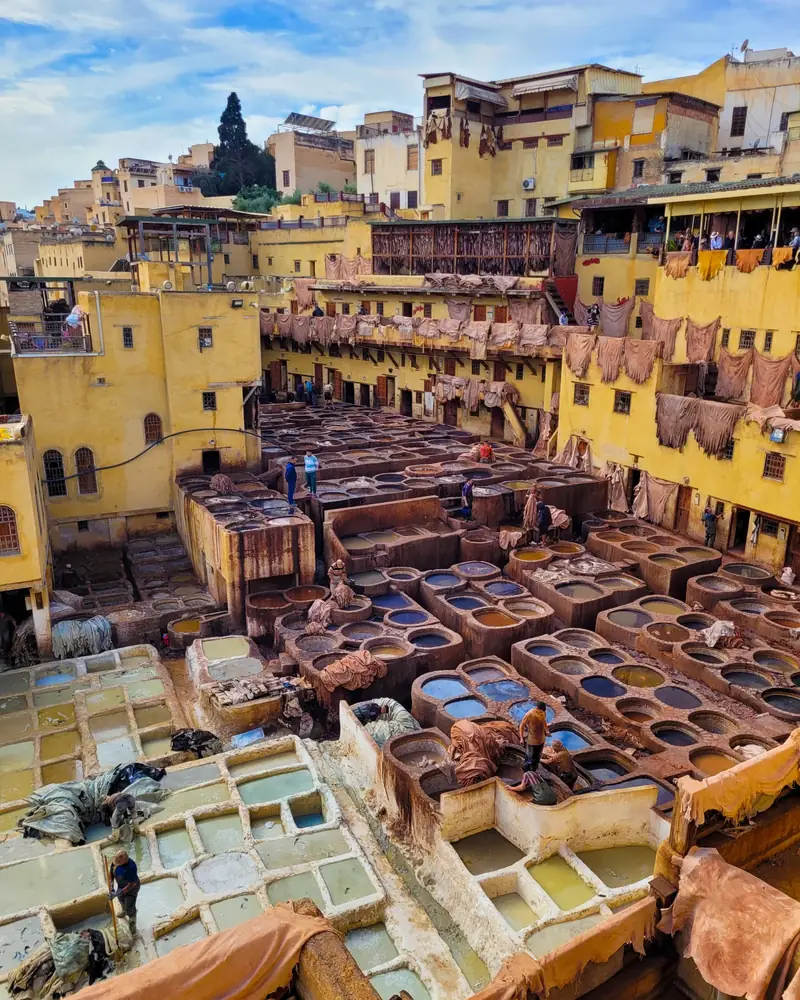
It can be, if you want to understand one part of Fes’s living craft economy and are comfortable with a commercial setting. The open vats and surrounding buildings are striking, but the visit is not only a photograph: workers are handling hides while shops sell finished goods.
A strong smell, unsuitable stairs, lack of clear terms or simple lack of interest are valid reasons to choose another stop. Allow about 30 to 60 minutes for an initial visit.
| Choice | Useful for | Clarify |
|---|---|---|
| Independent | A short terrace stop | Host’s terms and route |
| With guide | Context and navigation | Total fee and shopping |
| Skip or shorten | Comfort and access needs | Alternative meeting point |
What the Vats Show, and What They Cannot Prove
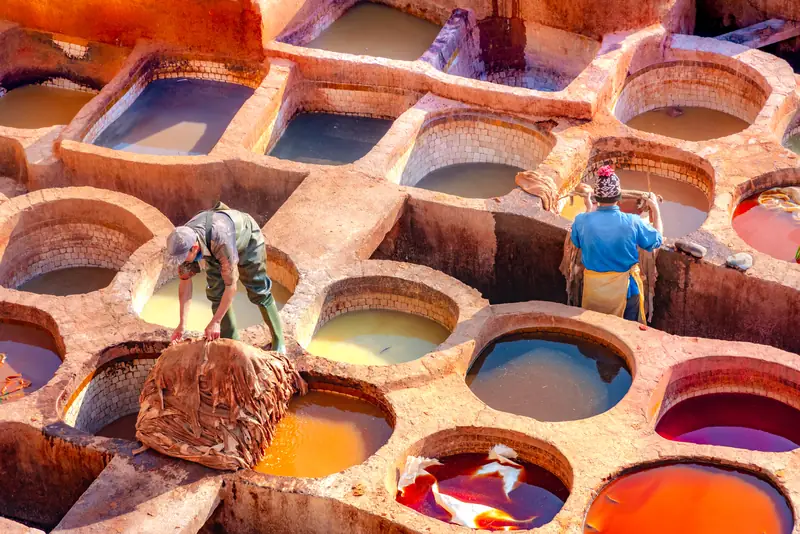
From an elevated terrace you can usually distinguish groups of vats, hides and people moving between work areas. Preparing hides, tanning and colouring are related but different stages; not every pale or coloured pool has the same function. Ask for an explanation instead of assigning an exact ingredient to a liquid by its colour, and expect some vats to look different from photographs.
Fes has a long leatherworking history, but avoid the claim that every tool, ingredient and work arrangement has remained unchanged for a thousand years. The site has also undergone renovation. The wider medina is the UNESCO World Heritage property; that status is not a separate endorsement of a terrace business, a guarantee of working conditions or a visitor-access permit.
Terrace Access Is an Agreement with a Host
Visitors commonly reach viewpoints through leather shops around the tannery. Different entrances can involve different stairs, railings, views and sales expectations. Choose clarity over a claim to the only good view.
Before entering, ask whether viewing, an explanation, a tip or browsing is expected, and whether any stated price is per person or per group. A purchase should not be silently substituted for an agreed service fee. If the arrangement is unclear, decline before starting. An offer described as free should still be clarified; the word alone does not explain how a host intends to be paid.
When to Go and What to Confirm First
There is no single terrace timetable that can safely be applied to every surrounding business. Confirm access for the place you intend to use, especially if this is the main reason for your medina walk. Work, weather, holidays, maintenance and shop arrangements can affect what you see.
Morning can be a practical choice for a longer walking day, but it is not an appointment with a staged production cycle or an odour-free period. Allow enough daylight for the approach and return, and ask which viewpoint is actually available before paying a guide or accepting a detour.
| Ask about | Before you accept | Do not assume |
|---|---|---|
| Cost | Viewing, explanation or tip | A universal free visit |
| Shopping | Whether browsing is expected | A purchase is required |
| Access | Stairs, railings and exit | A step-free terrace |
| Workplace | Which area is permitted | A tour among the vats |
Strong Smells and the Limits of a Mint Sprig
The odour can be noticeable and people experience it differently. A mint sprig may be offered to smell, but accepting it is optional. It is not protective equipment, evidence that exposure is harmless or a reason to stay when you feel unwell. If you are sensitive to odours or have a relevant health concern, consider a shorter stop or skipping the visit rather than relying on a leaf.
Stay in the agreed visitor area and keep away from vats, liquids, tools and working routes. Do not enter the production floor because someone casually waves you down, and do not treat closed shoes as sufficient permission or protection. If an authorised workplace visit is specifically offered, its safety and access arrangements need separate clarification.
Finding Chouara Without Treating Every Alley as a Shortcut
Chouara is within the Fes el-Bali medina, where narrow lanes and changing sightlines can make a map pin less useful than it appears. Save an offline map, the intended host’s details and a reachable return meeting point. Ask your accommodation which approach suits your starting location rather than following a photograph or an unexplained shortcut through a doorway.
Cars cannot take you along every lane to the terrace stairs. Our Fes city guide helps with wider arrival planning; agree a realistic vehicle drop-off and allow walking time. Deliveries, carts, residents and other users still need space, so a route with restricted car access is not a traffic-free corridor. If uncertain, stop out of the flow and return to a known landmark.
Independent Visit or Licensed Local Guide?
Independent visitors can make their own arrangements with a willing shop host; a guide is not automatically required to look from a terrace. A licensed guide can add context and help navigate. Agree language, duration, meeting point, total price and any separate charges before starting, rather than resolving these after reaching the balcony.
Ask whether shopping stops are optional and whether the guide has a commercial relationship with a proposed shop. An explanation delivered by a seller can be informative, but it is not an independent assessment of the merchandise. Verify urgent claims that the tannery is closed, moved or accessible only through one person before changing your plan. Decline unsolicited help clearly and politely instead of allowing an ambiguous paid service to begin.
Photography: Workers Are Not a Performance
Ask the host about photography rules and seek permission before identifiable close-ups of workers or other people. A panoramic view does not imply consent to every portrait. Do not demand that someone move, repeat an action or pose, and never enter working space to get closer. Keep the camera inside safe boundaries, do not lean over railings and avoid blocking stairs while changing lenses or reviewing pictures.
Let others pass and do not judge the stop a failure because a group shares the terrace. A longer lens does not remove privacy obligations, and paying for access does not buy control over the people below. Respect a refusal without bargaining, and do not make an additional payment offer to pressure someone into agreement.
- Before a portrait: ask rather than treating terrace entry as consent.
- At railings: keep your body and equipment inside the safe area.
- On stairs: move aside only where there is room, not at an exposed edge.
- After a refusal: put the camera down; payment is not a way around a no.
Stairs, Children and Mobility Planning
Check the actual route from shop entrance to viewing area: number and shape of stairs, handrails, rest space and the route back. Do not generalise from one accessible entrance or one difficult staircase to every terrace. For limited mobility or a stroller, seek specific confirmation before making the tannery the centre of the day.
With children, explain that the vats are not a place to explore and keep them away from edges and equipment. Carrying a child is not a universal solution to steep or narrow stairs. Arrange assistance deliberately if needed and clarify its price; never assume that help creates a safe or step-free route. Anyone who prefers to wait should have an agreed meeting place rather than being left in an unfamiliar shop.
Buying Leather Is a Separate Decision
You do not need to decide on a bag, jacket or slippers simply because you have seen the vats. If you want to shop, separate the viewing arrangement from the purchase discussion and take time to compare. Ask about material, lining, stitching, fastenings, sizing and care. Seeing work nearby does not prove that every item on the premises was produced there, made only with natural dyes or independently certified.
Agree the final price, currency and exactly what is included before paying. Inspect the item you will actually receive, ask for a receipt and clarify alteration, delivery or shipping arrangements in writing if relevant. Do not rely on an informal promise of a refund after you leave the country.
Combine the Tannery with a Flexible Medina Day
Al Attarine Madrasa offers a distinct architectural visit nearby, with its own ticket and current access conditions. Bou Inania Madrasa can fit into a wider medina day, but it is not the next doorway or part of a combined tannery admission. Leave time for orientation, meals and the walking between places rather than counting each map marker as a brief stop.
For context on the religious and scholarly quarter, see Al Quaraouiyine. Non-Muslims cannot enter that mosque; do not let a tannery host or guide imply that a purchase creates an exception. Choose a manageable number of visits and preserve time to walk out. A mosque exterior, an open madrasa and a rest can make a complete day without entering a workplace.
Budget, Weather and a Comfortable Exit Plan
Keep transport, guide fees, any agreed viewing service, food and shopping separate in your budget. Our money guide covers payment preparation. Carry suitable cash for small agreed expenses, but do not infer a compulsory fee from someone else’s tip or a years-old online review. Recheck the agreed terms if a new charge appears, and avoid turning an unclear request into a rushed purchase.
Heat, wet paving, fatigue or strong smells can change the plan. Bring water and shoes with grip, take breaks away from narrow routes and leave enough time for your onward transport. If the visit is unavailable or uncomfortable, choose another part of the medina rather than paying for a supposed secret entrance. There is no need to force an interior visit or perfect colour-filled photograph to understand why leatherworking matters to Fes.
Frequently asked questions
Can visitors enter the tannery floor?
It is not a standard public walking circuit. Plan a permitted terrace view; any authorised workplace access requires separate permission and safety clarification. Do not follow informal invitations between the vats.
Is Chouara Tannery free to visit?
There is no universal arrangement for every surrounding shop terrace. Ask before entering about viewing, explanation, tips and browsing, and agree any charge before accepting the service.
Do I have to buy leather?
A purchase should not be assumed. Clarify the viewing terms beforehand, separate shopping from access and decline an arrangement you do not want.
Does mint protect you from the smell?
It may be offered to smell, but it is optional and not protective equipment. Leave or skip the stop if uncomfortable; do not treat mint as proof that the environment suits your health needs.
How much time should I allow?
Roughly thirty to sixty minutes can suit a short viewpoint visit, plus the approach, return and any shopping you choose. It is a planning suggestion, not an official tour duration.