Money in Morocco: Dirhams, Payments and a Backup Plan
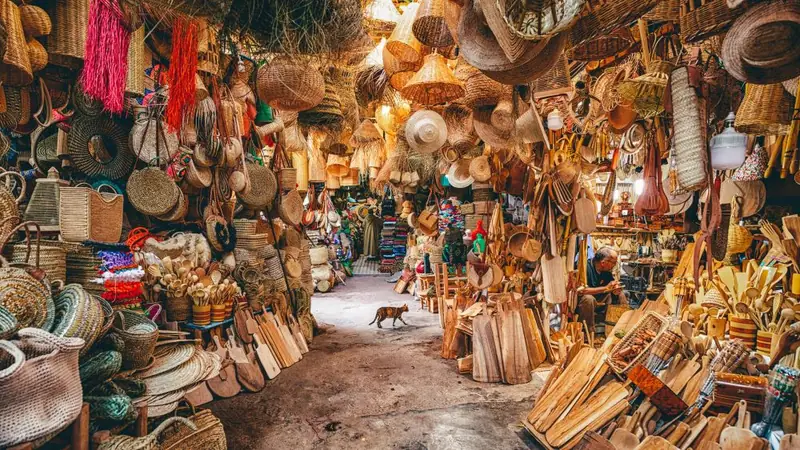
For money in Morocco, plan to use Moroccan dirhams in cash for everyday purchases and a card where acceptance is confirmed. Keep a second payment method separate. Hotels and larger businesses may take cards, but a working terminal at one address does not tell you what will work at the next riad, taxi or rural stop.
A 200-dirham note can be awkward for a small café bill even when you have enough money. Prepare smaller notes, check charges before withdrawing, and confirm the currency and total before paying. This guide explains the practical choices for a short city break or a longer route, including what to do before leaving a town and how to handle leftover cash before departure.
Plan for the next cash point. Ask your accommodation how the balance must be paid, then calculate cash needs until the next reliable opportunity to withdraw or exchange. Do not assume an ATM, mobile wallet or foreign transfer will work at the moment you need it.
At a glance
- Currency
- Moroccan dirham, MAD or DH
- Banknotes
- 20, 50, 100 and 200 MAD
- Everyday cash
- Keep small notes and coins
- Card screen
- Check MAD and the total
- ATM fees
- Machine and issuer may charge
- Border rules
- Check Office des Changes
In this guide
- Start with dirhams, not a fixed exchange rate
- Cash or card? Confirm at the actual business
- ATM withdrawals: understand each layer of cost
- Choose MAD deliberately, not by button colour
- Exchanging cash: compare the final payout
- Small notes, clear prices and polite bargaining
- Tipping: a voluntary thank-you, not a surprise tariff
- Build a budget from bookings, not one daily slogan
- Before remote travel, card trouble or a disputed charge
- Border rules and leftover money before departure
Start with dirhams, not a fixed exchange rate
One Moroccan dirham is 100 centimes. MAD, DH and Dhs usually mean the same currency; the UAE dirham is different. Ask for Moroccan dirhams when quoted euros, dollars, rials or informal units.
Plan to obtain dirhams on arrival rather than assume your home bank stocks them. That does not mean none can be obtained abroad or carrying a single note is illegal. Check the banknote exception below before travel.
Use an exchange-rate app as a rough comparison, not a promise of the amount a bureau or card issuer will give. The final cost can include a spread, a fixed charge and your bank’s fees. Compare how many MAD you receive for the same foreign-currency amount after every charge, not just a large “no commission” sign.
Cash or card? Confirm at the actual business
| Payment | Plan for | Check first |
|---|---|---|
| Cash | Taxis / small cafés | Small change |
| Card | Larger businesses | Network / fees |
| Phone wallet | Selected terminals | Physical backup |
| Online | Bookings | Currency / refund |
Visa and Mastercard are common at larger hotels, supermarkets and some restaurants, but acceptance varies by business, card and connection. Confirm a small riad’s balance and terms: an online deposit does not establish that the same card works in person.
Carry cash for souks, small cafés, tips and rural stops unless otherwise confirmed. Do not rely on an instant foreign transfer. The Morocco travel tips cover wider arrival preparation.
ATM withdrawals: understand each layer of cost
Check that the ATM supports your card’s network. A bank-attached machine used during opening hours may make a retained-card problem easier to report, but does not guarantee lower charges or success. Inspect the reader, cover your PIN and decline unsolicited help. Leave a suspicious machine instead of testing it.
There are separate limits: the machine’s per-transaction cap, your issuer’s daily allowance and your available balance. A rejected withdrawal does not prove your card is unusable everywhere. Read the message, check your issuer and avoid repeated blind retries that may trigger security controls. Never divide withdrawals to evade a legal reporting obligation.
The local operator may charge a withdrawal fee, and your issuer may add its own fee and exchange margin. A credit-card withdrawal may also be treated as a cash advance with interest and separate charges. Check your agreement beforehand. There is no reliable universal fee-free Moroccan bank or nationwide withdrawal limit to print as a permanent rule.
Balance fewer withdrawals against carrying too much cash; do not empty the account to spread a fee. Save the receipt or reference, machine location, date and amount until reconciled.
Choose MAD deliberately, not by button colour
Dynamic currency conversion, or DCC, is an offer by the merchant or ATM side to convert the transaction into your card’s currency. It is not the same thing as your own bank’s foreign-use fee. Choosing MAD normally declines that offered conversion and lets the network and issuer handle any conversion under your card terms.
Read the local amount, conversion rate, markup and final currency. Choosing MAD is generally the useful default for avoiding the merchant’s conversion markup, not a guarantee of zero fees or the cheapest result for every card. “Decline conversion” normally refers to DCC, not necessarily canceling the cash withdrawal; interfaces differ, so read before confirming.
If staff select a home-currency amount without asking, request correction before authorising. Keep the receipt if the charged currency differs from your choice and contact the issuer using its genuine app or published number. Never approve a second transaction merely because someone says the first failed; check its status first.
Exchanging cash: compare the final payout
Use a bank or authorised exchange operator, not street offers or unverified online contacts. Check identification, accepted currencies, note condition and opening hours. Not every desk can handle every currency.
Airport cash for the first journey can be worthwhile. Its exchange is not necessarily worse or identical to town: compare net payout, timing and transport costs rather than crossing the city for a tiny saving.
Count the cash before leaving, without displaying your full travel fund. Keep named exchange receipts and withdrawal records. If reconversion matters, ask in advance which documents the operator will accept; an ATM slip is not automatically interchangeable with an exchange receipt or customs declaration.
Small notes, clear prices and polite bargaining
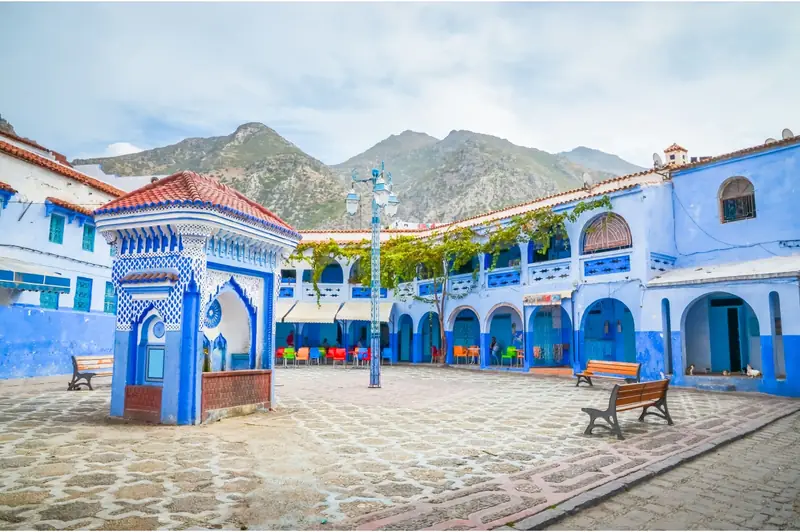
Common notes are 20, 50, 100 and 200 MAD. Keep a mix of smaller notes and coins for short rides, cafés and discretionary tips. There is no standard 10-MAD banknote in the usual current set: use a 10-dirham coin. Break a large note during a purchase where change is available, not by demanding change from every tiny stall.
Greet with Salam alaikum, thank with Shukran and decline with La, shukran. Ask the total before accepting a service, photograph or luggage carry. A tip is different from the agreed service price. Do not assume someone’s time is free because the fee was not discussed.
Bargain where prices are negotiable, not automatically at a pharmacy, fixed-price menu, ticket counter or metered fare. For goods, agree materials, quantity, final price and delivery terms. There is no universal rule to offer half. The souk shopping guide explains how to compare before committing.
Tipping: a voluntary thank-you, not a surprise tariff
For good service in a sit-down restaurant, around 10% is a useful starting point if a service charge is not already included. Check the bill rather than adding another percentage automatically. In a café, rounding up or leaving a few dirhams can be appropriate. These are flexible practices, not a legal charge owed for every interaction.
| Situation | Practical approach |
|---|---|
| Restaurant | About 10% if appropriate |
| Café / taxi | Optional rounding |
| Porter | Agree carrying fee first |
| Riad staff | Ask about shared tips |
| Guide / driver | Agree fee; tip separately |
For porters, guides, drivers and hammam staff, separate the paid service from a discretionary extra. A private day and a brief bag carry differ. Ask how pooled tips are distributed and whether amounts are per person or group. Tip discreetly in MAD; pressure is not an official tariff.
Build a budget from bookings, not one daily slogan
Separate accommodation per room or per person, meals, transport, admissions, activities and shopping. Then add contingency and the cost of your payment method. Two travellers sharing a room cannot compare their per-person spend directly with a solo traveller paying the full room price. Deposits and prepaid meals change how much cash you need, not necessarily the trip’s total cost.
For arithmetic only, imagine a 600-MAD room shared by two, 150 MAD of meals each, 100 MAD of transport each and 100 MAD of admissions each. That is 650 MAD per person for that example day before shopping and contingency. It is not a current hotel quote or a guaranteed national daily budget. Replace every line with your actual dates and route.
Using illustrative rates of 10 MAD per euro and 9.5 MAD per US dollar, that 650 MAD is roughly €65 or US$68. These rounded examples are not live exchange rates. A useful reference is Lonely Planet’s November 2025 budget guide, which listed a hostel bed at 100 to 250 MAD; treat that as a dated benchmark, not bookable 2026 availability.
Private desert transfers, premium camps and guided mountain activities can dominate a budget. Confirm whether quotes cover meals, permits, equipment, waiting and return travel. Use the getting-around guide to compare realistic transport choices instead of assuming every cheap headline fare covers the whole journey.
Before remote travel, card trouble or a disputed charge
Before leaving a larger town, ask about payment at the next accommodation, fuel stop and activity. Have cash for the planned stretch plus a sensible delay, while keeping day money apart from reserves. This matters around Ouarzazate, Merzouga and Zagora, but a town name does not prove every nearby ATM works or fails.
Enable your bank’s alerts, know the PIN and check how to access the genuine banking app abroad. Some issuers no longer require travel notifications; follow yours rather than a universal instruction. Keep emergency contact details and a separately stored physical backup. A phone wallet alone may leave you stranded if the phone is lost, flat or unable to authenticate.
For a retained card or debit without cash, record the machine and time, contact the operator through a verified channel and notify your issuer promptly. Recovery, reversal and replacement are not guaranteed or immediate. If a card is stolen, freeze it when appropriate and follow the issuer’s reporting process. For immediate danger seek local help first; the safety guide covers wider preparation.
Border rules and leftover money before departure
At this update, Office des Changes states that travellers may import and export up to 2,000 MAD in Moroccan banknotes as an exception to the general restriction. It is not an invitation to carry unlimited dirhams, nor the same rule as declaring foreign currency. Recheck oc.gov.ma and Moroccan customs for your status and route before crossing a border.
The 2026 exchange instruction sets mandatory declaration for covered cash/payment instruments at a value of 100,000 MAD or more, including relevant foreign banknotes and bearer instruments. Foreign-currency re-export and supporting import declarations have additional conditions. Ask customs before travelling with substantial sums; a bank balance or card spending limit is not automatically treated as physical cash at the border.
Keep original exchange and customs documents, reduce excess withdrawals near the end and ask an authorised operator about reconversion requirements before your final morning. Do not assume every airport counter will be open, accept coins or take any ATM receipt as sufficient proof. Allow for the final taxi and meal, and check how shops after security accept payment instead of depending on spending every remaining dirham there.
Frequently asked questions
What currency should I use in Morocco?
Use Moroccan dirhams, abbreviated MAD or DH. Confirm quotes in MAD and do not assume euros or dollars will be accepted or converted at a favourable rate.
Can I rely on cards and a phone wallet?
No. Acceptance depends on the business, card and connection; carry local cash and a separately stored backup. Confirm a riad balance and any deposit conditions before arrival.
Which ATM is free and what is the withdrawal limit?
There is no permanent nationwide answer. Check the machine’s offer, your issuer’s fees and limits, and any cash-advance terms; declining conversion does not remove every charge.
How much should I tip?
Around 10% for good restaurant service is a useful starting point when no service charge is included. Other tips depend on the service and are discretionary; agree any actual service fee first.
Can I take leftover dirhams home?
The current official exception allows up to 2,000 MAD in Moroccan banknotes for travellers. Check the latest rules and reconversion documents; this is separate from foreign-currency declaration and re-export conditions.