Chefchaouen Blue Medina: A Respectful Walking Guide
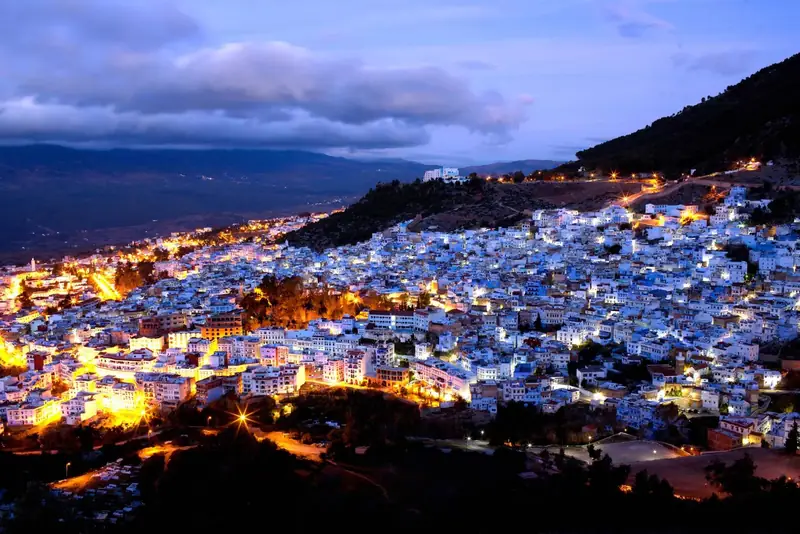
Chefchaouen’s blue medina is a lived-in hillside neighbourhood in Morocco’s Rif Mountains, not a single ticketed attraction or a collection of public photo sets. Allow a full unhurried day if you can, with time for the central squares, blue lanes and a proper break. An overnight stay makes it easier to walk without fitting everything between two road transfers, but it does not guarantee empty streets.
The main decisions are practical: how much climbing you want, whether to visit the kasbah separately, and whether conditions suit the uphill viewpoint near the Spanish Mosque. This guide explains the uncertain blue-paint story, proposes a flexible route and separates public lanes from private thresholds, paid photo arrangements and religious spaces.
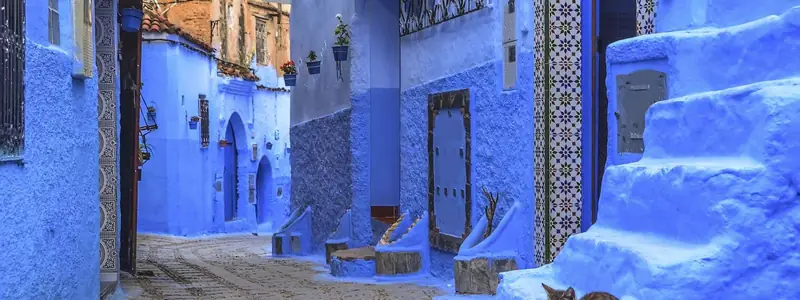
A blue doorway can still be someone’s front door. Ask before photographing people or entering private spaces, keep steps clear and accept a refusal. A social-media location pin is not permission to cross a threshold.
At a glance
- Setting
- Rif Mountains, northern Morocco
- Allow
- A relaxed day; overnight for flexibility
- Terrain
- Slopes, stairs and uneven paving
- Medina access
- Public lanes; separate paid services
- Rail
- No direct train to Chefchaouen
- Extra hike
- Akchour requires a separate plan
In this guide
- How Long Do You Need in the Blue Medina?
- Why Is Chefchaouen Blue?
- Start with a Square, Not a Photo Checklist
- A Flexible Route Through Lanes and Squares
- Kasbah and Grand Mosque: Different Access Rules
- Ras el Ma Is a Water Source, Not Akchour
- The Spanish Mosque Viewpoint: Plan the Return
- Photography Without Taking Over the Street
- Steps, Luggage, Children and Mobility
- Getting There and Protecting an Onward Connection
- Food, Craft Shopping and a Sensible Budget
- Weather, Akchour and a Backup Plan
How Long Do You Need in the Blue Medina?
A few hours cover a central circuit, not the whole town. Consider the usable time on foot, not simply the time between hotel departure and return.
One night gives an arrival walk and another chance the next morning. Two nights can leave a full day without packing or an onward transfer, rather than obliging you to add a mountain excursion. The medina is a neighbourhood, so no single gate ticket covers every museum, terrace, courtyard or guide service.
| Stay | What it allows | Tradeoff |
|---|---|---|
| Day trip | A central walking loop | More road time |
| One night | Evening and morning walks | Arrival still shapes the day |
| Two nights | A full day without moving | No need to fill every hour |
Why Is Chefchaouen Blue?
There is no single securely established explanation for every blue wall. Accounts connect the colour with Jewish spiritual symbolism, later repainting traditions and tourism; other stories claim cooling or mosquito-repelling effects. Treat these as differing explanations, not a proven scientific benefit or a reason to skip insect protection. Nor is the whole town uniformly blue: white surfaces, plain masonry and changing shades are part of the streetscape.
Chefchaouen’s history is older than its photographic reputation. Its late-fifteenth-century foundation as a fortified settlement and later Andalusian influences help explain the kasbah, roofs and urban layout. Avoid turning one colourful origin story into certainty about when every lane was first painted or which household introduced the practice.
Start with a Square, Not a Photo Checklist
Place Outa el Hammam, also written Uta el Hammam, is a useful orientation point beside the kasbah and Grand Mosque. Save its position, your accommodation and a reachable meeting place on an offline map. The square helps you reset your bearings without repeatedly asking residents for directions to a doorway.
Our Chefchaouen city guide covers the wider stay. For this walk, choose a short loop and an optional extension rather than linking every saved picture location. Map distance does not describe gradients, steps or a lane temporarily obstructed by deliveries. If you lose your route, return to a known square instead of continuing through what might be a private entrance.
A Flexible Route Through Lanes and Squares
Begin around Outa el Hammam, then explore nearby lanes and the smaller El Haouta square at your own pace. Notice door surrounds, paving, shops and transitions between blue and white rather than treating each as a backdrop to occupy. Step aside for residents and deliveries.
If energy and conditions allow, extend towards Ras el Ma on the eastern edge, then decide separately whether to climb farther. Reverse or shorten it when your accommodation, mobility or weather makes that more sensible. Keep enough energy for the return rather than measuring success by the furthest point reached.
| Stage | Focus | Keep flexible |
|---|---|---|
| Start | Outa el Hammam | Orientation and rest |
| Loop | Lanes and El Haouta | Steps and daily traffic |
| Extend | Ras el Ma | Wet paving and energy |
| Optional | Hillside viewpoint | Weather, light and return |
Kasbah and Grand Mosque: Different Access Rules
The kasbah is a distinct heritage visit near the main square, with gardens and museum collections described by Morocco’s tourism office. Check current opening, price and which rooms or towers are available before paying. Published third-party fees and schedules are dated or inconsistent, so no fixed figure or currency conversion is presented here. You do not need to buy a museum ticket simply to walk the surrounding public lanes.
The Grand Mosque is a working religious site, not another stop included in a kasbah ticket. Non-Muslims cannot enter. Admire the exterior without blocking doorways or expecting staff to provide an interior view. Muslim visitors should follow local guidance on entrances, dress, prayer and restricted areas. A guide, purchase or head covering does not override access rules, and photographs online do not establish current permission.
Ras el Ma Is a Water Source, Not Akchour
Ras el Ma, also written Ras el Maa, lies just beyond the medina’s eastern side. It is a traditional water source and a place used by residents, not merely a scenic prop. Keep circulation clear, ask before photographing people and avoid interfering with washing or other work. Wet surfaces can be slippery; shoes with grip are more useful than a plan based on how effortless the walk looks in pictures.
Do not confuse this stop with the Akchour waterfalls outside Chefchaouen. Reaching Ras el Ma on foot from the medina does not complete an Akchour excursion. If you are tired or the weather deteriorates, it is a sensible turnaround point. You need not continue uphill, enter the water or shop to make the walk worthwhile.
The Spanish Mosque Viewpoint: Plan the Return
The hillside near the Spanish Mosque, also called Jemaa Bouzafar, offers a wider view back towards the town. Think of it as an optional uphill walk beyond the medina, not a flat final lane. Check the route and conditions locally, carry drinking water and choose footwear for uneven ground. Do not promise yourself a particular walking time based on someone else’s fitness or starting point.
Sunset is popular, not a guarantee of solitude or good visibility. Check when darkness falls and how you will descend, carry a light if needed and turn back when rain, heat or fatigue makes that wiser. Do not assume the mosque interior is open to visitors or that a photograph identifies a permitted rooftop. A daylight walk can be better than waiting for sunset with an unsuitable return plan.
Photography Without Taking Over the Street
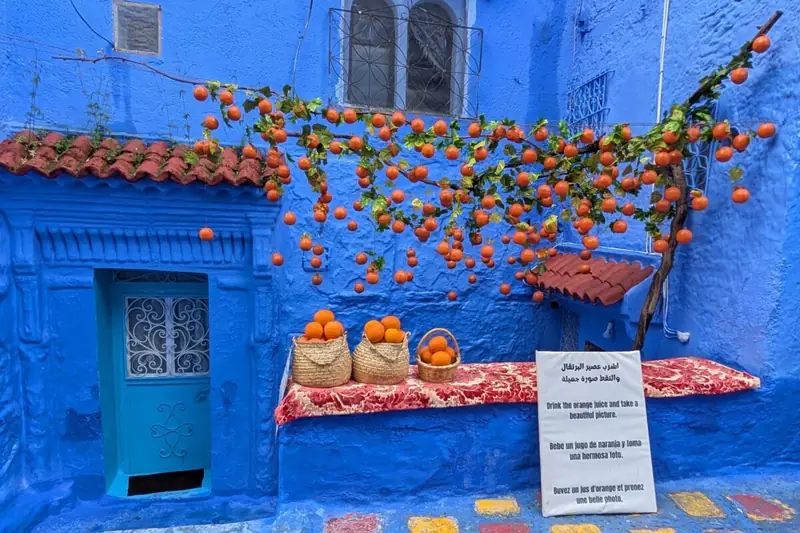
Public lanes are shared space; private houses, decorated stairs and courtyards are not automatically public attractions. Ask before entering or photographing identifiable people, and avoid aiming into homes. If a resident or business offers a paid photo setting, agree the price and what it includes before stepping in. The arrangement applies to that service, not to ownership of the whole street or a right to move other people aside.
Leave room for people who are not there to take pictures. A queue for a doorway does not justify blocking stairs, putting props on someone’s belongings or asking children to pose. Light changes with shade and weather, so early or late walking is an option rather than a guaranteed empty-street appointment.
- At a doorway: wait to one side and ask; never assume an open door is public.
- With people: ask permission and accept no without a second attempt.
- At a paid setting: agree terms first; paying does not remove privacy rules.
- On the move: pack equipment away when it obstructs a narrow passage.
Steps, Luggage, Children and Mobility
Compact does not mean flat. The medina has slopes, steps and uneven surfaces, and a route manageable without bags can be difficult with a wheeled suitcase. Ask your accommodation for a specific arrival route, nearest practical vehicle stop and actual stair count where possible. Clarify whether assistance is available and its cost before accepting it; an address inside the medina does not mean a taxi can stop at the door.
For a stroller or limited mobility, plan a shorter route around an agreed accessible starting point and verify surfaces and facilities rather than relying on a general accessible label. Schedule toilets, drinks and rest, and allow one person to return earlier if necessary. No promise of a continuous step-free route is made here.
Getting There and Protecting an Onward Connection
There is no direct train station in Chefchaouen. Arrival involves a bus or road transfer, possibly after rail travel elsewhere. Tangier, Tetouan and Fes are common cities to combine with it, but departure points, routes and journey times must be checked for your date. Confirm where you arrive, luggage arrangements and how to reach your accommodation rather than assuming every coach stops at a convenient medina gate.
Use the Blue North itinerary for the regional sequence and our bus planning guide to check transport options. Leave a buffer for collecting bags, walking down and reaching the correct terminal. Do not tie a viewpoint walk or a remote hike to the last possible departure, and verify the return journey before committing to a day trip.
Food, Craft Shopping and a Sensible Budget
Budget for food, drinks, transport and any chosen kasbah entry, guide or private photo service separately. Carry suitable cash for small payments and ask the price before ordering or accepting help. A café terrace is a business: check what a seat, order or view involves rather than treating it as public seating. Our money guide explains payment preparation without inventing a universal local tariff.
The tourism office highlights weaving, wool and woodworking among local crafts. Ask about materials and origin instead of assuming every item on display was made in that street. Agree purchases without pressure and decline unwanted assistance politely; a simple greeting and “La, shukran” can be enough. Do not buy or carry drugs because someone claims they are tolerated locally. A relaxed atmosphere does not make an offer lawful or risk-free.
Weather, Akchour and a Backup Plan
Spring and autumn often suit walking, but the actual forecast matters more than a seasonal slogan. Summer can be hot, winter can be wet and chilly, and shaded paving can stay slippery after rain. Bring layers, grip and water appropriate to the day. Our best-time guide gives wider context; it cannot replace local weather or trail advice.
Akchour and longer Rif hikes need separate transport, daylight, route and return arrangements. Check conditions and whether a suitably qualified local guide is appropriate; do not add a long hike casually between checkout and an onward bus. In poor weather, shorten the lanes, choose an open indoor visit or take a longer break. Chefchaouen does not need a sunset summit or a waterfall excursion to justify a slow day in the medina.
Frequently asked questions
Is there an entrance ticket for the blue medina?
There is no single attraction ticket covering the public lanes. The kasbah, private photo settings, guides and other services have separate arrangements; check before paying.
Why is Chefchaouen painted blue?
Several explanations link it with Jewish symbolism, repainting traditions and later tourism. There is no single established origin for all the blue walls, and claims about mosquito protection are not a substitute for precautions.
How long should I stay?
A relaxed day is useful for the medina. One night gives more flexibility around road transfers; two nights can leave a full day without moving. These are suggestions, not access requirements.
Is the medina suitable for a stroller or wheelchair?
Steps, slopes and uneven paving limit some routes. Confirm your specific path and accommodation access, arrange assistance if needed and do not assume a continuous step-free circuit.
Can I combine the medina and Akchour easily?
They are separate visits. Akchour requires transport, trail-condition checks, daylight and a return plan; do not add a long hike to a tight onward connection.