Dades Gorge: Plan the Valley, Not Just the Hairpin Photo
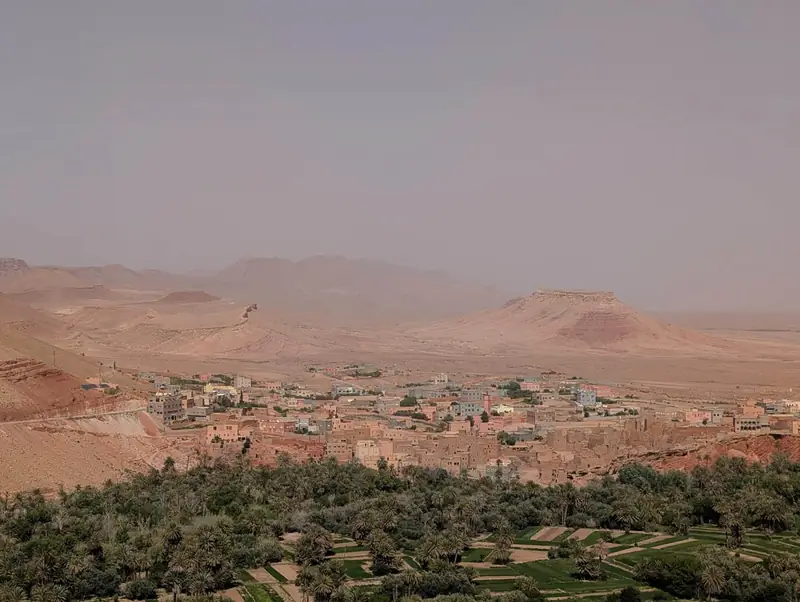
Dades Gorge is part of a spread-out valley landscape on the southern side of Morocco’s High Atlas, not a single roadside attraction. Plan around the section you want to explore, your overnight base and the daylight available. The famous road bends are only one feature among river-fed fields, earthen settlements and sculpted rock. A quick photo stop does not give you a full valley visit.
An overnight stay usually makes a relaxed drive and a short, locally checked walk easier to combine. It is a planning choice, not an entry requirement. This guide separates the lower valley, gorge road and longer mountain routes, explains what to ask a host or driver, and keeps Dades distinct from Todra and the Sahara dunes.
Check conditions before committing to a gorge or mountain route. Rain, flooding, debris, road works and limited daylight can change a plan. Follow local authority instructions and do not drive or walk through floodwater to keep a booking or obtain a photograph.
At a glance
- Setting
- Dades Valley, south of the High Atlas
- Orientation
- Boumalne Dades for the valley approach
- Time
- Overnight for an unhurried visit
- Travel
- Self-drive or arranged road transport
- Walking
- Specific route and local conditions matter
- Priority
- Weather, road access and a daylight return
In this guide
- How Much Time Should You Allow?
- Understand the Valley Before Choosing Stops
- Self-Drive, Private Driver or a Tour Stop?
- Driving the Bends Without Turning the Road into a Viewpoint
- Walking: Agree a Specific Route, Not Just “a Hike”
- Rain, Riverbeds and Seasonal Conditions
- Choose a Base by Location and Practical Access
- Village Paths, Fields and Respectful Photography
- Children, Mobility and a Realistic Turnaround
- Longer Routes Are Not Automatic Shortcuts
- Dades, Todra and Erg Chebbi Are Separate Visits
- Budget and a Flexible Day Plan
How Much Time Should You Allow?
A transfer-day stop can show a viewpoint, but it leaves less time for village paths, a meal or a change of weather. Count the detour into the valley and the return towards your onward route, not only the time beside the car. An accommodation address described simply as Dades may be well beyond the section you first imagined.
One night can work for an arrival drive and a short walk the next day. Two nights leave a full day without repacking, useful if you want a guided walk or a slower pace. Choose your priorities.
| Stay | What it allows | Tradeoff |
|---|---|---|
| Transfer stop | A chosen viewpoint | Little walking margin |
| One night | Drive and short walk | Arrival still matters |
| Two nights | A full day in the valley | No need to fill every hour |
Understand the Valley Before Choosing Stops
Boumalne Dades is a useful orientation town for approaching the valley. From the main southern travel corridor, the valley road leads through settlements, cultivated strips and changing rock scenery before the better-known bends and gorge sections. A single map pin labelled Dades Gorge may not identify your hotel, walk start or intended viewpoint.
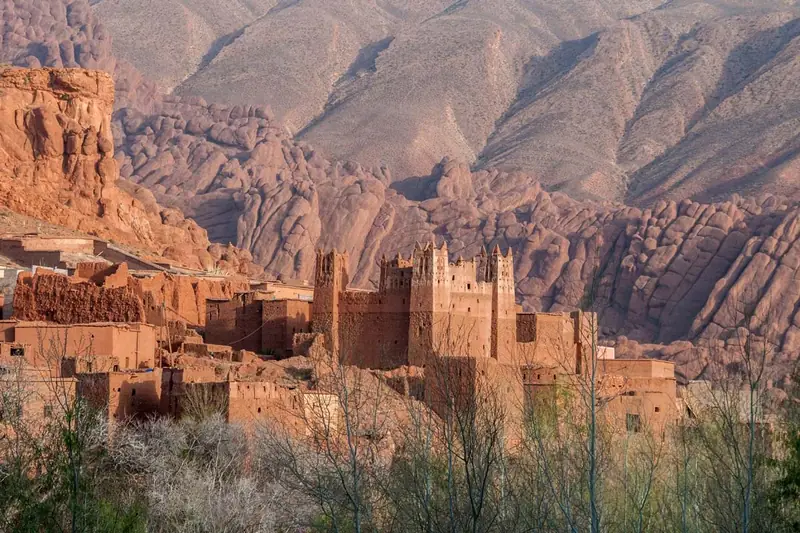
The rounded formations often called Monkey’s Fingers are another feature, not the same place as every switchback photograph. Ask which area a tour description means and whether the plan involves looking from the road or an actual walk. The Amazigh communities, working fields and earthen buildings are part of a living landscape, not an empty backdrop or a promise that every building is open to visitors.
Self-Drive, Private Driver or a Tour Stop?
Self-driving gives flexibility, but only if you are comfortable on winding mountain roads and can turn back without chasing a schedule. Check your rental agreement, insurance, fuel and vehicle suitability for the actual route. A car that suits the established valley road is not automatically suitable or insured for rough tracks or a higher mountain extension.
With a private driver, agree the route, turnaround, stops, waiting time, total price and driver hours. For a group tour, ask how much usable time is in Dades and where you sleep, rather than accepting a valley name as a complete itinerary. A transfer with a photograph is different from a guided hike; clarify which service you are buying before departure.
Driving the Bends Without Turning the Road into a Viewpoint
Expect bends, limited sightlines, changing surfaces and local traffic. Drive at a pace that leaves room to respond, and stop only where parking is permitted and the vehicle is fully clear of the carriageway. Do not stop on a blind bend or walk in the road to reproduce a photograph. A terrace view may be a business with its own purchase conditions.
Prefer daylight for an unfamiliar drive and leave a buffer for slow sections and the return. Published journey times are not guarantees after rain, repairs or a long series of stops. There is no need to reach the highest or furthest point if conditions or confidence change. This is planning advice, not live road status.
| Choice | Confirm first | Keep flexible |
|---|---|---|
| Valley drive | Road status and turnaround | Stops and daylight |
| Short walk | Surface, access and return | Pace and heat |
| Longer hike | Guide, weather and cover | Route or cancellation |
| Viewpoint | Legal parking or host terms | Crowds and visibility |
Walking: Agree a Specific Route, Not Just “a Hike”
A valley stroll, a rocky approach and a narrow-gorge hike are different outings. Before starting, ask about distance, ascent, surface, exposure, water, shade, any scrambling and the turnaround. Choose a route that fits the least confident person and do not assume a coloured line on an app is a maintained public trail.
For longer or less familiar mountain walks, arrange a suitably qualified professional local guide and explain your experience honestly. Agree what the price includes, group size, meeting point, return transport and what happens if weather changes. Check that your travel insurance covers the activity. A driver or accommodation host is not automatically a qualified hiking guide, even when they are helpful with introductions.
Rain, Riverbeds and Seasonal Conditions
Clear weather at your hotel does not establish conditions farther up a catchment. Heavy rain can cause flash flooding, and both walking and driving become dangerous in flooded areas. Avoid narrow channels and dry streambeds when flooding is possible, do not enter flowing floodwater and heed closures or warnings. A guide or larger vehicle does not override an official restriction.
Summer heat can make exposed walking demanding, while colder months can bring chilly nights and difficult conditions on higher routes. Spring and autumn may suit many visits, but no season guarantees an open road or safe hike. Check the forecast for the relevant elevation, ask locally for current conditions and shorten or postpone rather than assuming the desert side of the mountains is always dry.
Choose a Base by Location and Practical Access
Stay near the part of the valley you actually want to explore rather than choosing solely by a terrace photograph. Ask for an exact location, the access-road condition, parking or pickup, and whether the walk to the property includes steps or an unlit path. Confirm dinner, breakfast and arrival time if other food options are not nearby.
Ask about heating or cooling appropriate to the season, drinking-water arrangements, mobile reception and payment methods. A rural property can be some distance from services; bring essentials rather than assuming a shop or cash machine at every stop. Arrive before dark when possible, and keep the host’s contact details available offline in case navigation or reception fails.
Village Paths, Fields and Respectful Photography
Fields, irrigation channels, homes and kasbahs are not automatically public attractions. Ask before crossing private land or entering a building, and stay clear of irrigation and farm work. An attractive earthen structure may be occupied, privately owned or unstable. Do not climb walls or damaged buildings for a viewpoint, and do not infer visitor permission from a tour photograph.
Ask before photographing identifiable people, particularly children, and accept a refusal without negotiation. Keep stopping places clear for residents and other vehicles; a group photo does not take priority over daily access. Carry litter out and leave stones, plants and water channels undisturbed. A respectful short visit can be more meaningful than collecting every possible picture.
- At a house: ask before entering; a beautiful facade is not an invitation.
- By a field: use agreed paths and do not damage irrigation.
- For portraits: obtain permission and accept a no.
- At a stop: park clear and leave access for local traffic.
Children, Mobility and a Realistic Turnaround
Check surfaces, steps and vehicle access for the exact viewpoint, accommodation and walking route. A scenic drive may suit someone who does not want a hike, but that does not make every terrace or toilet accessible. With limited mobility or a stroller, seek specific confirmation and decide where you can comfortably wait or turn back without relying on improvised assistance.
For families, plan water, shade, food, toilets and breaks before everyone is tired. Do not leave children near road edges or allow them to explore channels and cliffs because the walk is described as easy. Agree a return time and keep energy for the way back. Carry a charged phone and offline information, while recognising that reception and help may not be immediately available.
Longer Routes Are Not Automatic Shortcuts
An onward line on a map beyond the familiar valley section is not proof of a straightforward through-road. Higher routes or rough connections can involve different surfaces, weather, vehicle requirements and long delays. Obtain current local and official advice for the complete intended route; do not follow an app’s shortest route into terrain you have not planned or your rental agreement excludes.
If you are unsure, use an out-and-back valley visit with a known turnaround and return to the established onward corridor. No four-wheel-drive requirement or all-car guarantee is offered for every route here. Tell a responsible person your walking or driving plan and revise it when conditions change rather than treating a booked next stop as a reason to push on.
Dades, Todra and Erg Chebbi Are Separate Visits
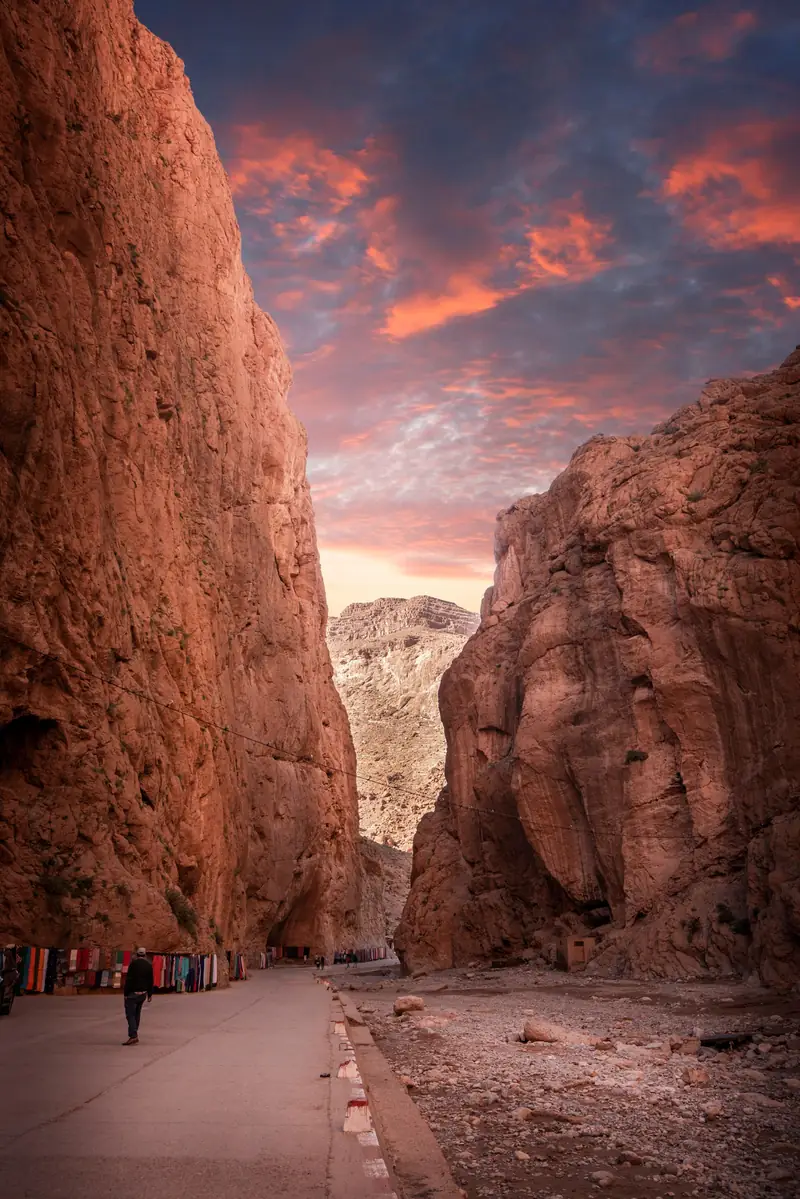
Todra Gorge is a different valley near Tinghir, not the next bend of Dades. Combining both can be a substantial road day once you include the drive out, the link between valleys, stops and walks. Decide whether you want a brief comparison or time to explore one place properly; neither gorge needs to be treated as a compulsory checklist item.
Erg Chebbi near Merzouga is another onward destination, not a nearby extension of a gorge walk. Use our Sahara guide to compare overnight plans and confirm a camp’s actual meeting point and latest arrival time. Do not promise a sunset arrival after a long hike and multiple gorge stops without checking the entire day with your driver or operator.
Budget and a Flexible Day Plan
Budget separately for transport, accommodation, meals, guides and any agreed private access or service. There is no single valley ticket that includes every viewpoint, terrace and walk. Ask prices in dirhams before accepting, clarify per-person versus group charges and use our money guide for payment planning.
A workable overnight plan is a daylight arrival with one or two safe stops, dinner near your base, then a locally checked walk before an unhurried departure. This is a suggestion, not a timed official circuit. In poor conditions, replace the walk with rest or a shorter permitted stop and keep the onward schedule flexible. You do not need the hairpin photograph or a canyon scramble for Dades to be worthwhile.
Frequently asked questions
Is Dades Gorge worth an overnight stay?
An overnight stop can leave time for a daylight drive and a short, locally checked walk. Two nights offer more flexibility. These are planning suggestions, not entry requirements.
Do you need a four-wheel drive?
That depends on the exact route, current conditions and rental terms. Do not generalise from the established valley road to rough tracks or higher connections, and confirm the whole plan before departure.
Can you visit Dades and Todra in one day?
They are separate valleys linked by road. It may fit a brief road-trip comparison, but walking and stops add time; choose a realistic plan rather than assuming the names refer to adjacent viewpoints.
Can you hike independently?
Select a specific route and check weather, access and difficulty locally. For longer or unfamiliar mountain outings, arrange a qualified professional guide and appropriate insurance rather than following an unverified map track.
What should you do if rain changes the plan?
Follow closures and local authority advice, avoid floodwater and flood-prone channels, and shorten or postpone. A booking or photograph does not justify continuing into unsafe conditions.