Atlas and Anti-Atlas Trekking: Difficulty, Seasons and Guides
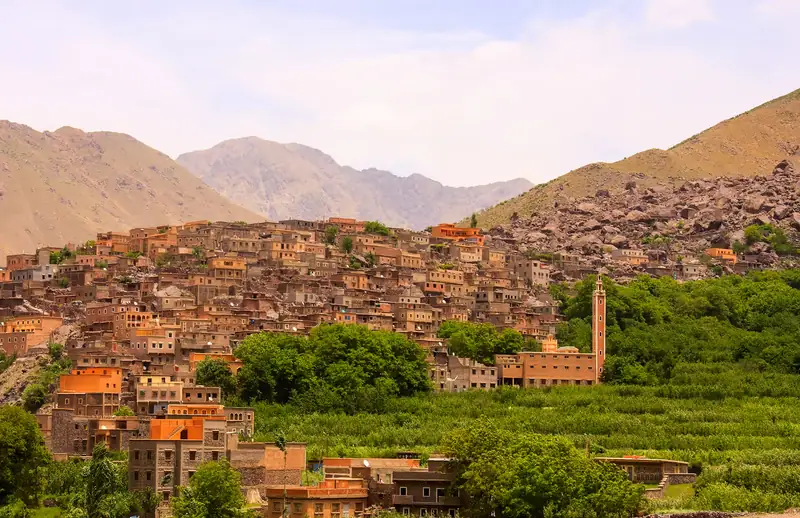
Compare High Atlas and Anti-Atlas walks by difficulty, season and fitness needs, with guidance on hiring a local mountain guide versus independent hikes.
At a glance
- Duration
- 8 days
- Theme
- Mountain trekking
- Route
- Marrakech → Imlil / High Atlas → Anti-Atlas option
- Pace
- Active; guide and weather dependent
In this guide
This route is a planning framework, not a guaranteed timetable. Check current opening arrangements and transport with the relevant official operator. Long road transfers need meal, rest and daylight allowances.
Day-by-day plan
Days 1 to 2: Imlil valley orientation
Travel from Marrakech and choose a short, guided village walk. Fitness: comfortable walking on uneven, steep paths for two to four hours. Use a local guide for route finding, weather judgment and cultural context; hire through a known accommodation or guide association.
Days 3 to 4: High Atlas day hikes
Choose a longer route only if acclimatized and fit for sustained uphill walking. A moderate day may mean five to seven hours on rocky trails; elevation and heat make it harder than the distance suggests. Toubkal summit is a separate, strenuous high-altitude undertaking, not a casual add-on.
Days 5 to 6: Anti-Atlas option
Transfer south with an overnight break and base near Tafraoute for granitic landscapes and village walks. Difficulty ranges from easy valley strolls to exposed, remote routes. Independent walking is appropriate only on well-understood tracks with offline navigation, water and a clear check-in plan; remote terrain favors a local guide.
Days 7 to 8: Buffer and return
Reserve a rest/weather day and return to Marrakech or Agadir with a buffer. Do not schedule a summit or remote trek immediately before a flight.
Season and equipment
Spring and autumn are often comfortable for lower and middle elevation walks. Winter can bring snow and cold to high routes; summer heat makes exposed lower trails risky. Conditions vary by altitude. Carry layers, sun protection, enough water, a charged phone and suitable footwear; confirm trail status and guide arrangements locally.
Guide or independent?
A qualified guide is strongly recommended for Toubkal, remote Anti-Atlas routes, winter conditions or anyone unfamiliar with mountain navigation. Independent walking can suit experienced hikers on popular, clearly marked lower routes, but tell your host your route and return time.
Transfer times and realistic pacing
These are approximate planning ranges for a normal, uninterrupted journey, not door-to-door guarantees. Mountain roads, traffic, roadworks, weather, meal stops and photo breaks can add substantial time. For intercity public transport, verify the exact service and station before fixing a connection.
| Leg | Planning time |
|---|---|
| Marrakech–Imlil | about 1.5 to 2.5 hours by road |
| Imlil–Tafraoute | a long interregional transfer, commonly 6 to 8 hours by road; split overnight |
| Imlil trailheads–villages | walking time varies from a short half-day to full-day routes |
Usable days: On this 8-day calendar plan, budget about 5 genuinely full sightseeing days after allowing for arrival, departure and the named long transfers. Late flights can recover a partial day; a full road-transfer day does not count as sightseeing.
Transport options
- Private driver: Most flexible for rural stops, luggage and custom breaks; costs more, and you should confirm licensed operator, vehicle, inclusions, driver hours and overnight plan in writing.
- Self-drive: Gives control and can work for confident drivers on paved main roads; you handle navigation, parking, fatigue, insurance, mountain conditions and camp transfers. Avoid night driving on unfamiliar rural roads.
- Train or coach: Often best value and lower-stress on served city corridors; less useful for remote valleys, medinas’ doorsteps and desert camps. Check ONCF or the coach operator for current routes, times, baggage and station/terminal location.
Fast version vs. slow version
- Fast: 7 nights, 4 bases; choose either High Atlas or Anti-Atlas, not both. Hotel changes: 3.
- Slow: 8 nights, 4 bases; include a rest/weather day and split the interregional road transfer. Hotel changes: 3.
Hotel changes mean packing and checking in again, not just sleeping in a different town. Count one change for every move to a new overnight base; avoid consecutive one-night stays when possible.
Practical planning by stop
- Where to stay by area:
- Marrakech: Medina for walkability and riads; Gueliz/Hivernage for easier vehicle access and modern hotels.
- Imlil: Village guesthouse with clear luggage transfer arrangements; paths and stairs are common.
- Tafraoute: Town centre for services or a village guesthouse with a planned transfer.
- What to eat along the way:
- Marrakech: Try tanjia, pastilla and harira; seek a busy stall or restaurant with clear prices.
- Imlil: Expect home-style tagine, lentil soup and fresh bread; confirm meal times and dietary needs.
- Tafraoute: Try almond-based sweets, amlou and local tagine; ask about seasonal harvest dishes.
- What you can skip:
- Skip Marrakech if... you are short on time and would rather spend the week in one quieter region; the medina can be busy and hot.
- Skip Imlil if... you do not want hilly walking or a rural stay; keep the extra night in Marrakech instead.
- Skip Tafraoute if... your schedule is tight; reaching the Anti-Atlas is a significant detour from the northern cities.
Seasonal planning note
Spring and autumn are usually the easiest all-round seasons along this route. Inland heat can be severe in summer, and Atlas passes and high trails can have snow or closures in winter. Desert nights are cold, coastal wind varies, and Ramadan changes daytime opening hours and meal rhythms. Check local conditions and holiday dates for your exact stops. Reconfirm transport, access, opening days and weather before booking.
Useful destination guides: Marrakech · Imlil · Tafraoute · best time to visit · transport guide.
Skip this route if... you want a low-transfer, fully spontaneous trip, or if the itinerary’s longest travel days do not fit your comfort level. Pick one region and spend the saved time there.
Frequently asked questions
What fitness do I need for an Atlas trek?
For a village walk, be comfortable with several hours on uneven ground and hills. Higher or summit routes require strong cardiovascular fitness, acclimatization and appropriate gear.
Can I climb Toubkal year-round?
No. Conditions and access change with season and weather; use a qualified local guide and verify current requirements before planning.