Marrakech to Merzouga in 3 Days: Stops, Times and Trade-offs
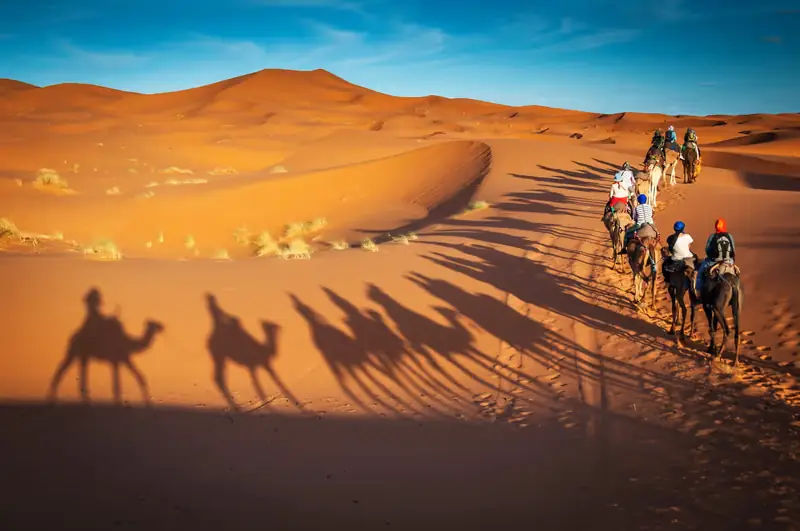
A realistic stop-by-stop outline via Tizi n’Tichka, Aït Benhaddou, Skoura, Dades and Todra, comparing group tours, private drivers and self-drive, with winter pass cautions.
At a glance
- Duration
- 3 days
- Theme
- High Atlas and Sahara road trip
- Route
- Marrakech → Tizi n’Tichka → Aït Benhaddou → Skoura → Dades → Todra → Merzouga → Marrakech
- Pace
- Very demanding; tour or experienced driver
In this guide
This route is a planning framework, not a guaranteed timetable. Check current opening arrangements and transport with the relevant official operator. Long road transfers need meal, rest and daylight allowances.
Day-by-day plan
Day 1: Marrakech, pass, Aït Benhaddou, Skoura and Dades
Leave early, cross the Tizi n’Tichka pass in daylight and allow time to walk through Aït Benhaddou. Continue to Skoura and the Dades area only if daylight and road conditions allow. This is already a long day; do not promise every stop as an extended visit.
Day 2: Dades, Todra and Merzouga
Walk a short section of Dades or Todra Gorge, then drive to Merzouga. Stop at viewpoints only where safe and legal. Reach camp with enough daylight for its transfer process.
Day 3: Sunrise and return
A sunrise visit means an early start; the return to Marrakech via the Draa Valley can take nine to eleven hours of wheel-time before meal/rest stops. A safer, more enjoyable plan is to add a fourth day and sleep en route, or finish in Fes instead of returning.
Transport comparison
Shared group tour: generally the lowest per-person transport cost and the simplest logistics, but with fixed stops, long minibus days and variable inclusions. Get a written list of meals, camp category, fees and optional extras. Private driver: flexible stops and easier pacing, usually much more expensive; confirm licensed operator, vehicle, fuel and accommodation inclusions. Self-drive: most control and can suit confident drivers, but you manage mountain roads, fatigue, winter conditions, parking and desert-camp transfers; a normal rental car does not drive onto dunes. As a broad 2026 planning estimate, not a live quote, budget about 700 to 1,500 MAD per person for a shared group package before optional upgrades. A private three-day package can run roughly 2,500 to 5,000+ MAD per person for a small party, depending on camp and inclusions. A self-drive rental plus fuel may be around 1,800 to 3,000 MAD per vehicle before lodging, meals, insurance excess and camp transfer. Prices change by date and group size: compare the full written total, not the headline price.
Winter pass and road conditions
Snow, ice, fog, roadworks or closures can affect the High Atlas pass in winter and shoulder seasons. Check current conditions before departure, travel in daylight, use suitable tires/vehicle and keep a buffer. If the pass is unsafe, obey local authorities and reroute or postpone; never treat a tour’s published itinerary as a guarantee.
Transfer times and realistic pacing
These are approximate planning ranges for a normal, uninterrupted journey, not door-to-door guarantees. Mountain roads, traffic, roadworks, weather, meal stops and photo breaks can add substantial time. For intercity public transport, verify the exact service and station before fixing a connection.
| Leg | Planning time |
|---|---|
| Marrakech–Tizi n’Tichka–Aït Benhaddou | 4 to 5 hours wheel-time; longer with pass stops and site visit |
| Aït Benhaddou–Skoura | about 1 to 1.5 hours |
| Skoura–Dades | about 2 to 3 hours |
| Dades–Todra Gorge–Merzouga | about 4 to 5 hours driving plus gorge stop |
| Merzouga–Marrakech via the Draa route | 9 to 11 hours wheel-time; an exceptionally long return day |
Usable days: On this 3-day calendar plan, budget about 0 genuinely full sightseeing days after allowing for arrival, departure and the named long transfers. Late flights can recover a partial day; a full road-transfer day does not count as sightseeing.
Transport options
- Private driver: Most flexible for rural stops, luggage and custom breaks; costs more, and you should confirm licensed operator, vehicle, inclusions, driver hours and overnight plan in writing.
- Self-drive: Gives control and can work for confident drivers on paved main roads; you handle navigation, parking, fatigue, insurance, mountain conditions and camp transfers. Avoid night driving on unfamiliar rural roads.
- Train or coach: Often best value and lower-stress on served city corridors; less useful for remote valleys, medinas’ doorsteps and desert camps. Check ONCF or the coach operator for current routes, times, baggage and station/terminal location.
Fast version vs. slow version
- Fast: 2 nights, 3 overnight bases counting the return city; the third day is mostly driving. Hotel changes: 2.
- Slow: 4 nights, 3 overnight bases; add a road night each way and do not force a three-day return. Hotel changes: 2.
Hotel changes mean packing and checking in again, not just sleeping in a different town. Count one change for every move to a new overnight base; avoid consecutive one-night stays when possible.
Practical planning by stop
- Where to stay by area:
- Marrakech: Medina for walkability and riads; Gueliz/Hivernage for easier vehicle access and modern hotels.
- Ait Benhaddou: Stay near the ksar for early/late access or in Ouarzazate for more services; check the bridge/river approach.
- Skoura: Oasis guesthouse or kasbah stay with prearranged transport; distances between sites are not always walkable.
- Dades Valley: Choose a guesthouse near the specific gorge/valley section and confirm pickup, dinner and road access.
- Todra Gorge: Tinghir for services or a gorge-area guesthouse for an early walk; check road access and stairs.
- Merzouga: Village-side guesthouse for flexibility; a camp for a planned dunes stay. Confirm where the car and luggage remain.
- What to eat along the way:
- Marrakech: Try tanjia, pastilla and harira; seek a busy stall or restaurant with clear prices.
- Ait Benhaddou: Try a local tagine, dates and mint tea; avoid assuming every viewpoint café is open.
- Skoura: Try date-based sweets, local bread and tagine; ask the host about seasonal dishes.
- Dades Valley: Try amazigh-style tagine, barley or flatbread and seasonal dates; meals are often accommodation-based.
- Todra Gorge: Try local dates, tagine and flatbread; ask your host what is seasonal.
- Merzouga: Ask for a locally prepared tagine, madfouna (regional stuffed bread) and mint tea; camp menus vary.
- What you can skip:
- Skip Marrakech if... you are short on time and would rather spend the week in one quieter region; the medina can be busy and hot.
- Skip Ait Benhaddou if... you have limited mobility or the heat/crowds make an exposed uphill ksar walk unsuitable.
- Skip Skoura if... you prefer dense city sights; oasis kasbahs take time and some sites need a local guide or arranged access.
- Skip Dades Valley if... you do not want a road-focused trip; the valley is best as an overnight stop, not a quick detour.
- Skip Todra Gorge if... you are uncomfortable with narrow gorge roads or the route is already overpacked; choose one gorge, not both.
- Skip Merzouga if... long transfers, cold nights or a camp experience do not appeal; Agafay is closer but is not the Sahara.
Seasonal planning note
Spring and autumn are usually the easiest all-round seasons along this route. Inland heat can be severe in summer, and Atlas passes and high trails can have snow or closures in winter. Desert nights are cold, coastal wind varies, and Ramadan changes daytime opening hours and meal rhythms. Check local conditions and holiday dates for your exact stops. Reconfirm transport, access, opening days and weather before booking.
Useful destination guides: Marrakech · Ait Benhaddou · Skoura · Dades Valley · Todra Gorge · Merzouga · best time to visit · transport guide.
Skip this route if... you want a low-transfer, fully spontaneous trip, or if the itinerary’s longest travel days do not fit your comfort level. Pick one region and spend the saved time there.
Frequently asked questions
Is this route too rushed?
For most travellers, yes. The outbound days are demanding and the return day can be punishing. Four or five days makes the journey markedly more humane.
What price should I expect?
There is no dependable single rate: group size, season, camp standard and inclusions change quotes sharply. Compare written, itemized offers rather than a headline price; clarify lunches, entrance fees, camp transfers and tips.