Moroccan Festivals and Holidays: Plan the Right Trip
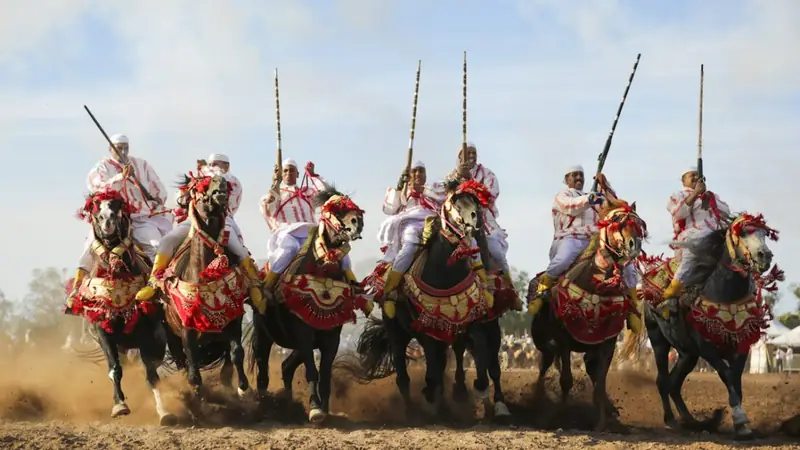
Moroccan festivals can be the reason to choose a city, but first separate a confirmed event from a seasonal tradition and a public holiday. Choose Essaouira for Gnaoua music, Fes for a sacred-music programme, or a harvest region for a locally rooted celebration. Then verify the year, venue and admission rules before buying non-refundable travel.
A seafront concert, a family Eid meal and a rose-harvest fair involve very different expectations. Some welcome a ticket-buying audience; others are community or religious occasions, not visitor attractions on demand. This guide explains how to choose, what is actually announced and how to arrange sleep, transport and respectful participation without relying on last year’s calendar.
Check the edition, not just the festival name. Date status checked 20 November 2026: the Gnaoua organiser announces 24–26 June 2027. Marrakech’s film festival announces 20–28 November 2026. Other seasonal references below are not confirmed dates for a future edition.
At a glance
- Music choice
- Gnaoua in Essaouira; sacred music in Fes
- Confirmed Gnaoua
- 24–26 June 2027
- Religious dates
- Await Moroccan confirmation
- Admission
- Varies by event and zone
- Planning priority
- Room, return journey, ticket
- Quiet alternative
- Visit outside the main event
In this guide
- Choose a festival for your interests, not its crowd ranking
- Confirmed dates and old programmes: how to read them
- Essaouira: Gnaoua music with a workable overnight plan
- Fes, Rabat and other city festivals: choose actual sessions
- Harvest fairs and moussems: local context comes first
- Ramadan and Eid: religious observance is not a concert
- National public holidays: fixed dates, variable services
- Tickets, transport and a realistic festival budget
- Crowds, children and respectful participation
Choose a festival for your interests, not its crowd ranking
For live music, start with the programme rather than claims about the biggest festival. Gnaoua in Essaouira centres Gnawa musicians and collaborations; Fes offers a programme of sacred music from different traditions. Mawazine in Rabat has a broad international and Moroccan music identity.
If art is the main interest, investigate Asilah’s cultural season; for cinema, check Marrakech’s official film-festival programme. A harvest fair around Kelaat M’Gouna or Erfoud may be more about local products and regional celebration than a continuous performance schedule.
| Interest | Place | Check |
|---|---|---|
| Gnawa | Essaouira | Year, stage, zone |
| Sacred music | Fes | Venue and individual concert |
| Varied music | Rabat, Mawazine | Current announcement and access |
| Art or cinema | Asilah or Marrakech | Programme, pass and session |
| Harvests | Rose valley or Erfoud | Local dates and public activities |
The best fit may also be no festival at all. If quiet medina walks, easy restaurant bookings or early sleep matter most, avoid the main dates. The best-time guide helps balance the occasion with weather and ordinary sightseeing.
Confirmed dates and old programmes: how to read them
As checked on 20 November 2026, the Gnaoua organiser announces its 28th edition for 24–26 June 2027. That is a future date announcement, not proof that every artist, price or stage plan is published. Parts of the same website still link to earlier programmes and ticket products. Check the year on the actual item you are buying.
The Marrakech film festival announces 20–28 November 2026. Use its current programme and e-pass instructions for sessions; a date banner alone does not secure a seat or access to an industry event. An old screening on a search result is not a current showing.
For Fes, Mawazine, Timitar and Asilah, this guide gives cultural orientation rather than a promised next-edition schedule. Spring, summer and autumn labels are planning clues only. Check the organiser’s dated announcement, then confirm with your accommodation before committing to a long detour. If information conflicts, favour the current organiser over a recycled month-by-month list.
Essaouira: Gnaoua music with a workable overnight plan
Gnawa is a living musical and cultural tradition with spiritual dimensions, not simply a style invented for a tourist stage. UNESCO’s heritage recognition concerns the tradition, not a guarantee that every festival concert recreates a private ritual. A public performance is not permission to enter a closed ceremony.
Choose accommodation after checking where performances and pedestrian restrictions will be. A room close to a stage saves walking but can make sleep difficult. Ask which direction the room faces and how late access through the neighbourhood remains straightforward.
Festival access can differ between a public space, a reserved stage zone and a smaller venue. Do not assume everything is free or that a pass includes every event. Book through the organiser’s linked channel, read the dated conditions and keep the confirmation offline.
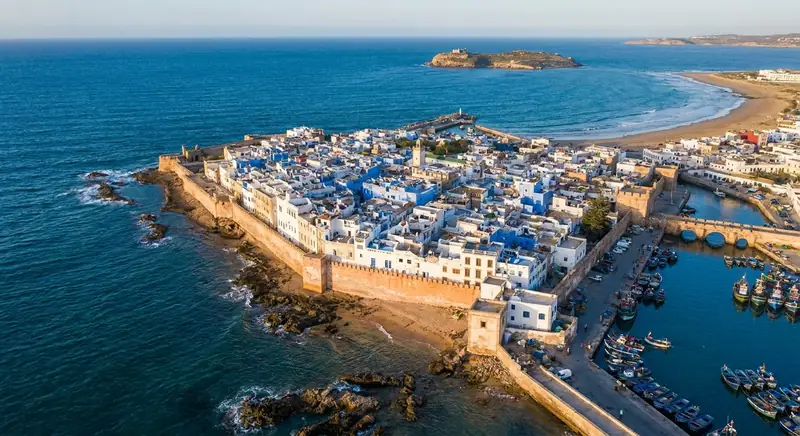
Bring a layer for coastal wind and plan a calm place away from the speakers. Leave time for the port and ordinary town life, without treating working areas as a backdrop to crowd photos. The Essaouira guide helps choose what to do before the evening programme. A long intercity journey immediately after a late concert is usually an avoidable strain.
Fes, Rabat and other city festivals: choose actual sessions
Fes’s World Sacred Music Festival is a programmed encounter among musical traditions, not an all-access tour of religious buildings. Venue names and entry rules matter. Choose the concert you want, check its location and allow for walking through the medina.
For Fes, leave daytime space for crafts, architecture and a meal rather than filling every hour between performances. If seating, steps or a quiet exit matter, ask the specific venue before purchase. Do not infer wheelchair access from a city-centre address or assume that every performance has the same facilities.
Mawazine in Rabat, Timitar in Agadir and Asilah’s arts events offer other ways to shape a trip, but their dates and formats require their own checks. Look for the current map and transport arrangements as carefully as the artist list.
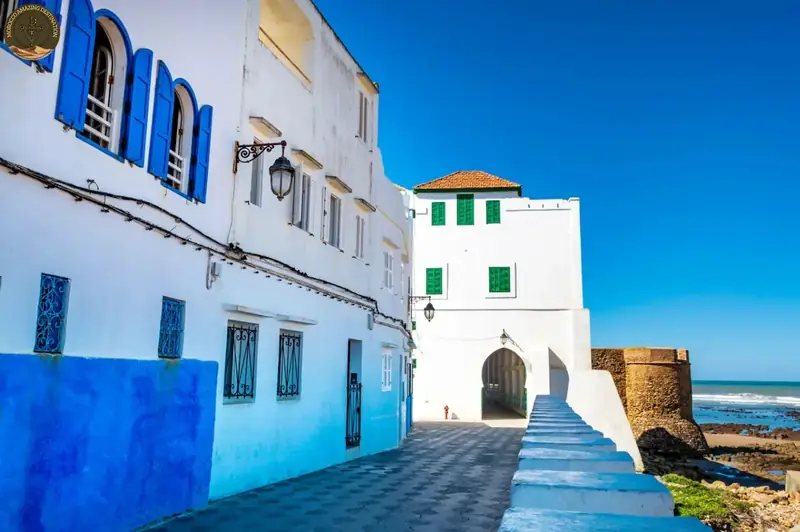
In Asilah, a walk through painted streets can be enjoyable independently of a scheduled opening or workshop. Do not advertise an ordinary street as a live painting session. Confirm which exhibitions are open to visitors and whether a specific event needs registration. Avoid arranging a cross-country transfer for an activity that only appeared in a past edition.
Harvest fairs and moussems: local context comes first
The rose celebration around Kelaat M’Gouna is associated with the spring harvest, while Erfoud is known for an autumn date celebration. Harvest timing, the fair and particular public activities need not coincide exactly. Do not promise flowering fields or a procession merely because a tour is marketed with the festival name. Ask what is actually happening on your day.
A moussem can combine social, economic, cultural and religious roles. It is too narrow to define every moussem as only a pilgrimage to a saint’s tomb. UNESCO describes Tan-Tan as a gathering of Saharan nomadic peoples with trade and cultural exchange. Its heritage description is not an announcement of this year’s dates or visitor facilities.
Imilchil should not be sold as an opportunity for visitors to watch people choose spouses. Ask locally which public activities are appropriate and respect private gatherings. Photography, market access and ceremonies have different expectations.
For a rural event, organise the return journey and a real place to stay before setting off. Ask about road access, toilets, shade and the distance between accommodation and fairground.
Ramadan and Eid: religious observance is not a concert
Ramadan is the fasting month, not a single festival day. Many Muslims fast from dawn to sunset, and daily rhythms shift. For 2027, early February into early March is a forecast window, not a confirmed Moroccan calendar. The start and end depend on official Moroccan moon-sighting announcements. Do not substitute another country’s date automatically.
Eid al-Fitr marks the end of Ramadan. Eid al-Adha is a separate major feast in the Islamic calendar; it is not simply a fixed number of Gregorian weeks later. The Hijri New Year and Mawlid also follow the Islamic calendar. Avoid describing the duration of family celebrations as if it were identical to statutory days off or every business’s closure.
During Ramadan, ask accommodation where daytime meals are available and recheck museum, shop and transport hours individually. Some visitor-facing businesses operate, while others change their routine. Be discreet about eating, drinking or smoking around people who are fasting. Around sunset, allow staff time for iftar and avoid demanding an immediate nonessential service.
During Eid, family travel can put pressure on transport and some businesses close. Book essential journeys ahead, confirm the first available meal and avoid scheduling every must-see attraction on the holiday itself. Visitors are not entitled to a family invitation; if invited, ask what is appropriate. Our religion guide explains context beyond the travel calendar.
National public holidays: fixed dates, variable services
These fixed-date holidays are listed by Morocco’s government portal. They help identify possible closures, not a universal timetable for banks, museums, restaurants or trains. The Islamic holidays need separate confirmation for your travel year. Check opening hours with the actual attraction rather than concluding the whole country will close.
| Date | National holiday |
|---|---|
| 1 January | New Year |
| 11 January | Independence Manifesto anniversary |
| 14 January | Amazigh New Year |
| 1 May | Labour Day |
| 30 July | Throne Day |
| 14 August | Oued Ed-Dahab anniversary |
| 20 August | Revolution of the King and the People |
| 21 August | Youth Day |
| 31 October | Aid Al Wahda, Unity Day |
| 6 November | Green March anniversary |
| 18 November | Independence Day |
The 31 October Unity Day entry matters when comparing older calendars, which may omit it. For a trip, the practical question is whether your specific service runs and at what time, not how a generic holiday-count total was calculated.
Tickets, transport and a realistic festival budget
Compare the complete cost in Moroccan dirhams: ticket and booking charges, room, meals, local rides and the next intercity journey. There is no reliable single ticket price for Moroccan festivals, and foreign-currency equivalents change. Some activities may be free while reserved zones or sessions cost money. Read refund, name, age and re-entry rules before paying.
Book a room with cancellation terms you can accept and save the host’s written address. Ask about noise, stairs and late arrival, not just proximity. Reserve essential trains or buses through the operator, then recheck the timetable closer to departure. Do not assume extra late services will run simply because a concert ends after midnight.
Leave a transfer buffer and preferably arrive before the day’s essential performance. Choose a lit, identifiable meeting point for the return and agree any taxi fare basis before the ride. If the group separates, have a fallback location and a charged phone. Keep a payment backup without carrying all your cash into the densest crowd.
Crowds, children and respectful participation
Stand where you can leave comfortably rather than forcing a place near the speakers. Identify exits and staffed help before the performance, and move away if the space becomes uncomfortably compressed. Protect your hearing and your belongings. Free outdoor access does not mean a space has no capacity limit or that it suits every child.
Families should check session age rules, toilets, seating, sound levels and a realistic bedtime. Travellers with mobility or sensory needs should ask about the actual entrance, surface and viewing area. Skip a performance if the available setup does not meet your needs; the rest of the trip still matters.
Ask before photographing people or recording close-up performances, and follow organiser rules. Keep clear of riders, animals and barriers at equestrian displays. Do not treat religious practice as an on-demand show. Our Moroccan culture guide adds context.
Frequently asked questions
Which Moroccan festival is best for a first visit?
Choose by interest: Gnaoua in Essaouira for Gnawa and collaborations, Fes for sacred music, or a confirmed harvest fair for regional traditions. Check the current programme rather than a biggest-festival ranking.
When is the next Gnaoua festival?
The organiser announces 24–26 June 2027, checked on 20 November 2026. Recheck the edition and specific ticket product before booking; old programme links may remain online.
Are Moroccan festivals free?
Some public activities can be free, but ticketed sessions, reserved zones and pass conditions vary. Verify admission for the exact year, performance and area; never assume a festival-wide rule.
Can I visit Morocco during Ramadan or Eid?
Yes, with planning. Confirm Moroccan dates, meal availability and individual opening hours. During Eid, reserve essential travel and allow for family-related closures rather than expecting every business to operate normally.
Can I use a seasonal calendar to book a rural festival?
Not by itself. Confirm local dates, public activities, accommodation and return transport. Harvest timing and the announced fair are not necessarily the same thing.