Morocco Packing List: What to Bring for Your Route and Season
A useful Morocco packing list starts with comfortable walking shoes, breathable everyday clothes, a warm layer and a bag you can manage between transport and accommodation. Add protection from sun, wind or rain according to your actual route. A coastal weekend, a desert overnight and a high mountain trek need different equipment, even within the same month.
Pack for the coldest overnight stop and the longest transfer, not just the sunny photograph on your booking page. Keep medication, documents and essential charging equipment accessible, then build a small wardrobe you can wash and repeat. This guide separates a practical city-trip baseline from seasonal additions, specialist outdoor kit and items that need checking before they enter your luggage.
Check the last stretch to your accommodation. Ask where a taxi can stop, whether there are stairs and who handles the final transfer. A compact suitcase can work well; a backpack is not automatically better if carrying weight is difficult for you.
Packing priorities
- Clothing
- Light layers you can combine
- Shoes
- Tested comfort and useful grip
- Weather
- Check each overnight stop
- Day bag
- Keep essentials accessible
- Power
- Adaptor is not a converter
- Outdoor kit
- Match the route and conditions
In this guide
- Start with your itinerary, not a shopping list
- Build a small wardrobe you can repeat
- Add layers for the season and the region
- Choose footwear for walking, not just photographs
- Pick luggage you can manage on transfer days
- Prepare documents, money and an offline phone
- Check adaptors, chargers and power-bank restrictions
- Keep medication and hygiene supplies practical
- Pack separately for desert camps and mountain trips
- Leave unnecessary gear behind and check restrictions
Start with your itinerary, not a shopping list
List overnight stops, transfers and booked activities, then check each place’s forecast shortly before leaving. Morocco’s coast, inland cities, desert and mountains do not share one climate, as the official climate overview explains. A national temperature is not a useful packing target.
Separate essentials from comfort and specialist equipment. A city break does not require expedition boots, but a fleece alone will not prepare a summer bag for a winter summit. Use the best-time guide for regional context, then adjust to the forecast.
Build a small wardrobe you can repeat
For a week with laundry planned, this is a starting point, not an airline allowance or a rule for every body. Choose pieces that combine comfortably for long drives and steps. Adjust underwear and specialist items to your needs.
| Item | Starting amount | Useful purpose |
|---|---|---|
| Everyday tops | 3 or 4 | Breathable layers to rotate |
| Bottoms | 2 | Loose trousers, skirts or dresses |
| Long-sleeve shirt | 1 | Sun coverage and an extra layer |
| Warm layer | 1 or more for cold stops | Fleece or suitable insulation |
| Outer layer | As forecast requires | Wind or rain protection |
| Underwear and socks | To your wash schedule | Include a spare accessible set |
| Sleepwear | 1 set | Match indoor and overnight cold |
Linen, cotton and lightweight blends can suit warm weather; consider comfort and drying time rather than one supposedly perfect fabric. For hiking, use the clothing system agreed with your guide. Test overnight drying at home and confirm when accommodation laundry returns.
Loose clothes covering shoulders, chest and knees are a useful respectful baseline in many public settings, not a claim that every visitor faces one nationwide dress law. The advice applies to planning for all genders. Bring a cover-up for moving between a pool or beach and town; choose swimwear for the actual swimming setting.
A scarf can add warmth or coverage, but it is not universally required headwear for visitors and does not create access to a religious site. Follow each venue’s rules. Clothing also cannot guarantee freedom from unwanted attention, and harassment is never the wearer’s fault. Pack what lets you move comfortably without treating cultural etiquette as a safety promise.
Add layers for the season and the region
| Trip conditions | Add to the baseline | Check before leaving |
|---|---|---|
| Hot inland days | Light long sleeves, hat, sunglasses | Heat forecast and daytime plans |
| Atlantic coast | Wind layer and light knitwear | Wind as well as temperature |
| Spring or autumn route | Adaptable warm layer, rain shell | Each stop, including evenings |
| Winter cities or desert | Warmer insulation, socks, sleepwear | Heating and camp bedding |
| Mountain walking | Route-specific layers and footwear | Altitude, snow, guide’s kit list |
Check rain forecasts for your dates and northern stops rather than removing the shell because it is spring. Choose an outer layer that fits over warm clothing instead of several incompatible jackets. Keep it accessible during transfers.
Ask about heating: sunshine does not guarantee a warm room. Warm sleepwear and socks can earn their space in winter. There is no fixed nationwide day-to-night temperature swing; match insulation to the overnight forecast and your cold tolerance.
Choose footwear for walking, not just photographs
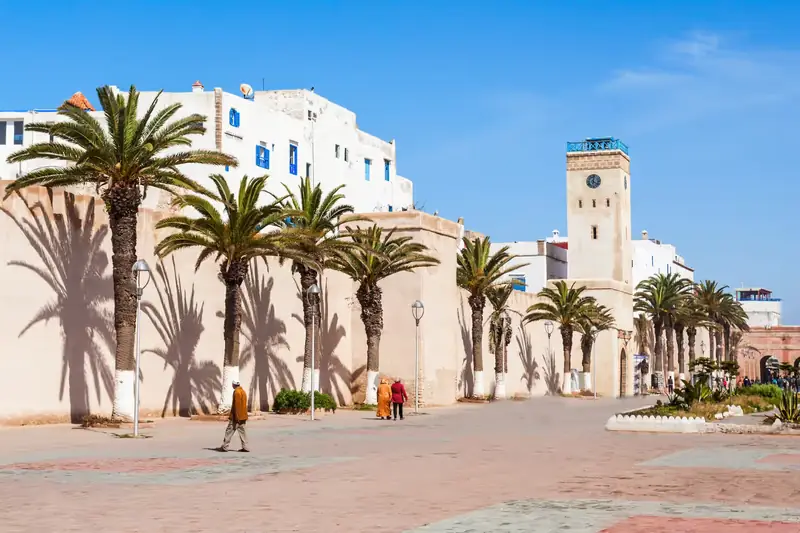
One broken-in pair of closed walking shoes or trainers with grip can cover many city routes. Test them on a long walk with your intended socks. Uneven paving, slopes and stairs make fit more important than buying a new pair for the trip.
Add sandals if useful for your accommodation or swimming plans. Souk slippers are an optional purchase, not a substitute for tested walking shoes. Prioritise orthotics, mobility aids or adapted footwear over an arbitrary minimalist target.
Pick luggage you can manage on transfer days
Check your ticket’s baggage entitlement for every operating carrier and separate connection. Measure the packed bag including handles and wheels, and check day-bag or combined limits. Airline allowances differ; do not assume buses provide unlimited luggage space either.
Wheels help on smooth surfaces; backpacks help on steps but put the load on your body. Ask your medina accommodation about vehicle access and porters, agreeing assistance and price beforehand.
- Keep passport, approvals, medication, valuables and essential contact details in your personal bag.
- Add a layer and a change of underwear for delayed luggage or an unexpectedly long transfer.
- Keep a small amount of spending money accessible without displaying your whole reserve.
- Protect liquids against leaks and leave space for purchases without exceeding baggage limits.
Prepare documents, money and an offline phone
Use the entry-requirements guide to check passport-specific validity, visas and authorisations rather than copying a blanket six-month rule. Carry necessary originals, insurance contacts and your first address. Keep protected backups separately; a phone photograph is useful information but is not a substitute for a valid passport.
Download maps, tickets and accommodation details before departure. A local SIM, eSIM or roaming plan can all be options, but first check device support, network unlocking, activation and whether the plan includes calls. Do not assume mobile data or a charged phone will always be available. Save a written contact number and a way to access essential account verification.
Bring a working payment method and separate backup. The money guide covers cash, cards and border rules. A zipped bag organises belongings but is not theft-proof; read the safety guide rather than treating accessories as a guarantee.
Check adaptors, chargers and power-bank restrictions
Electrical Safety First’s Morocco advice lists plug types C and E and a 220V, 50Hz supply. Check each appliance’s input label: a plug adaptor changes physical compatibility, not voltage or frequency. Choose a correctly rated adaptor that maintains any required earth connection. Do not assume a two-pin adaptor suits every appliance.
A charger marked for 100–240V usually accommodates the stated voltage, but check its instructions and the complete setup. High-power hair tools deserve particular attention; leaving them at home can avoid an unsuitable converter. Ask your accommodation if you need equipment supplied, and never force a plug or improvise an electrical connection.
Power banks and spare lithium batteries belong in cabin baggage, subject to the operating airline’s capacity, quantity and handling rules. Remove them if your cabin bag is taken for the hold. Royal Air Maroc’s baggage page currently limits power banks to two per passenger in the cabin and prohibits recharging them during flight. Recheck your own carrier; do not assume permission to use or charge one onboard.
Keep medication and hygiene supplies practical
Bring regular medicines in original labelled packaging, with prescription copies and an appropriate prescriber’s letter. Check legality, quantity limits and any permissions for Morocco and transit countries, even for products sold without prescription at home. TravelHealthPro’s medicines guidance explains why familiar packaging or a prescription alone may not settle another country’s rules.
Plan supplies and possible delays with your clinician or pharmacist, including storage temperatures and arrangements for liquids, needles or medical equipment. Do not put your only essential supply in checked baggage or assume an identical replacement will be readily available. A pharmacist can advise on a personal travel kit; routine antibiotics or diarrhoea medication are not universal packing requirements.
Pack sunscreen, sunglasses, a hat, your usual toiletries, tissues and hand sanitiser in manageable quantities. Add menstrual or other personal-care supplies you rely on rather than assuming your preferred product will be easy to replace. Earplugs may help with traffic, shared accommodation or early activity; check you can still notice alarms or essential alerts.
A reusable bottle is useful when filled from a known safe source. Do not assume any filter makes all water safe: products differ in what they remove and how they must be maintained. Ask about safe drinking-water arrangements for remote trips. A bottle or electrolyte product does not replace shade, rest, sensible activity planning or medical help when needed.
Pack separately for desert camps and mountain trips
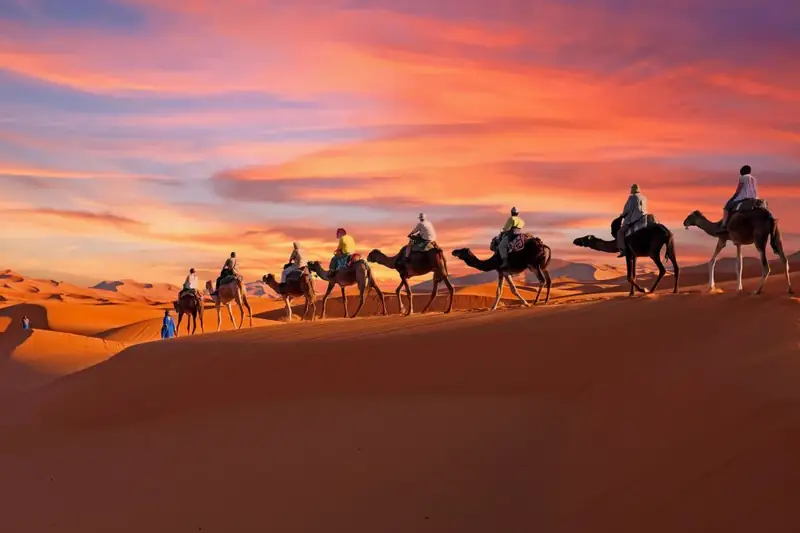
For a desert overnight, ask what bedding, heating, towels, charging and luggage transfer are actually included. Take a small overnight bag only if the operator confirms larger-bag storage and access. Bring a torch, suitable warm layer, socks and sun protection; long trousers can be useful for a camel ride. A scarf may help with dust, but it is not protective equipment for every condition.
Read the Sahara tour guide for choosing the trip, then request the operator’s current kit list. Do not assume a luxury label means reliable room heating or charging at every tent. Keep medication and documents with you instead of in a vehicle you may not be able to reach overnight.
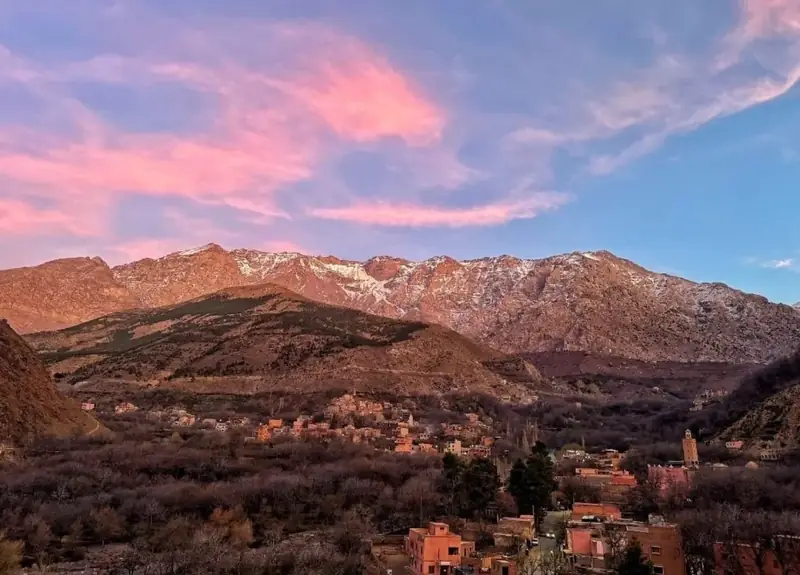
A mountain village visit is not the same activity as a summit attempt. For trekking, establish route, altitude, season, guide arrangements and what equipment is supplied or hired. Winter snow and ice can require specialist kit and skills, not simply warmer trainers. The Toubkal guide is a planning starting point, not a replacement for a qualified guide’s current assessment.
Leave unnecessary gear behind and check restrictions
Leave a drone at home unless you have verified the required Moroccan permissions for bringing and operating it. British government advice warns of fines and confiscation without permission. A small recreational model is not automatically exempt. Airline acceptance also does not establish customs permission for an item.
Skip duplicate shoes, unnecessary heavy outfits and valuables. Never carry packages for strangers. Check liquids, sharp objects, batteries and camping equipment with the airport and carrier. Review return-flight rules, especially before buying oils or other liquids.
Finish with a trial pack and carry or roll test, or arrange assistance. Keep journey essentials accessible without unpacking everything. Packing should serve your trip and abilities, not a contest for the smallest bag.
Frequently asked questions
What should I wear in Morocco as a tourist?
Loose, breathable clothes with adaptable coverage are a practical baseline for many public settings. Add warmth and rain or wind protection for your route. Beach or pool clothing should be considered separately, and individual venues may set their own rules.
Do I need warm clothes for a desert night?
Check the season, forecast and camp arrangements. Cold nights may need proper insulation, warm socks and sleepwear, not just daytime clothes. Confirm bedding and heating instead of assuming a camp category guarantees warmth.
Is a suitcase or backpack better for Morocco?
Either can work. Choose for your mobility, transfers and the last stretch to your accommodation. Ask about stairs, vehicle access and assistance; a backpack is not automatically easier than a compact wheeled case.
Do I need an adaptor or a voltage converter?
That depends on your plug and appliance. Morocco commonly uses C and E sockets; check the input rating and earthing requirements of each device. An adaptor alone does not change voltage or frequency.
Can I bring a power bank and a drone?
These need separate checks. Power banks are cabin items subject to airline limits and onboard handling rules. A drone requires checking Moroccan permissions for import and operation; airline acceptance alone does not authorise bringing or flying it.