Dakhla, Morocco: Kitesurfing, Lagoon Trips and How to Get There
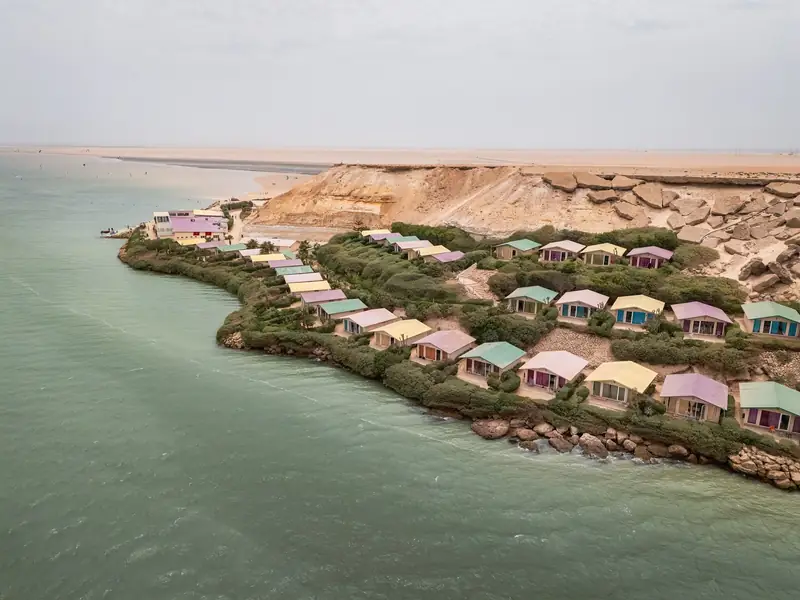
Dakhla is a windswept town at the tip of a long sandy peninsula in Morocco’s far south, where the Sahara runs straight into the Atlantic. The best things to do in Dakhla revolve around its lagoon, about 40 km long: learning to kitesurf on flat, shallow water, taking a 4x4 or a boat to the White Dune, eating oysters at the farms and watching flamingos on the sandbanks. Trade winds blow on most days of the year, which is why kite camps line the shore.
Dakhla is also remote, more than 1,500 km south of Casablanca and best reached by air. This guide covers what to do, kite seasons and spots, a two-day plan, excursions, where to stay, flights and buses, the best time to go and safety.
Book transfers before you land. Many kite camps are 25 km or more north of town, and there is no regular public transport out to the lagoon. Confirm airport pickups and excursion shuttles in writing before you pay.
At a glance
- Where
- Far south, Atlantic peninsula and lagoon
- Known for
- Kitesurfing, White Dune, oysters
- Allow
- 4–7 nights to kite; 2–3 days otherwise
- From Casablanca
- About 2 h by air
- Wind
- Most days; strongest April–September
- Sea
- About 18–22 °C; wetsuit in winter
In this guide
- Is Dakhla Worth Visiting?
- Best Things to Do in Dakhla
- Kitesurfing in Dakhla: Seasons, Spots and Schools
- Dakhla vs Essaouira for Kitesurfing
- A 2-Day Dakhla Itinerary
- Excursions and Day Trips from Dakhla
- Where to Stay in Dakhla
- Getting to Dakhla: Flights, Buses and Driving
- Best Time to Visit Dakhla
- Is Dakhla Safe? Checkpoints and Travel Advice
- Money, SIM Cards and Etiquette
Is Dakhla Worth Visiting?
Yes, if you kitesurf, windsurf or wingfoil, or want to learn: few places combine this much flat, shallow water with such reliable wind. For everyone else, it is a niche choice. The town, founded by Spain in 1884 as Villa Cisneros, is modern and plain, the sights are natural rather than historic, and getting here takes a flight or a very long bus ride.
- Kiters and wingfoilers: plan four to seven nights; camps sell weekly packages built around the wind.
- Non-kiters: two or three days cover the White Dune, Dragon Island, an oyster farm and a desert drive.
- Skip it if: you want medinas, monuments and nightlife, or have less than a week in Morocco.
Best Things to Do in Dakhla
Almost everything happens on or around the lagoon, and most outings need a 4x4, a boat or a guide. Excursions are timed around the tide, so plan them a day ahead.
Kitesurf, windsurf or wingfoil on the lagoon
The lagoon is about 40 km long and up to 4 km wide, and at high tide its waist-deep shallows reach up to 300 m from the shore. That makes it one of the easiest places in the world to learn, and beginners usually need several days of lessons to ride on their own. Schools also teach windsurfing and wingfoiling and rent out gear.
Visit the White Dune
The White Dune, or Dune Blanche, is a crescent of pale sand that spills into the lagoon about 30–40 km from town. Depending on the tide, it is ringed by turquoise shallows or almost cut off by water. There is no entry fee; you pay for the 4x4 or boat trip, and advanced kiters ride down to it on organised downwinders.
Sail to Dragon Island and look for wildlife
Dragon Island is a small sandy island in the lagoon whose outline is said to resemble a dragon; boat and catamaran trips stop for a swim and a climb to its viewpoint. On the way, look for flamingos and other wading birds on the sandbanks, and for bottlenose dolphins, which are often seen in the bay but never guaranteed. Migrating birds are most numerous from November to March.
Eat oysters at a lagoon farm
Pacific oysters are farmed in the lagoon, and several farms serve them at simple tables by the water. A dozen usually costs about 40–90 MAD (≈ €4–8 / $4–9) at the source, a fraction of the price in Marrakech. In town, grilled fish, octopus and prawns fill the menus.
Soak in a hot spring and drive into the desert
Inland, the sulphurous Asmaa hot spring lies roughly 25–35 km from town along sandy tracks. About 100 km south, the Imlili salt flat holds natural pools with small fish, a strange sight in the middle of the Sahara.
Kitesurfing in Dakhla: Seasons, Spots and Schools
Trade winds from the north and northeast blow on most days of the year, typically at 15–25 knots, and are strongest from April to September, when gusts can top 30 knots. Winter winds are lighter and less regular, but many days are still rideable. The lagoon is about 18 °C in winter and reaches 22 °C or more in late summer.
- The lagoon: flat, shallow water for beginners and freestyle, with many camps on the shore north of town.
- Speed Spot: glassy water on the eastern side of the lagoon, loved by freestylers; the wind is offshore, so go with a school that provides boat support.
- Ocean side: wave spots such as West Point, where the GKA Kite World Tour holds its wave contest, most recently on 4–11 October 2026; for experienced riders only.
- Choosing a school: ask about instructor qualifications, rescue boats, group sizes and what happens on days without wind.
Kite safety. Stay inside the zones your school sets, never ride alone in offshore wind, and check the tide, because the depth over the sandbanks changes quickly between high and low water.
Dakhla vs Essaouira for Kitesurfing
| Aspect | Dakhla | Essaouira |
|---|---|---|
| Water | Flat, shallow lagoon | Open bay with chop and waves |
| Wind | Most days; strongest Apr–Sep | Most afternoons; strongest in summer |
| Learning | Easiest: waist-deep water | Good; best in spring and Sept |
| Access | Fly, about 2 h from Casablanca | Bus, about 3 h from Marrakech |
| Off the water | Desert, oysters, birdlife | UNESCO medina, port, Gnawa music |
Dakhla is the better place to learn and to log long sessions on flat water; Essaouira is quicker to reach and adds a historic walled town. Our Essaouira guide covers its beaches and medina.
A 2-Day Dakhla Itinerary
For a short stay or rest days between kite sessions; book excursions through your camp or a licensed guide, and let the tide set the times.
- Day 1 · MorningA first lesson or a taster session on the lagoon.
- Day 1 · AfternoonA 4x4 trip to the White Dune, timed for the tide.
- Day 1 · EveningSunset over the lagoon, then dinner at your camp or grilled fish in town.
- Day 2 · MorningA boat or catamaran trip to Dragon Island, watching for flamingos and dolphins.
- Day 2 · AfternoonOysters at a lagoon farm, then a soak at the Asmaa hot spring.
- Day 2 · EveningA walk past the Spanish-era church, then mint tea and pastries in town, which comes to life after sunset.
Excursions and Day Trips from Dakhla
Distances are from Dakhla town. Prices for 4x4 and boat trips vary widely, so compare what is included.
| Destination | Distance, transport | Why go |
|---|---|---|
| White Dune | 30–40 km, 4x4 or boat | Dune spilling into the lagoon |
| Dragon Island | In the lagoon, by boat | Swimming, viewpoint, birds |
| Oyster farms | Lagoon shore, by car | Oysters at the source |
| Asmaa hot spring | 25–35 km, 4x4 | Warm sulphurous water |
| Imlili | About 100 km, 4x4 | Desert pools with fish |
| Old lighthouse | West of town, by taxi | Striped landmark, no climbing |
The White Dune, the hot spring and Imlili need a real 4x4 and a driver who knows the tracks, and rental contracts often forbid off-road driving, so most travellers book a guided trip. Heading on to Mauritania? A daily bus runs to the Guerguerat border, about five hours south; check visa rules and travel advice first.
Where to Stay in Dakhla
- Lagoon camps: bungalows, tents or rooms on the water 25 km or more north of town, often half or full board, with kite schools on site.
- Dakhla town: hotels and guesthouses near the centre, with restaurants, banks and metered petits taxis; you will need transport to the lagoon.
- Campsites: a few on the road north of town, popular with overland travellers driving to Mauritania.
Camps fill up early in the windy season, so book ahead. Nights are cool and breezy, so check that bungalows are sheltered from the wind.
Getting to Dakhla: Flights, Buses and Driving
- From Casablanca: Royal Air Maroc flies daily in about 2 hours, and also links Dakhla with Agadir, Marrakech, Rabat and Laayoune on some days.
- From Europe: Transavia flies from Paris-Orly, Binter Canarias from Gran Canaria and Ryanair seasonally from Madrid; schedules change by season.
- Airport: Dakhla Airport (VIL) is close to the town centre, a short petit-taxi ride away; camps usually arrange pickups.
- By bus: CTM and Supratours run from Agadir in about 20 hours, with several police checkpoints on the way.
- By car: the N1 covers about 535 km from Laayoune, mostly in good condition but with long gaps between fuel stations; carry water and keep your passport handy.
Agadir is about 1,150 km away by road, so driving down takes several days. Check current bus times and fares with CTM and Supratours.
Best Time to Visit Dakhla
| Season | Conditions | Verdict |
|---|---|---|
| Apr–Jun | Strong, steady wind; sea about 20 °C | Excellent for kiting |
| Jul–Aug | Strongest wind, warm days | Peak season; book early |
| Sep–Oct | Warmest sea, good wind, fewer crowds | Best all-round |
| Nov–Mar | Lighter wind; sea 17–19 °C | Waves and birds; bring a wetsuit |
Rain is rare, about 30 mm a year, and daytime highs stay around 22–26 °C all year, but evenings are cool and the wind rarely lets up. Ramadan is expected from about 8 February to 9 March 2027, when daytime service can be slower.
Is Dakhla Safe? Checkpoints and Travel Advice
Dakhla lies in Western Sahara, a territory Morocco administers as its Southern Provinces and whose final status is the subject of a UN-led process. For visitors, the everyday hazards are sun, wind, tides and long, empty roads.
Some governments, including the UK and Australia, advise against all travel within 30 km of the Berm, a militarised sand wall well inland, and to the areas east and south of it; Dakhla and its lagoon lie well outside that zone. Check your own government’s advice, make sure your travel insurance covers the region, and see our guide to whether Morocco is safe.
- Checkpoints: expect police checks on roads in and out of town; carry your passport and stay patient.
- Photos: never photograph checkpoints, military sites or police officers.
- Remote trips: go with a guide, carry plenty of water and tell someone your plans.
Money, SIM Cards and Etiquette
- Cash: banks and ATMs are in town, so withdraw cash for tips, oysters and taxis before heading to the camps.
- SIM cards: a Maroc Telecom or Orange SIM costs around 30 MAD with your passport; coverage can be patchy away from town.
- Tipping: 1–2 MAD in cafés, 5–10 MAD in casual restaurants and about 50–100 MAD a day for a driver; tip instructors at the end of a course if you are happy.
- Dress: swimwear and wetsuits at the camps and beaches; in town, cover shoulders and knees.
- Language: Hassaniya, the Arabic dialect of the Sahara, is spoken alongside Moroccan Arabic, French and some Spanish, a legacy of Spanish rule.
- Phrases: “Salam alaikum” (hello), “shukran” (thank you) and “la, shukran” (no, thank you) go a long way.
- Packing: a windproof jacket, high-factor sunscreen, sunglasses and reef shoes; see our Morocco packing list.
Prices may vary. Euro and dollar figures use November 2026 rates (€1 ≈ 10.9 MAD, $1 ≈ 9.9 MAD). Oyster, excursion and lesson prices vary by operator and season, so verify locally.
Frequently asked questions
Is Dakhla good for beginner kitesurfers?
Yes. The lagoon’s flat, waist-deep water and steady wind make it one of the easiest places in the world to learn, and most beginners ride on their own after several days of lessons.
When is the best time to go to Dakhla?
April to September has the strongest, most reliable wind, and July and August are the busiest months. September and October combine warm water, good wind and fewer crowds, while winter brings lighter wind and better ocean waves.
How do I get to Dakhla?
Most visitors fly: Royal Air Maroc has daily flights from Casablanca, and there are direct routes from Paris-Orly, Gran Canaria and, seasonally, Madrid. Buses from Agadir take about 20 hours.
Is Dakhla safe for tourists?
For visitors, the main hazards are sun, wind, tides and long remote roads. Dakhla lies in Western Sahara, where some governments advise against travel near the Berm far inland, so check your own government’s advice and your insurance.
How many days do you need in Dakhla?
Kiters should plan four to seven nights to make the long trip worthwhile. Non-kiters can see the White Dune, Dragon Island and an oyster farm in two or three days.