Agafay Desert: Marrakech's Moonlike Stone Desert Under the High Atlas
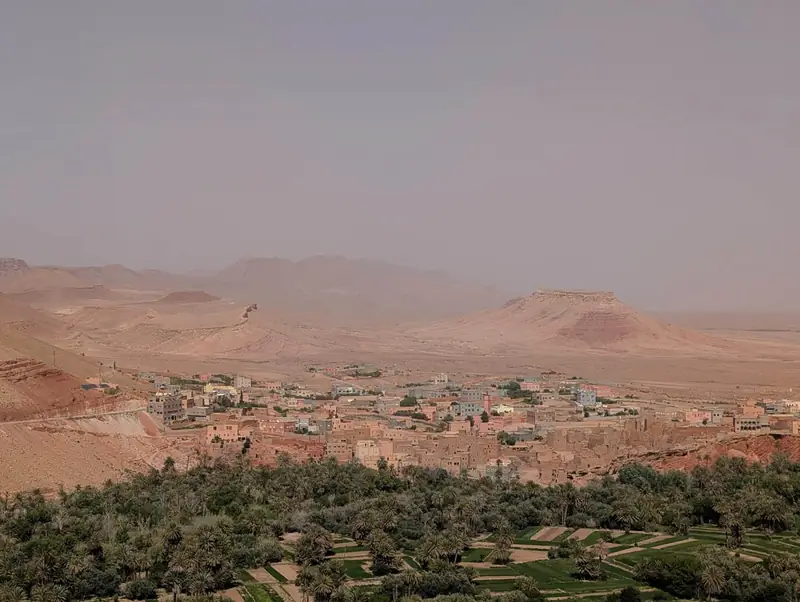
Beginning roughly 30 to 40 kilometres southwest of Marrakech toward Lake Lalla Takerkoust, the Agafay Desert is an undulating plateau of pale compacted stone, dry gullies and gravel ridges ('reg') rather than golden Saharan sand dunes. Knowing that geological distinction up front is the single key to enjoying Agafay: come for wide-open lunar horizons framed by snow-dusted High Atlas peaks, not wind-rippled sand.
Because the drive takes just 45 to 60 minutes from the medina or Gueliz, Agafay works brilliantly when a short Marrakech break leaves no room for the 9-to-10-hour haul to Merzouga or M'Hamid. Book a late-afternoon sunset dinner pass or an overnight tented camp, and avoid unshaded midday hours between June and August.
Arrive two hours before sunset for golden light across the stone ridges and High Atlas skyline. Agafay is a hard-packed mineral stone desert (reg), not fine sand dunes; reserve camp day passes, dinner tables and return evening drivers in advance, as rural tracks are unlit after dark.
At a glance
- Distance
- 30 to 40 km southwest of Marrakech (45 to 60 minutes by car)
- Terrain
- Rolling limestone, clay and gravel badlands (reg), not sand dunes
- Visit styles
- Afternoon pool + sunset dinner pass, camel walk or overnight glamping
- Backdrop
- Direct views south toward the High Atlas peaks on clear winter/spring days
- Best season
- October to May year-round; summer evenings only from June to August
- Easy pairing
- Lake Lalla Takerkoust and the Kik Plateau toward Asni or Imlil
In this guide
What makes Agafay different
Agafay is a semi-arid landscape of pale rocky hills, gravel and dry channels southwest of Marrakech, with the High Atlas visible when conditions are clear. It is not a Saharan sand sea: the rounded slopes seen from camps are predominantly stone and compacted earth rather than tall wind-blown dunes. Sparse plants and nearby communities are part of the landscape, not evidence that it is empty.
Choose between a short sunset visit and an overnight stay according to the atmosphere you want: camps differ in noise, facilities and transport. Ask for the exact location, return pickup, meal inclusions and vehicle suitability for the final track. For quad activities check helmets, instruction and insurance; stay on authorized routes, avoid vegetation and carry water and a warm layer for the evening.
Stone Desert (Reg) vs Saharan Sand Dunes (Erg): Setting Honest Expectations
Marketing photos occasionally crop tight around tent lanterns until first-time visitors assume Agafay looks like the Sahara. In reality, Morocco's great sand seas (Erg Chebbi and Erg Chigaga) sit behind the High Atlas barrier hundreds of kilometres southeast.
Agafay's beauty lies in sculpted mineral folds that turn amber and violet at dusk while the 4,000-metre Toubkal massif rises across the southern horizon. If your itinerary spans a week or more, compare full Saharan routes in our Sahara desert tour guide; if you have only a long weekend, Agafay delivers open sky without spending two full days in a car.
| Feature | Agafay Desert (near Marrakech) | Erg Chebbi / Erg Chigaga (Sahara) |
|---|---|---|
| Drive from Marrakech | 45 to 60 minutes each way | 9 to 11+ hours each way (multi-day trip) |
| Surface | Compacted pale stone, clay and gravel hills | True wind-sculpted golden sand dunes |
| Ideal duration | Half-day sunset dinner or 1 overnight | Minimum 3 to 4 days round-trip |
| Atmosphere | Boutique tented lodges, pool passes & Atlas views | Deep Saharan horizon and oasis road corridor |
Sunset Day Passes vs Overnight Tented Camps
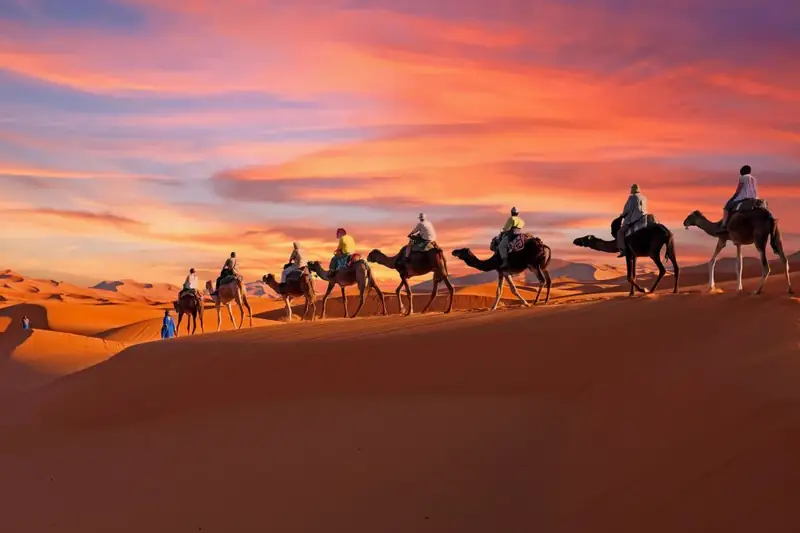
Over the past decade, Agafay has grown from a handful of off-grid canvas bivouacs into dozens of eco-domes and boutique desert lodges. Even without staying overnight, many camps sell pre-booked day passes combining afternoon pool access, a quiet ridge walk or camel stroll at dusk, and a three-course Moroccan dinner around fire pits.
Staying the night rewards you with crisp starlight once dinner day-trippers depart around 22:00 and quiet dawn light on the Atlas snowline before returning to Marrakech monuments like Menara Gardens.
Choosing Calm Tracks Away From Quad-Bike Dust
Because entry points closest to the paved P2009 road attract group quad-bike and buggy convoys in late afternoon, ask where a camp sits before booking. Lodges tucked deeper into private valleys toward Lalla Takerkoust enforce quieter zones so sunset diners are not sharing a ridge with engine noise.
Getting There and Combining With Lalla Takerkoust
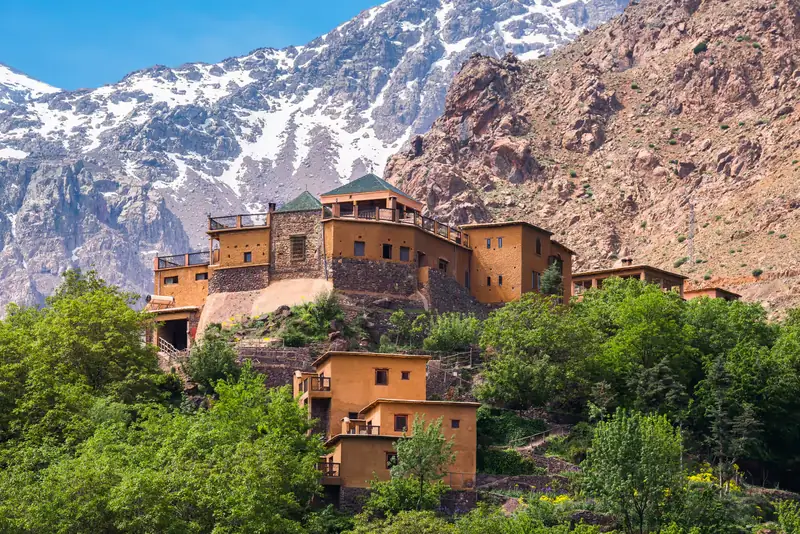
While main feeder roads from Marrakech are paved, the final two to five kilometres into individual camps follow graded gravel pistes without streetlamps. Arrange a round-trip transfer through your camp or a licensed driver rather than relying on on-demand ride apps late at night; see getting around Morocco and best time to visit Morocco.
- Pre-book your return car: Metered city petit taxis do not operate out into rural Agafay; agree a fixed round-trip waiting rate with a grand taxi or camp transfer before leaving Marrakech.
- Bring a warm evening jacket: Open hills cool rapidly after sunset from November through March even when Marrakech medina feels mild.
- Scenic loop option: Pair a morning drive past Lalla Takerkoust reservoir and the Kik Plateau with a relaxed late lunch or sunset stop in Agafay.
Frequently asked questions
Does the Agafay Desert have real sand dunes?
No. Agafay is a rocky pre-desert ('reg') made of compacted pale stone, clay and gravel hills rather than loose Saharan sand dunes.
How far is Agafay from central Marrakech?
Most camps sit 30 to 40 kilometres southwest of Marrakech, taking roughly 45 to 60 minutes depending on medina traffic and the final gravel track.
Can I visit Agafay just for sunset and dinner without sleeping there?
Yes. Most Agafay camps offer pre-booked sunset dinner packages or afternoon pool-and-dinner day passes with return transfers to Marrakech.
Is Agafay worth visiting in summer?
Midday temperatures from June to August are fiercely hot on unshaded stone hills; in summer, skip daytime activities and arrive just before sunset for an outdoor breeze.
Should I rent a car to drive into Agafay at night?
Paved roads reach the edge of the plateau, but unlit gravel camp tracks branch in many directions after dark, making a pre-booked camp driver far more relaxing.