Menara Gardens, Marrakech: Olive Groves, Almohad Basin and Atlas Views
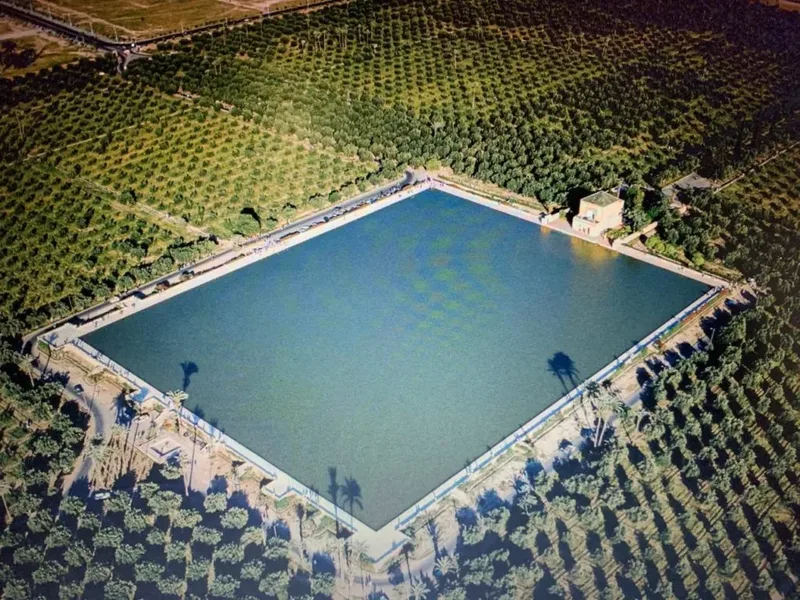
Menara Gardens on the western edge of Marrakech is an open agricultural estate and historic reservoir rather than a flower-filled botanical showcase like Jardin Majorelle. Laid out in the 12th century under the Almohads to store snowmelt channelled from the High Atlas, its vast rectangular basin and green-tiled pavilion sit inside tens of hectares of working olive groves.
Travellers who arrive at noon expecting exotic flowerbeds sometimes leave underwhelmed; travellers who come in late-afternoon winter or spring light find one of Marrakech's classic views and a relaxed local promenade. Plan 45 to 75 minutes, bring water and sun protection, and check at the pavilion gate if you want upper-balcony access.
Come for clear-sky Atlas reflections, not floral borders. Entry to the outer olive groves and basin promenade is free public parkland, while entering the small 19th-century Minzah pavilion carries a separate ticket when open.
At a glance
- Location
- End of Avenue de la Ménara, roughly 3.5 km west of Jemaa el-Fna
- Origins
- 12th-century Almohad reservoir (sahridj) with an 1869–1870 pavilion
- Main draw
- Reflecting pool, green-roofed Minzah pavilion and High Atlas horizon
- Admission
- Outer olive groves and basin walk free; pavilion interior ticketed separately
- Best light
- Clear winter or spring late afternoon when snow caps the High Atlas
- Suggested time
- 45 to 75 minutes at an easy stroll
In this guide
An orchard shaped by water
Menara is a historic agricultural estate as well as a place of leisure. Its origins lie in the twelfth-century Almohad period, when a large basin helped store water for surrounding orchards. Underground channels known as khettaras are part of the wider story of bringing water to the Marrakech plain; the basin and olive rows make this practical landscape visible today.
The green-roofed pavilion is later than the original garden and was rebuilt in the nineteenth century. Walk around the basin to compare the pavilion, orchard and, on a clear day, the High Atlas. It is not a flower-filled botanical garden. Confirm pavilion access and any charge locally, keep away from the water's edge and bring sun protection for exposed paths.
How the Almohad Reservoir and Olive Estate Work
In the mid-12th century, Almohad rulers engineered large open-air basins outside Marrakech's walls to regulate water brought roughly 30 kilometres from the High Atlas foothills through underground khettara channels. Stored water irrigated orchards of olive, palm and fruit trees while serving as an open training reservoir.
The compact two-storey Minzah pavilion overlooking the southern rim dates from 1869–1870 under Alaouite Sultan Muhammad IV, built on an earlier Saadian foundation and topped with a green pyramidal tile roof that gave rise to the name Menara.
| Marrakech garden | Setting & style | Ticket model | Best reason to go |
|---|---|---|---|
| Menara Gardens | Vast olive orchard and historic water basin | Grounds free; pavilion separate | Open sky, local stroll and High Atlas reflection |
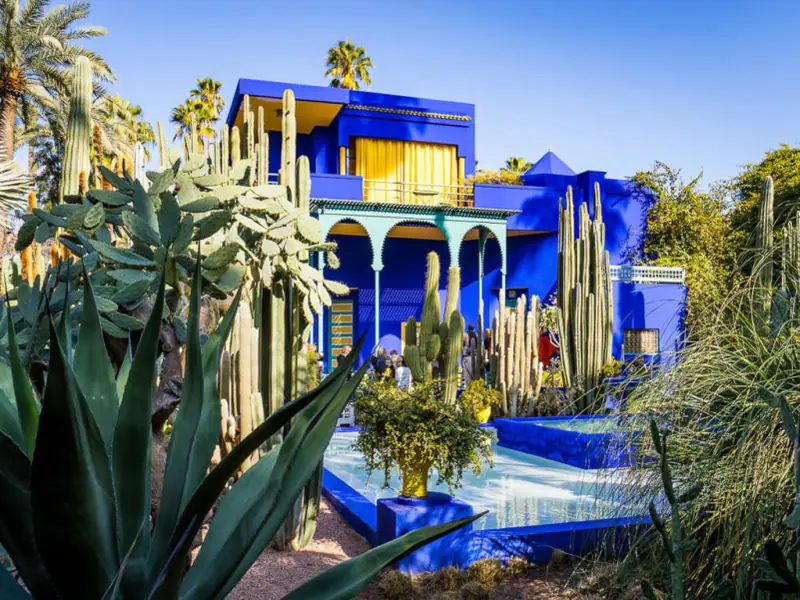
| Jardin Majorelle | Compact exotic botanical garden in Gueliz | Timed paid ticket online | Cobalt architecture, cacti and dense shade |
| Cyber Park Arsat Moulay Abdesalam | Restored central park near Koutoubia | Free public park | Easy shaded break close to the medina |
What to Expect on the Ground
From the main gate facing Avenue de la Ménara, a broad straight gravel-and-paved avenue leads between silver-green olive rows toward the raised rim of the basin. Steps climb onto the wide promenade surrounding the water, where giant carp gather along the walls and local families stroll on weekends.
Expect dust, wide spacing and modest shade along the basin rim itself. In summer haze or sand-laden Harmattan winds, the High Atlas skyline can disappear into glare; after winter rain or crisp January–April mornings and late afternoons, snow-covered peaks frame the pavilion cleanly.
Visiting the Minzah Pavilion
Walking around the entire reservoir and sitting beneath the olive trees costs nothing. If the small walled courtyard around the 19th-century pavilion is open, a modest cash entry ticket lets you climb narrow stairs to the upper loggia for the elevated axis view back toward Koutoubia Mosque and the city.
Pavilion hours can close earlier than the surrounding park grounds or pause during maintenance, so treat upper-balcony access as a bonus rather than the sole reason for the trip.
Getting There from the Medina, Hivernage or Airport
Menara Gardens sits west of Hivernage along Avenue de la Ménara, just north of Marrakech Menara Airport. Walking from Koutoubia Mosque takes 40 to 45 minutes along wide modern boulevards, which is pleasant in cool winter sunshine and exhausting in July heat.
- Petit taxi: A metered beige petit taxi from Koutoubia, Gueliz or Hivernage takes about 10 minutes; ask the driver to switch on the meter before setting off, as outlined in getting around Morocco.
- Horse-drawn calèche: Green calèches parked near Koutoubia and Foucault Square commonly run sunset loops down Avenue de la Ménara; agree the total round-trip price and waiting time per carriage before boarding.
- Airport timing: Although close to the terminal on the map, there is no luggage storage at the park gates; visit unencumbered from town rather than dragging suitcases along gravel paths.
Local Atmosphere, Sun Protection and Etiquette
On Friday afternoons, Sundays and public holidays, Menara Gardens fills with Marrakchi families picnicking beneath the olives, giving the park a warm neighbourhood feel very different from ticketed tourist monuments. Refreshment kiosks near the basin sell water and snacks, though carrying your own bottle is wise.
Avoid camel photo touts stationed outside the exterior avenue unless you first agree an exact price per person in dirhams, and review Seasonal heat patterns in our best time to visit Morocco guide.
Frequently asked questions
Is Menara Gardens free to enter?
Yes, walking through the outer gates, olive groves and paths around the main water basin is free. Entering the small 19th-century Minzah pavilion carries a modest separate ticket when open.
How long do I need at Menara Gardens?
Allow 45 to 75 minutes to walk from the avenue gate to the basin, circle the water, take photographs and rest under the olive trees.
When can you see snow on the mountains behind Menara Gardens?
Snow on the High Atlas peaks behind the pavilion is clearest between December and April, especially on crisp afternoons after rain clears dust from the air.
Is Menara Gardens worth visiting in summer?
Only early in the morning or near sunset. Midday summer heat is fierce on the unshaded basin terrace and summer haze often hides the mountain view.
Can I walk to Menara Gardens from Jemaa el-Fna?
It is a flat 3.5 to 4 kilometre walk taking around 45 minutes each way along modern avenues, though a short metered petit taxi is far more comfortable in warm weather.