Dune Blanche, Dakhla: A Practical Guide
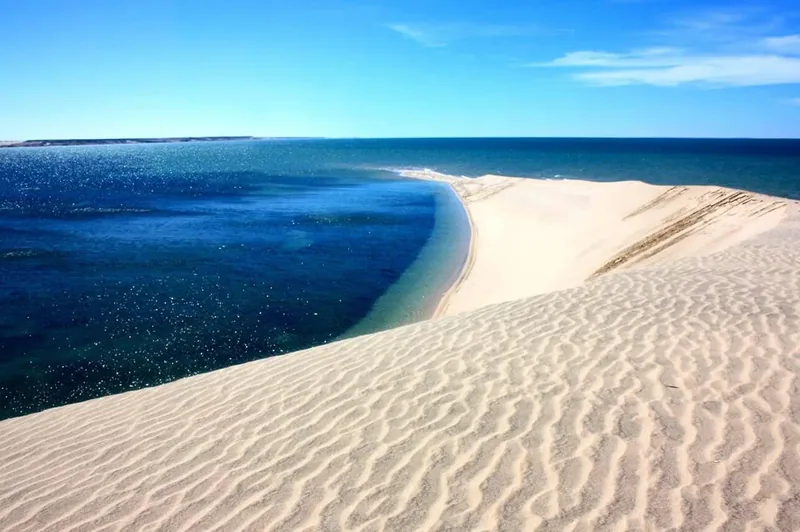
Dune Blanche is a pale crescent of sand where the desert meets Dakhla lagoon. Wind and tides change the appearance of the shore, and the dune can look like an island when water surrounds it. This is a natural landscape, not a built attraction or a substitute for the inland Sahara.
Plan around the tide. Ask a local operator about safe access and return conditions before setting out.
At a glance
- Location
- Dakhla lagoon, Western Sahara
- Landscape
- Pale dune and tidal lagoon
- Access
- Local driver or organized excursion
- Timing
- Allow a half-day; confirm tides
- Facilities
- Limited or none at the dune
- Bring
- Water, sun protection and a wind layer
In this guide
A dune shaped by wind and water
The white dune rises beside the lagoon, a coastal environment of shifting sand and tidal flats. Its contrast with the blue-green water changes with light and water level. Lagoon wetlands support birds and other wildlife, so keep your distance from resting or feeding animals and leave no litter.
Getting there and timing the visit
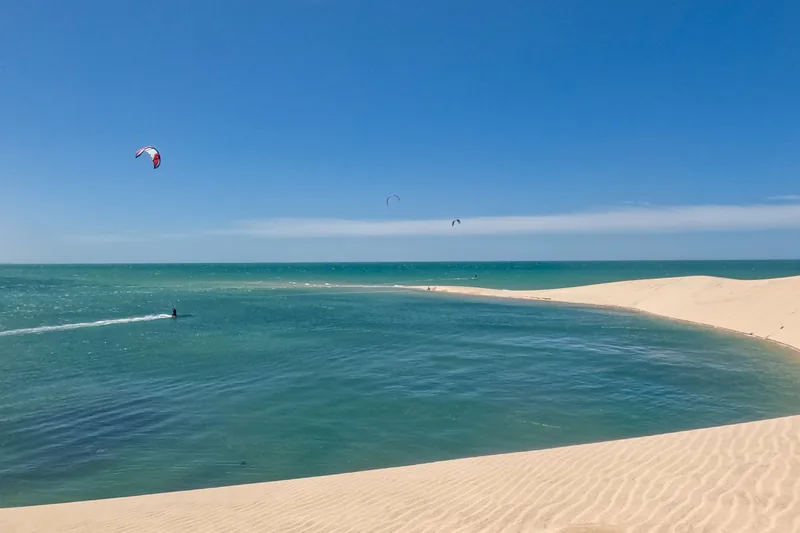
Excursions often use a local 4x4 driver, and some water-sports trips approach by water. Sources differ about exact access at different tides: do not assume that a low-tide crossing, a road or a boat will always be available. Ask your operator about the specific route, forecast, water level and safe return window that day.
A practical half-day
Agree on pickup, vehicle, duration, stops, water and total price before booking. There are few facilities at the dune; carry drinking water, sunscreen, a hat, closed shoes and a layer against wind. Soft sand and uneven, wet ground make the outing difficult for wheelchairs or people with limited mobility; discuss access before booking.
Tide and water safety
A falling or rising tide can change the route quickly. Do not walk out alone onto unfamiliar flats or drive onto wet ground. Follow local guidance, leave well before the water returns and never attempt a crossing when conditions are uncertain. Kite and boat activities require suitable equipment, an experienced operator and a clear rescue plan.
Respect the lagoon
Keep to established tracks and avoid disturbing birds, dunes and fragile shore vegetation. Take rubbish away and ask before photographing people. Dakhla is in Western Sahara, a territory whose status is disputed; check your government’s current travel advice, insurance terms and route restrictions before travel.
Frequently asked questions
Is Dune Blanche the same as Dragon Island?
No. They are separate places in the Dakhla lagoon; confirm which stop your excursion includes.
When should I go?
The safe approach depends on tide, wind and your route. Confirm the timing and return window with a knowledgeable local operator.
Is there an entrance fee?
It is a natural site; ask the operator about transport, activity and any applicable access charges before booking.
Can I reach the dune independently?
Access involves unfamiliar tracks or water and changing tides. A local operator with suitable transport is the safer choice.
What should I bring?
Carry water, sun and wind protection, suitable footwear and any personal medication; facilities are limited.