Imlil: Village Walks and Mountain Days Without a Summit
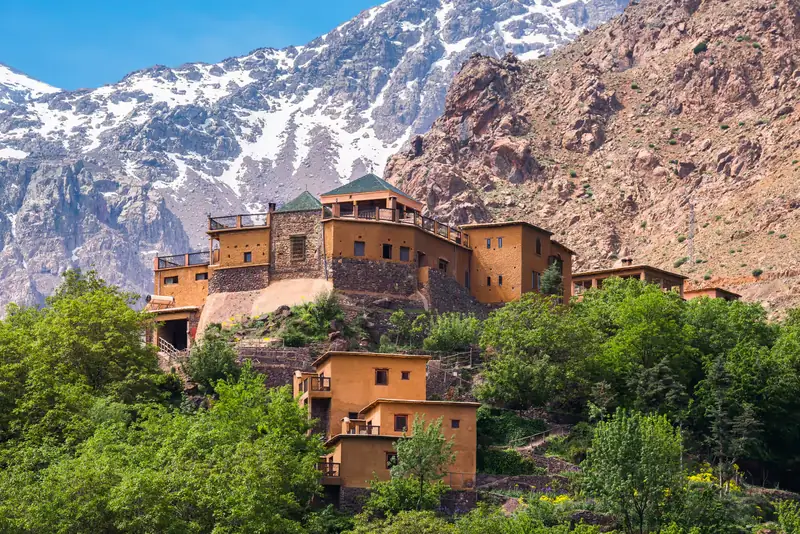
Imlil is a High Atlas village and walking base south of Marrakech. Come for the valley, cultivated terraces and surrounding villages, not only to start a Toubkal climb. A day trip can combine a modest walk with lunch, while an overnight stay leaves more room for a slower pace. Neither option needs a summit to feel worthwhile.
The important distinction is between looking around the village and committing to a mountain route. “Easy” can still mean uphill stone paths, steps and an uneven descent. Choose the distance for your group, keep time for the return and bring layers even when Marrakech is hot. A driver gets you to Imlil; a mountain guide and suitable conditions determine the walking day beyond it.
Choose the walk, not just the destination. Decide on the uphill effort, surface, turnaround time and route back before leaving the village. A shorter visit with a view and a meal is better than a rushed or unsuitable mountain circuit.
At a glance
- Setting
- High Atlas, in the Aït Mizane valley
- Village elevation
- Around 1,740 metres
- Road from Marrakech
- Allow roughly 1.5 to 2 hours each way, plus delays
- For a first visit
- Village views, a suitable walk and lunch
- Underfoot
- Slopes, steps and rocky paths
- Separate undertaking
- Toubkal summit trek
In this guide
- A Village Visit, a Day Walk or a Trek?
- What You See in the Valley
- Walking Towards Aroumd Without Overcommitting
- When You Need Mountain Guiding
- Keep Toubkal Separate from an Imlil Day Trip
- Seasons, Weather and a Sensible Turnaround
- Getting from Marrakech and Returning
- Day Trip or Overnight: Access Matters More Than the View
- Budget, Food, Equipment and Mule Welfare
- Children, Limited Mobility and Respectful Visiting
A Village Visit, a Day Walk or a Trek?
Start with what you want to do on foot. A village visit can be a short look around, a terrace meal and a return to your vehicle. A walk through nearby settlements adds climbing and uneven ground. A mountain pass or the route towards the high refuges needs a different allowance for fitness, equipment, guiding and daylight. A destination name alone does not describe the effort.
For a first outing, reserve roughly two to three hours for a local walk if the group and conditions suit, with lunch and all road travel additional. That is a planning allowance, not a marked route duration or a reason to keep walking when someone is tired. Set a turnaround time with the guide and leave space for rests, photographs and a slower descent.
| Visit | Good for | Main limit |
|---|---|---|
| Village stop | Views and lunch | Exact access |
| Local walk | Nearby settlements | Ascent and descent |
| Mountain route | A hiking day | Guide and conditions |
What You See in the Valley
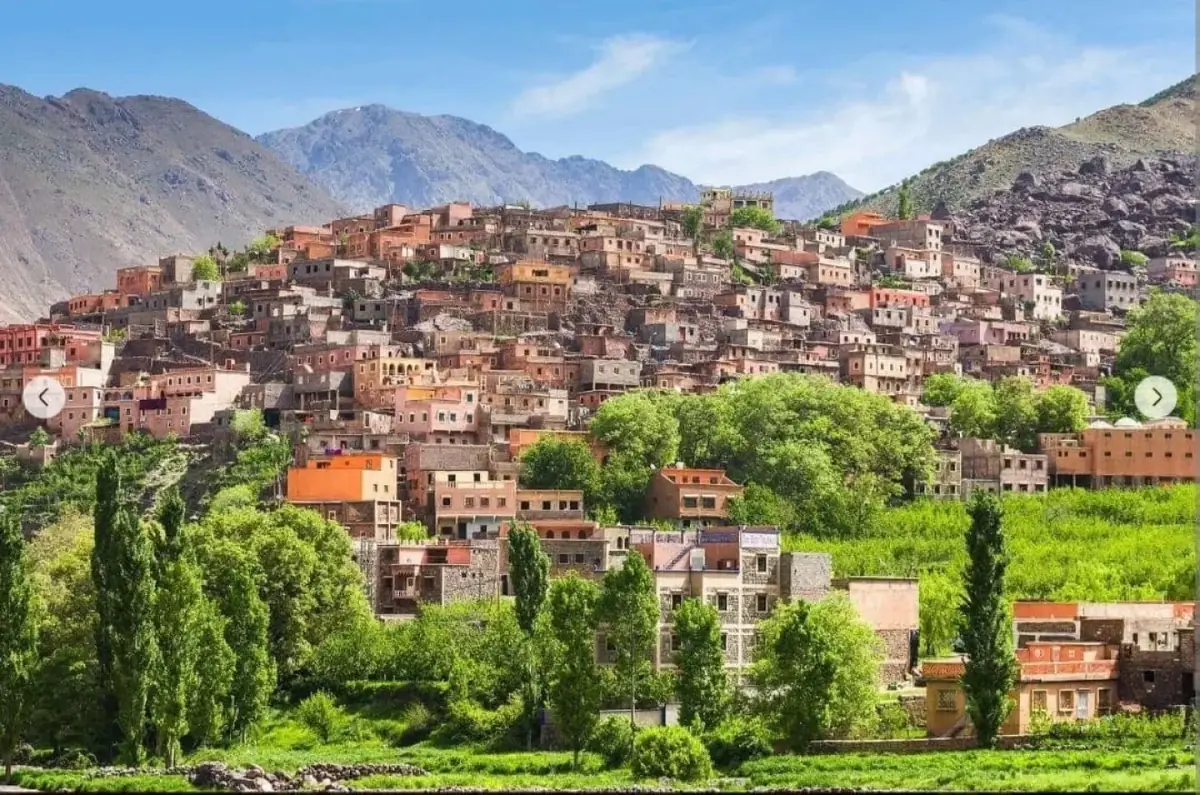
Imlil is both a trekking hub and a place where people live and work. Guesthouses, cafés, guide services, fields and village lanes share the valley. The regional tourism guide to Imlil introduces its mountain setting. Look at the relationship between cultivated slopes, houses and paths rather than expecting an untouched landscape with no businesses or visitors.
Amazigh communities shape the surrounding villages. Agriculture and access paths are not scenery to walk through without permission: stay out of crops, keep gates as you find them and ask before photographing people or homes. Snow on distant peaks, running water and seasonal greenery depend on conditions. The weather on your visit matters more than a single promotional photograph.
Walking Towards Aroumd Without Overcommitting
Aroumd, also written Armed or Aremd, is a nearby village on the approach towards the higher Toubkal routes. It can be a goal for a local walk, but there are different approaches and the return matters as much as the outward leg. Ask your guide to match the surface and ascent to the whole group rather than describing the outing only as “a village walk”.
A waterfall detour can involve wet stones, steps or a steeper approach. It is optional, and its flow is not guaranteed. Stay on an open suitable path, do not scramble for a photograph and do not treat the river as a managed swimming area. A café stop with a view or an earlier turnaround can make a better day than following a group beyond your comfort.
When You Need Mountain Guiding
For routes beyond a simple village visit, arrange a professional mountain guide. The Bureau des Guides in Imlil is a starting point for organizing one, rather than assuming that anyone who approaches you is your guide. Explain recent walking experience, knee or balance problems, children and any need to avoid exposed or steep ground. A good route choice starts with those facts, not a promise that everybody can do the same circuit.
Agree the route goal, expected ascent, return point, duration, language, group size and total price before starting. Separate guiding from driving, meals and any optional transport. Keep the group together and tell the guide promptly when the pace is too fast. For routes towards Toubkal, organize a licensed mountain guide and bring identification; settle current checkpoint and document arrangements before departure rather than arriving at a control point unprepared.
Keep Toubkal Separate from an Imlil Day Trip
Toubkal is a high-altitude mountain undertaking, not the final stop on a casual drive-and-lunch excursion. The approach to the refuges alone involves a substantial climb; continuing to the summit adds altitude, weather exposure and a long descent. A short walk from Imlil does not prepare everyone for the higher route, and a night in the village is not a guarantee against altitude illness.
Use the Mount Toubkal guide and Toubkal hiking guide for separate trek planning. Allow time for acclimatisation, appropriate skills and equipment, refuge arrangements and insurance covering the intended elevation and activity. Snow or ice changes the task, regardless of the calendar. Do not add a refuge or summit goal simply because the first part of a valley walk feels comfortable.
Seasons, Weather and a Sensible Turnaround
Conditions can be cooler than Marrakech, especially in shade and after sunset, but strong sun and an uphill walk can still be hot. Check the forecast for Imlil and the intended walking elevation, plus the road. A city-weather widget is not a mountain forecast. Short winter daylight, snow, ice, rain and wind all affect what is reasonable; no month guarantees an easy dry path.
Keep a warm layer and weather protection accessible, and be ready to shorten or cancel. Follow closures and local authority instructions. Heavy rain can make rivers, gullies and roads dangerous: do not cross floodwater on foot or in a vehicle. If you feel unwell, stop ascending and tell the guide; serious symptoms or deterioration call for descent when safe and urgent medical help, not an attempt to push through to lunch.
Getting from Marrakech and Returning
The road journey usually goes via Asni. As a planning range, allow around one and a half to two hours each way from Marrakech, with pickups, traffic, stops and poor weather additional. A private vehicle offers control over pauses and return time; a shared excursion follows a group schedule and may include commercial stops. Compare time actually available in Imlil, not just the headline length of the tour.
Public travel can involve shared taxis and a change at Asni, with waiting time and onward availability rather than a guaranteed visitor timetable. There is no train to Imlil. The transport guide explains the wider options. Before walking away from a vehicle, settle the pickup point, waiting arrangement, luggage and return destination. Avoid a tight same-day flight connection or a return plan that depends on finding the last seat after a long walk.
| Transport | Advantage | Tradeoff |
|---|---|---|
| Private vehicle | Flexible return | Higher shared cost |
| Group trip | Common logistics | Fixed pace |
| Shared taxis | Flexible legs | Waits and changes |
Day Trip or Overnight: Access Matters More Than the View
A day trip suits visitors who want one manageable walk and a meal before returning to Marrakech. An overnight stay gives room to rest after arrival, start walking without the morning drive and spend time in the village. It does not remove the need to choose an appropriate route. Do not fill the extra time automatically with a higher or longer hike.
For accommodation, locate the actual vehicle drop-off and the final approach to the room. A hillside terrace can mean stairs or a steep luggage carry. Clarify heating, hot water, bathroom arrangements, meals and arrival time; summer photographs do not describe winter room comfort. If luggage support is offered, agree the charge and handling separately, keeping medication, documents, water and your warm layer with you.
Budget, Food, Equipment and Mule Welfare
Build the budget from transport, guide, meals, accommodation if needed and equipment or luggage support. Determine whether a quote is per person, per vehicle or per group, and whether the driver waits. No single village entrance ticket covers these services. Bring dirhams and small notes using the money guide; do not assume every purchase can be paid by card or that a specific cash machine will work.
Carry drinking water and a snack rather than relying on a late lunch or a promised supply on the walk. Agree the complete meal price, drinks and dietary needs before ordering; allow time for food preparation. Wear grippy shoes and use the packing guide for layers and sun protection. For any pack animal, look for an attentive handler, suitable load and a sound animal; decline an overloaded or injured one. A mule ride is not a substitute for a route you can manage or an accessible path.
Children, Limited Mobility and Respectful Visiting
Village lanes and approach paths may be steep, narrow or stepped, so a general “family friendly” label does not establish pushchair or wheelchair access. For a shorter visit, plan a specific reachable café or viewpoint from a precise drop-off. Carrying a child downhill can hide the effort of the return. Choose footwear and distance for the least confident walker, and keep children away from stream edges and working animals.
Greet people politely, ask before entering a home or taking a close photograph and keep litter with you. A home lunch is hospitality arranged with hosts, not access to every house. Compare alternatives in the Marrakech day-trip guide and leave city monuments for another day using the Marrakech guide. A useful plan is an early drive, an agreed walk with a turnaround, an unhurried meal and a return with room for delays.
- Before leaving Marrakech: road weather, pickup and return.
- Before walking: route, guide, turnaround and water.
- Before booking a room: drop-off, stairs, heating and meals.
- Before going higher: conditions, equipment, documents and insurance.
Frequently asked questions
Is Imlil worth visiting without climbing Toubkal?
Yes. Village views, a suitable local walk and lunch can fill a day without a summit. Match the route to the group rather than trying to walk as high as possible.
How long is the drive from Marrakech?
Allow roughly 1.5 to 2 hours each way, with time for pickups, traffic, stops and mountain-road conditions in addition. Treat that as a planning range, not a timetable.
Do you need a guide in Imlil?
A simple village visit is different from a mountain walk. Arrange a professional mountain guide for routes into the mountains; for Toubkal, organize a licensed guide and current checkpoint/document arrangements before departure.
Can you visit Imlil in winter?
A visit depends on road and local conditions. Snow, ice, cold and short daylight may change or prevent the walk; keep a shorter option and do not treat winter mountains as a summer stroll.
Is Imlil suitable for limited mobility?
Some visits can focus on a specific reachable stop, but steep lanes and steps mean there is no blanket promise of accessible village walking. Establish the exact drop-off and approach rather than relying on a general tour label.