Cap Spartel and the Caves of Hercules: Tangier's Atlantic–Mediterranean Loop
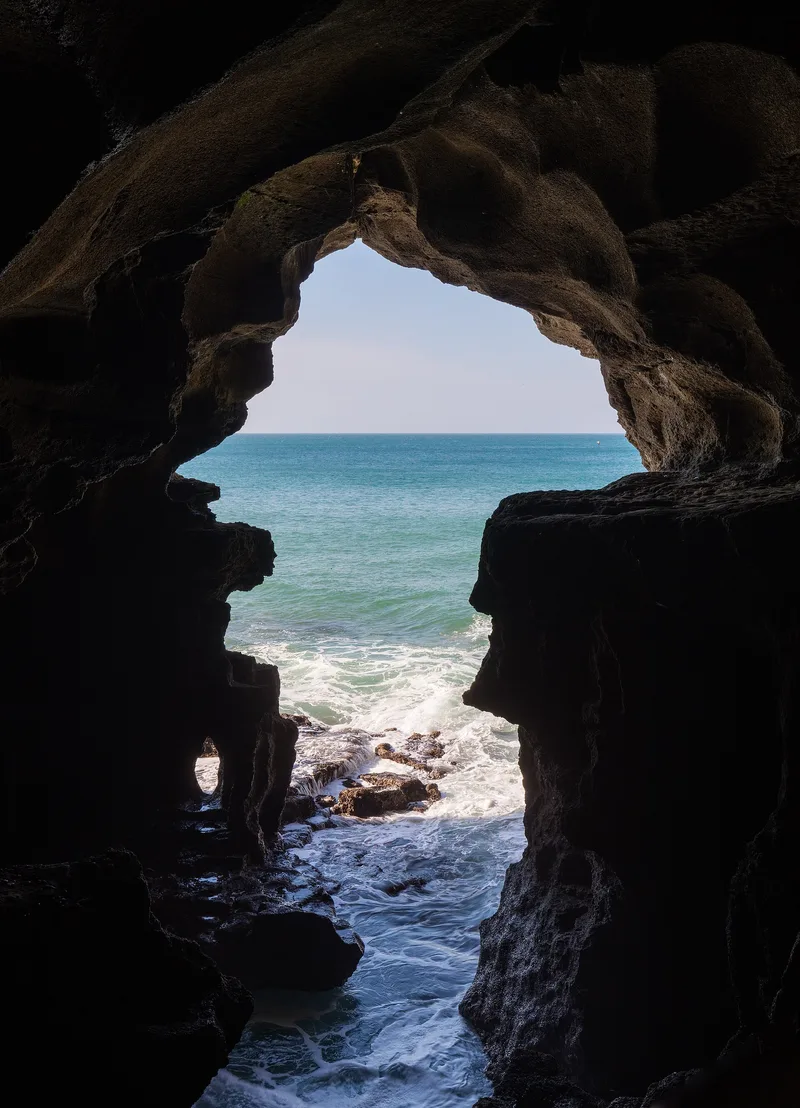
Roughly 14 kilometres west of central Tangier, forested Jbel Kebir drops abruptly to Cap Spartel, the northwestern headland of mainland Africa where the waters of the Mediterranean meet the Atlantic swell. Five kilometres farther south along the Atlantic coast road sit the Caves of Hercules at Achakar, a wave-carved limestone cavern famous for its sea-facing opening shaped remarkably like the map of Africa.
Because regular urban buses do not connect central Tangier, the headland lighthouse and the Achakar caves smoothly, the two stops work best as a single 2.5 to 3.5 hour grand taxi or car loop. Plan late afternoon on a clear day, agree waiting time with your driver before leaving town, and carry dirham cash for both optional entry gates.
Book your return ride before leaving Tangier. Empty taxis rarely wait outside the Caves of Hercules near dusk; hire a grand taxi for the full round trip with agreed waiting time at Cap Spartel and Achakar.
At a glance
- Distance
- About 14 km west of Tangier to Cap Spartel, plus 5 km south to the caves
- Key stops
- 1864 Cap Spartel Lighthouse viewpoint and Caves of Hercules sea window
- Transport
- Chartered grand taxi with waiting time or rental car via Jbel Kebir
- Tickets
- Public headland free; lighthouse museum/garden and cave interior paid
- Total time
- 2.5 to 3.5 hours round trip from Tangier
- Best timing
- Clear afternoon into sunset on the west-facing Atlantic coast
In this guide
A lighthouse, a quarry and a legend
Cap Spartel guards the Atlantic approach to the Strait of Gibraltar. The lighthouse, ordered under Sultan Mohammed IV after shipwrecks, began operating in 1864; its history includes international cooperation over navigation. The headland and the cave are separate stops, so allow transport time between them rather than treating them as one site.
The Hercules cave combines natural coastal erosion with human quarrying: circular scars show where stone was cut for millstones. Its sea opening resembles Africa to many visitors. Stories of Hercules resting here belong to mythology, not documented geological history. Surfaces can be wet and slippery; stay behind barriers, avoid exposed rocks in rough seas and confirm access and ticket arrangements locally.
Two Stops, One Easy Coastal Circuit
Leaving Tangier through the pine and eucalyptus hills of La Montagne (Jbel Kebir) and Perdicaris Park, the road climbs above the Strait of Gibraltar before reaching the rocky promontory of Cap Spartel. Commissioned in 1864 by Sultan Muhammad IV with international maritime cooperation after repeated shipwrecks in the strait, the buff-stone lighthouse still anchors navigation at the entrance to the Mediterranean.
From the cape, the coast road drops south to the wide Atlantic sands of Plage Achakar and the Caves of Hercules (Grottes d'Hercule). Partly hollowed by Atlantic surf and enlarged over centuries by local craftsmen cutting circular millstones from the rock walls, the cave chamber frames crashing waves through its renowned silhouette opening.
| Stop on the loop | What is free vs ticketed | Suggested stop time | Main highlight |
|---|---|---|---|
| Perdicaris Park (Rmilat) | Free forest trails and strait lookouts | 20 to 30 min (optional) | Shaded cliff views toward southern Spain |
| Cap Spartel headland | Outer cliff & sea signpost free; lighthouse complex paid | 35 to 50 min | 1864 lighthouse, gardens and two-seas panorama |
| Caves of Hercules & Achakar | Beach promenade free; cave interior ticketed | 30 to 45 min | Millstone-cut cavern and Atlantic sea window |
What to Expect at Cap Spartel
Outside the lighthouse compound, public terraces and the wooden directional sign looking out over the meeting of the Mediterranean Sea and Atlantic Ocean are open without charge. When you enter the renovated Cap Spartel reserve complex, a paid ticket grants access to landscaped gardens, a compact maritime history museum inside the historic buildings and café terraces.
Check posted prices at the entrance gate before deciding whether you want the full museum-and-garden circuit or simply the exterior coastal viewpoint. Strong Levante (easterly) winds blow frequently across the headland even on sunny summer afternoons, so pack a windproof layer.
Visiting the Caves of Hercules Realistically
The Caves of Hercules are compact rather than a deep multi-hour cavern system. A short stepped descent leads into cool damp galleries textured with hundreds of circular grooves left by historic millstone quarrying, ending at the natural sea arch facing the Atlantic.
Following refurbishment, foreign visitors pay a modest entry fee in dirhams at the official booth above the steps. Inside, wet limestone floors can be slick from ocean spray, and queues form briefly in front of the sea window when tour buses arrive together; wait five minutes for groups to rotate through and the chamber clears quickly.
How to Organise Transport Without Overpaying
The most common mistake is taking a one-way taxi to Cap Spartel and assuming another metered petit taxi will pass by to take you onward to Achakar and back to Tangier. Petit taxis operate only inside the municipal boundary, so cross-boundary excursions belong to cream-coloured or regional grand taxis.
- Agree the whole loop upfront: Negotiate a private grand taxi for the complete circuit (Tangier, optional Perdicaris lookout, Cap Spartel, Caves of Hercules and back to Tangier) including 90 to 120 minutes of waiting time, paying at the end of the return ride. See getting around Morocco.
- Driving yourself: Paved roads are in good condition with signed parking areas at both Cap Spartel and Achakar; keep small coins ready for official parking attendants wearing vests.
- Unofficial cave guides and camel touts: Inside the small cave you do not need a guide to find the sea window, and beachside camel rides at Achakar should only be taken after agreeing a clear per-person rate. Read more in Morocco safety and scams.
Best Season, Sea Conditions and Northern Pairings
Spring through autumn brings the clearest horizons across the Strait of Gibraltar toward Tarifa in Spain, while winter Atlantic swells send dramatic white spray through the Caves of Hercules opening. During severe Atlantic storms, waves occasionally restrict the lowest cave platform for safety.
After a morning in Tangier's medina and an afternoon at Cap Spartel, many travellers continue the next day inland to Chefchaouen and its Blue Medina. Compare seasonal coastal winds in our best time to visit Morocco guide.
Frequently asked questions
How long does a trip to Cap Spartel and the Caves of Hercules take?
Allow 2.5 to 3.5 hours round trip from central Tangier, including driving through Jbel Kebir, 40 minutes at Cap Spartel and 35 minutes at the Caves of Hercules.
Can I reach Cap Spartel and the Caves of Hercules by city bus?
Public bus coverage does not connect central Tangier, the headland and the caves efficiently. Hiring a round-trip grand taxi with waiting time or driving a rental car is far more practical.
Are Cap Spartel and the Caves of Hercules free?
The outer cliff viewpoint and two-seas sign at Cap Spartel are free, while the lighthouse museum/garden complex and the interior of the Caves of Hercules each charge a separate admission ticket.
Is the Caves of Hercules opening natural or carved?
The coastal cavern was shaped by Atlantic waves and later enlarged by quarrymen cutting stone millwheels, giving the seaward opening its famous Africa-like outline.
What is the best time of day to visit?
Mid-to-late afternoon on a clear day lets you see the Strait of Gibraltar in bright light and reach the west-facing Caves of Hercules and Achakar beach near sunset.