Akchour Waterfalls and God's Bridge: Trails and Gorge Planning From Chefchaouen
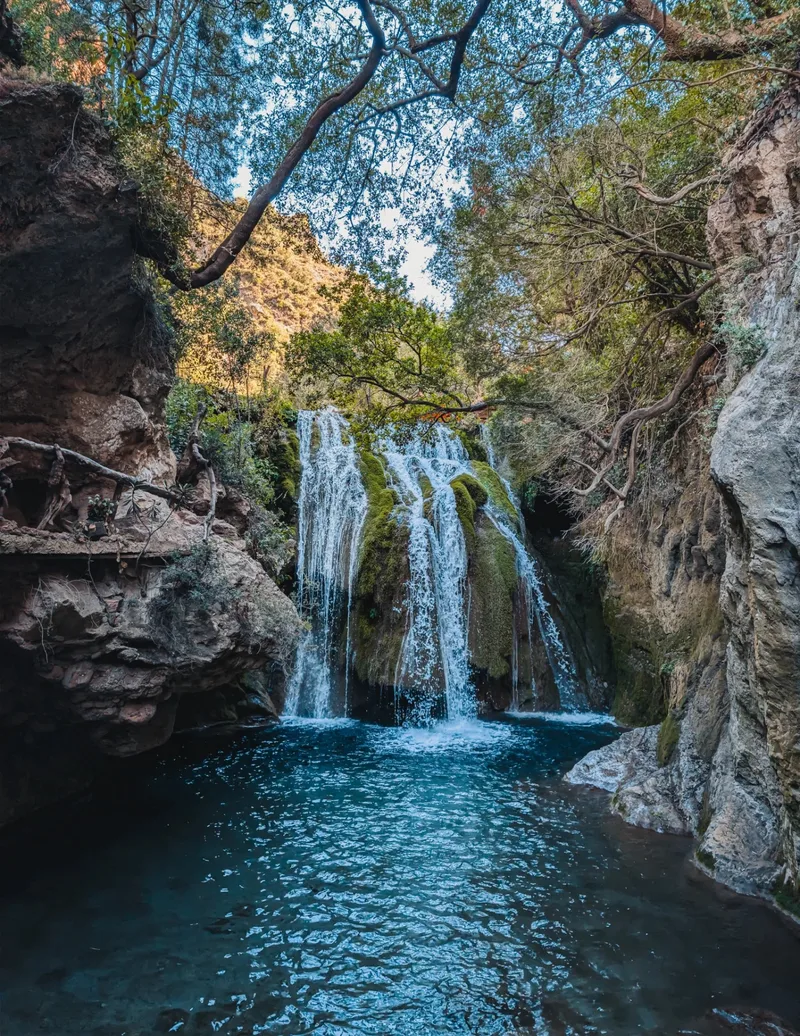
Roughly 30 kilometres northeast of Chefchaouen, the limestone valleys of Talassemtane National Park converge at Akchour, where clear mountain streams cut travertine pools, shaded gorges and two separate hiking routes. From the small hydro dam at the trailhead, one path climbs upstream to the soaring natural rock arch of God's Bridge (Pont de Dieu), while a longer riverside trail follows the Oued Farda to the Small and Grand Waterfalls.
Akchour rewards early starts, realistic distance planning and respect for mountain weather. Leave Chefchaouen by shared or private grand taxi in the morning, decide whether to hike one route well rather than rushing both, wear grippy shoes that handle wet stones, and never enter narrow gorges during or after heavy Rif rain.
Confirm your afternoon return taxi and check the mountain forecast first. Avoid narrow Rif river gorges whenever heavy rain is forecast or has recently fallen upstream, and make sure you leave the trail early enough to catch shared grand taxis back to Chefchaouen before dusk.
At a glance
- Location
- Talassemtane National Park, about 30 km (45 to 50 min) from Chefchaouen
- Two separate trails
- God's Bridge rock arch OR the Oued Farda waterfall trail
- God's Bridge time
- Roughly 1.5 to 2 hours round trip with steeper rocky sections
- Grand Waterfall time
- Roughly 4 to 5 hours round trip (Small Waterfall in about 90 min return)
- Transport
- Shared or chartered grand taxi from Chefchaouen; cash in dirhams
- Best season
- Spring and early summer for strong turquoise water flow and mild air
In this guide
A river landscape with two different destinations
Akchour lies in the Rif near Talassemtane National Park, where streams cut through wooded limestone country. The waterfalls and God's Bridge are different destinations: the latter is a natural rock arch over a gorge, not a constructed bridge. Water flow, vegetation and the character of the paths change with the season.
At the dam, confirm the current fork and intended route with a local guide before setting out. The longer waterfall walk and the bridge require separate time budgets; do not assume they form a simple loop. After rain, slippery rock, fast water and flash flooding can make crossings unsafe. Turn back if conditions deteriorate, carry water and sturdy footwear, and arrange your return transport before leaving Chefchaouen.
Two Trails From One Dam: Understand the Split Before Starting
Every vehicle from Chefchaouen stops near the village parking area just before the small Akchour dam. Immediately past the dam, the canyon splits into two distinct valleys that do not loop together at the top without strenuous backcountry trekking.
At the dam the waterfall route generally starts on the left, across the bridge, and continues past the Small Waterfall toward the Grand Waterfall. The other branch leads toward God's Bridge above the Oued Farda. Paths and crossing conditions can change: confirm the route locally before starting.
| Akchour route | Round-trip walking time | Terrain character | Best suited for |
|---|---|---|---|
| Small Waterfall | About 1.5 hours | Shaded riverside path with gentle stone crossings | Casual walkers and shorter half-day visits |
| Grand Waterfall | 4 to 5 hours | Longer forest gorge, multiple stream crossings, steady climb | Active hikers starting before 09:30 |
| God's Bridge (Pont de Dieu) | 1.5 to 2 hours | Narrower canyon path with steeper rocky scrambles | Dramatic geology and emerald canyon views |
Can You Hike Both Trails in One Day?
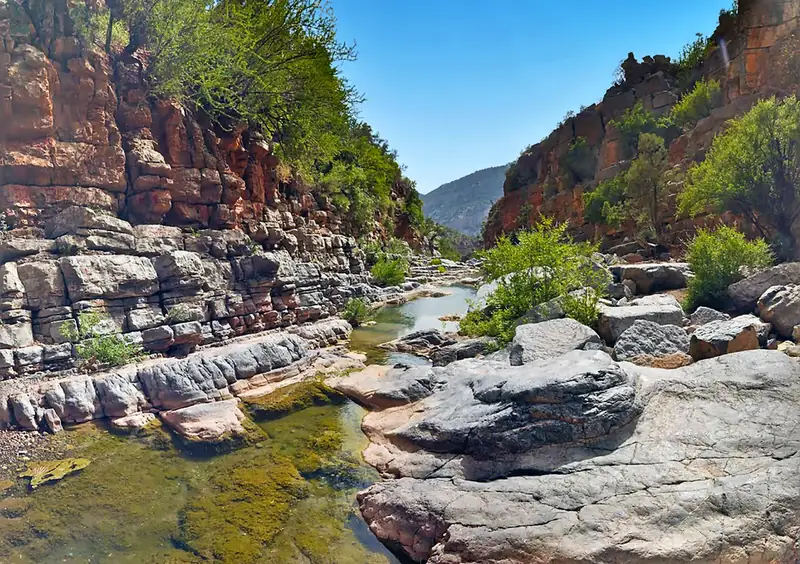
Strong hikers who leave Chefchaouen around 08:00 can complete the Grand Waterfall before early afternoon and add God's Bridge afterward, logging 5.5 to 7 hours of walking on uneven rock. For most visitors, combining the Small Waterfall with God's Bridge or dedicating the whole outing to the Grand Waterfall feels far more enjoyable.
Simple seasonal riverside stalls along the lower paths set plastic chairs beside the water and serve mint tea and slow-cooked tagines for cash; carry your own drinking water, snacks and a litter bag so nothing stays behind in the national park.
Shared and Private Grand Taxis From Chefchaouen
Shared grand taxis bound for Akchour gather in central Chefchaouen (ask locally for the current Akchour grand-taxi stand, typically near Rue Moulay Ali Ben Rachid below the medina) and depart once all six passenger seats fill. Buying a single seat is economical in mid-morning peak hours, while chartering all seats lets small groups leave early without waiting.
- Return timing matters: Shared taxis line up at the Akchour parking lot in mid-to-late afternoon, but thin out rapidly near nightfall. Finish your hike at least 60 to 90 minutes before sunset or pre-arrange a fixed pickup time with a driver, as explained in getting around Morocco.
- Footwear and cold water: Stream crossings use stepping stones and wooden planks that get slippery; wear trail runners or hiking sandals with firm grip. Even in July, mountain spring water is briskly cold.
- Trailhead guides: Marked main paths to the waterfalls and God's Bridge are busy in dry weather and do not require a guide, though licensed local mountain guides are worthwhile for longer Talassemtane traverses. Review general tout advice in Morocco safety and scams.
Seasonal Water Levels and Flash-Flood Safety
April through June normally delivers the best balance of flowing cascades, green Rif hillsides and warm daylight. By late August and September after dry summers, the Small and Grand Waterfalls can narrow to a light trickle, though shaded pools near God's Bridge remain scenic.
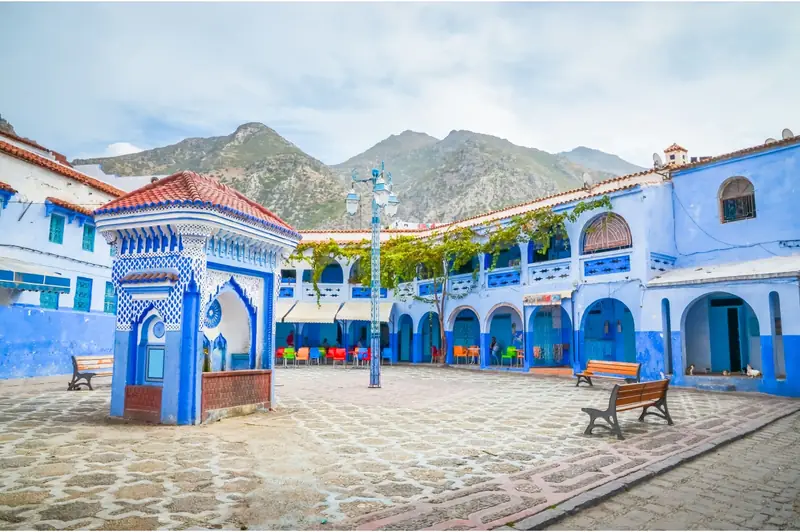
In late autumn, winter and early spring storms, heavy rain in the upper Rif catchment can send sudden muddy surges down narrow canyons and dislodge loose rock. Postpone Akchour for a dry day in Chefchaouen's Blue Medina if rain threatens, and consult our best time to visit Morocco guide.
Frequently asked questions
How far is Akchour from Chefchaouen?
Akchour is roughly 30 kilometres northeast of Chefchaouen, taking 45 to 50 minutes each way by grand taxi or car along winding mountain roads.
Are Akchour Waterfalls and God's Bridge on the same trail?
No. Both start from the same Akchour dam entrance, then split into two separate canyons: one trail follows the river to the Small and Grand Waterfalls, and the other leads to God's Bridge.
Is there an entrance fee for Akchour?
Walking the main public trails in Talassemtane National Park has traditionally been free aside from small parking fees for cars, though you should carry dirham cash for taxis, parking attendants and riverside tea stalls.
Do Akchour's waterfalls flow all year?
Water volume is seasonal. Spring and early summer bring the strongest turquoise cascades, whereas late summer after dry months can reduce the upper waterfall considerably.
Is the Akchour hike suitable for beginners?
The walk to the Small Waterfall is gentle and suitable for most steady walkers in grippy shoes, while the full Grand Waterfall and upper viewpoints near God's Bridge involve rocky, uneven climbs.