Fes el-Bali Medina: Plan a Walk, Not a Race Through the Lanes
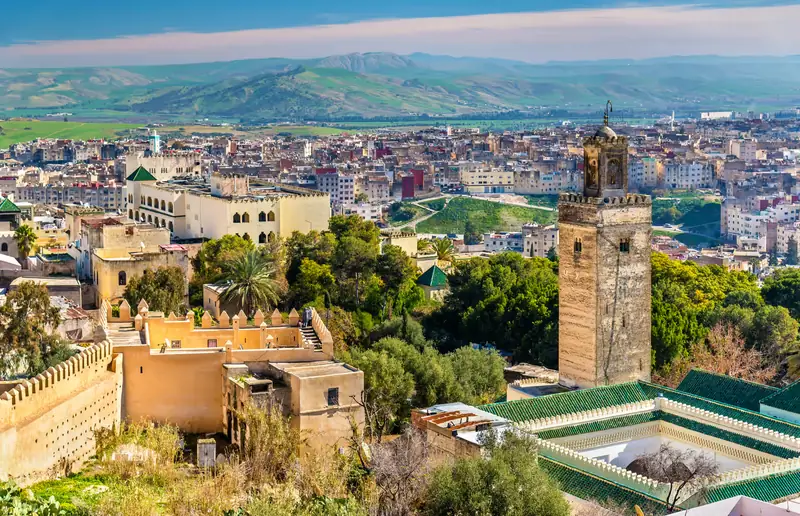
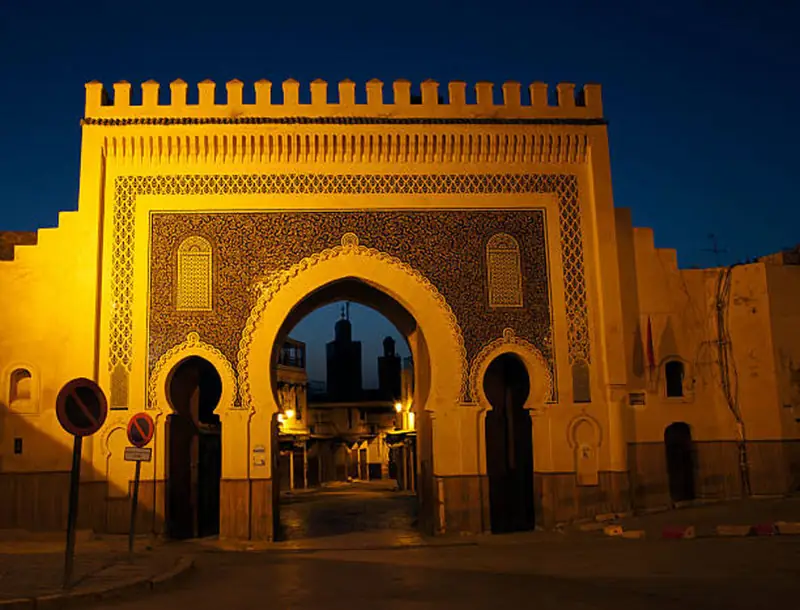
Fes el-Bali is the older walled medina of Fes, a living district of homes, markets, religious buildings and workshops. Start with your nearest useful gate, a short list of sights and a return plan, rather than trying to see every alley. Bab Boujloud is a familiar western entrance, but it is not automatically the best gate for your accommodation or the end of your walk.
Allow a full day for a first visit, with breaks and only a few interiors; a second day makes slower exploration easier. These are planning suggestions, not entry requirements. This guide explains orientation, licensed guides, separate monument access and practical comfort without promising an easy maze, universal opening hours or a car journey to every riad door.
Save the gate and accommodation contact before entering. Download an offline map, ask your host for the actual walking approach and agree any guide or porter service before it begins. A map shortcut is not permission to enter a home, workshop or religious building.
At a glance
- Setting
- Old walled Fes, distinct from the modern city
- Starting point
- Bab Boujloud or a gate agreed with your host
- Time
- Full day with breaks; two for a slower pace
- Ground
- Slopes, uneven paving, narrow lanes and steps
- Traffic
- Little ordinary car access, but moving deliveries
- Access
- Separate rules for each monument and terrace
In this guide
- Fes el-Bali Is a District, Not One Ticketed Attraction
- Read the Main Routes Without Trusting a Simple Escape Rule
- Start with the Journey to Your Door
- Licensed Guide or Independent Walk?
- Choose a Few Monuments Instead of Collecting Every Doorway
- Tannery Terraces and Craft Visits Need Their Own Agreement
- Why the Historic Streets Matter Beyond the Headline Sights
- Shopping, Prices and Clear Boundaries
- Slopes, Steps, Children and Mobility Needs
- Heat, Rain, Rest Stops and Prayer-Time Changes
- Photography and Returning After Dark
- A Flexible First Day and a Clear Finish
Fes el-Bali Is a District, Not One Ticketed Attraction
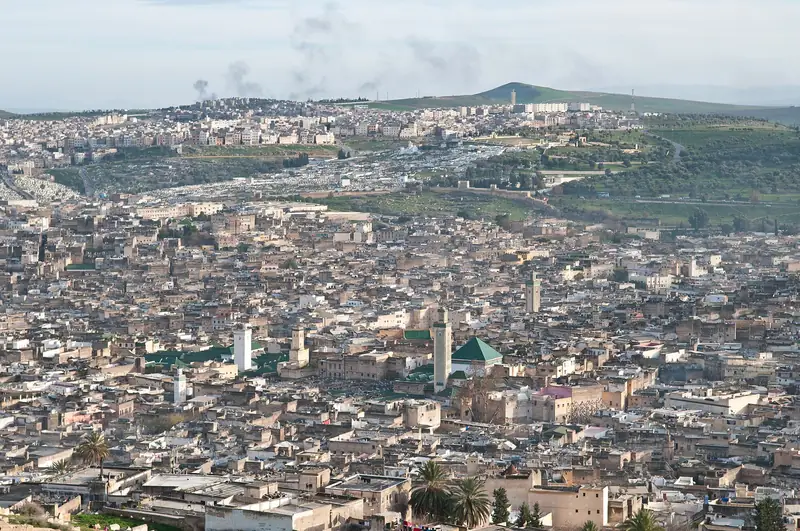
The medina is a network of neighbourhoods with public streets, private houses and active places of work and worship. It is different from Fes el-Jdid and the Ville Nouvelle, where the main railway station lies. A listing that simply says Fes may refer to any of these areas, so check the actual address before booking accommodation, a transfer or a walking meeting point.
UNESCO’s Medina of Fez property recognises a historic urban ensemble, not a pass into every building. You do not buy one ticket that includes all madrasas, museums and tannery terraces. Plan the streets and individual entrances separately, and keep time for daily activity rather than treating residents as part of a staged historical display. The table separates decisions that are often bundled together.
| Choice | Means | Confirm |
|---|---|---|
| Public lanes | Living neighbourhood | Route and return |
| Monument | Separate visit | Entry and hours |
| Terrace | Often commercial | Terms and stairs |
Read the Main Routes Without Trusting a Simple Escape Rule
Bab Boujloud is a useful western orientation point. Talaa Kebira and Talaa Seghira are two major routes descending into the old town from that side. They help you understand the broad shape of a walk towards the central religious and market areas, but learning their names does not make every branch obvious or every return effortless.
Choose a gate, a recognisable junction and an agreed return point as anchors. Do not treat “always go downhill” as a guaranteed route to a taxi: slopes and branches are more complicated than that slogan. A short retrace to somewhere you recognise is often better than following increasingly narrow alleys. R’cif is another useful orientation area, but confirm the precise pickup location rather than assuming every taxi can reach your map pin.
Start with the Journey to Your Door
Rail and road arrivals bring you to the wider city, not usually to an old-medina bedroom. Ask the property for the nearest practical vehicle stop, the walking distance, steps and a contact who can meet you. Share the arrival time and clarify what happens if you are late.
Agree any porter’s route and total dirham price before handing over bags; keep valuables, documents and medication with you. For an evening arrival, a prearranged meeting is preferable to improvising in unfamiliar lanes. Use the Fes city guide for the wider base and the transport guide to compare travel types, then confirm the current service directly.
Licensed Guide or Independent Walk?
A licensed local guide can connect buildings, crafts and neighbourhood history while reducing navigation work. Check the official badge and local authorisation, and agree language, duration, group size, fee, breaks and ending point. State whether you want a history-led walk without shopping, a craft-focused visit or time in specific interiors. A guide is not automatically an admission ticket.
Independent exploration can work if you keep the route modest, accept retracing and know how to contact your accommodation. Unsolicited directions are not the same as an agreed guide service. If you decline help, do so politely; if you accept it, settle the service and price first. Neither a guide nor an app removes the need to respect private lanes, closures or religious restrictions.
| Style | Useful for | Agree first |
|---|---|---|
| Guide | History and orientation | Badge, fee, shopping |
| Independent | Flexible short route | Map, gate, contact |
| Two days | Slower exploration | Open sights and rests |
Choose a Few Monuments Instead of Collecting Every Doorway
Bou Inania Madrasa and Al-Attarine Madrasa offer different settings for historic religious architecture. Pick one or two interiors rather than promising a complete list between meals. Ask at each official entrance about current access, hours, ticket category, payment and any closed rooms. A photograph of an upper floor does not establish that visitors may enter it today.
Al-Qarawiyyin is an active mosque and scholarly complex, not a standard sightseeing interior. Non-Muslim visitors should not plan on entering the mosque; any permitted public exterior view is incidental and must not obstruct worshippers. Library enquiries are separate and do not guarantee a public visit. A nearby madrasa ticket or guide’s claim does not create an exception to the site’s rules.
Tannery Terraces and Craft Visits Need Their Own Agreement
Chouara Tannery is commonly viewed from surrounding commercial terraces. Before climbing through a shop, ask what access costs, whether anything must be bought and whether photographs are allowed. Confirm stairs and the return through the building. Do not assume a terrace is a public viewing platform or that a “free” invitation carries no sales expectation.
The vats are a workplace, not a visitor route. Do not descend into working areas, handle materials or seek a closer shot without proper authorisation. Strong odours and stairs may make a short view enough. Craft demonstrations elsewhere also need permission and clear terms: ask whether a visit includes a sales stop and do not let a polite introduction become a purchase you never intended.
Why the Historic Streets Matter Beyond the Headline Sights
UNESCO places the city’s foundation in the ninth century and highlights its Marinid flourishing in the thirteenth and fourteenth centuries. Madrasas, merchant buildings, homes, fountains and religious institutions form the larger story. This does not mean every wall you see has the same date or that the district stopped changing centuries ago.
Pause where you are not blocking movement and notice how a fountain, shopfront or doorway serves the neighbourhood. A quiet entrance may be someone’s home, not an undiscovered attraction. Ask before entering a workshop or taking a close portrait. The medina’s interest includes present-day work and family life; describing it as unchanged or outside modern life obscures the people who maintain it.
Shopping, Prices and Clear Boundaries
For a purchase, agree the item, material claims, total dirham price and any delivery before paying. If shipping, ask for written terms and understand how problems would be handled later. A demonstration is not independent proof of provenance or quality, and a guide’s introduction does not oblige you to buy. It is acceptable to leave a shop without negotiating.
Ask before photographing merchandise or handling fragile work. Decline an unwanted offer with “La, shukran” and keep the exchange calm. Separate guide fees, entrance tickets, food and shopping in your budget; there is no universal medina tariff. Use the money guide to plan the practical details.
- Before help: agree the service and total fee.
- Before entry: check the actual doorway and current rules.
- Before buying: confirm the item, amount and delivery.
- Before returning: save the gate, contact and walking approach.
Slopes, Steps, Children and Mobility Needs
Wear shoes with grip and plan for uneven paving, descents and the climb back. Little ordinary car access does not mean an empty path: carts, pack animals and other deliveries need space. Move aside where safe without blocking a home’s doorway, and do not crowd animals or equipment for pictures. Keep children close in narrow or busy sections.
Ask about the exact route, gradients, steps, narrow points and toilets before relying on a stroller, wheelchair or mobility aid. An accessible room does not establish an accessible approach from the gate. Build a shorter alternative around confirmed needs and rest points, and tell a guide your pace in advance. There is no requirement to reach every quarter for a worthwhile visit.
Heat, Rain, Rest Stops and Prayer-Time Changes
Summer walking can be hot, while rain can make stone slick and cooler days can still require layers. Carry safe drinking water, protect yourself from the sun and plan breaks before fatigue. Do not assume every workshop or religious building offers a public toilet. Ask where you can pause comfortably, and keep medication and a charged phone available.
Friday prayers, Ramadan, holidays, restoration and individual business decisions can change the rhythm of the day. Do not declare the whole medina closed on Friday or assume every monument follows the same schedule. Check specific places locally and keep a street-and-break alternative. A restaurant or terrace’s opening claim does not establish public access to neighbouring religious premises.
Photography and Returning After Dark
Ask permission for identifiable portraits, especially of children, and accept a refusal. Keep religious thresholds and deliveries clear; dress respectfully and follow posted instructions. Avoid photographing sensitive or military sites. A rooftop panorama online is not permission to enter a private roof or fly a drone; Moroccan authorisation is required for drone use.
Before dinner, know the return route and ask your accommodation about meeting arrangements if it is unfamiliar. Shopfronts look different when shutters close. Prefer familiar, active routes and avoid isolated lanes after dark; keep money and your phone discreet, and do not follow an unknown shortcut because someone claims the usual route is closed. If unsure, contact the property rather than continuing deeper into a quiet area.
A Flexible First Day and a Clear Finish
A practical example is to arrive at an agreed gate in daylight, take a short orientation walk, visit one confirmed-open interior and pause for lunch. Add a second area only if energy and access allow, then return with time for bags or onward travel. Use the three-day Fes plan to spread the wider city across a longer stay rather than turning this into a timed marathon.
Confirm guide fees, monument opening times and transport for your dates before committing to a tight connection. If a stop is closed, choose another open street or a quiet break. Leave time for the walk out rather than attaching a train or flight to the most optimistic finish.
Frequently asked questions
Do I need a guide for Fes el-Bali?
Not necessarily for a modest, prepared walk. A licensed guide can help with history and orientation; verify the badge and agree fees, shopping stops and endpoint first.
Can a taxi reach my riad?
Not usually to a door deep in the old medina. Ask your property for the practical vehicle stop, walking approach, steps and any agreed luggage help.
Can non-Muslims enter every monument?
No. Separate visitor madrasas from active mosques; non-Muslims should not plan on entering Al-Qarawiyyin Mosque. Follow each site’s current rules.
How long should I allow?
A full day with breaks and a few interiors is a useful first plan. Two days let you explore more slowly.
Is Friday a bad day to visit?
Not automatically. Worship and business routines affect individual openings, so check specific sights and meals locally rather than assuming the whole district closes.