Essaouira Ramparts and Port: A Walk Between the Medina and Sea
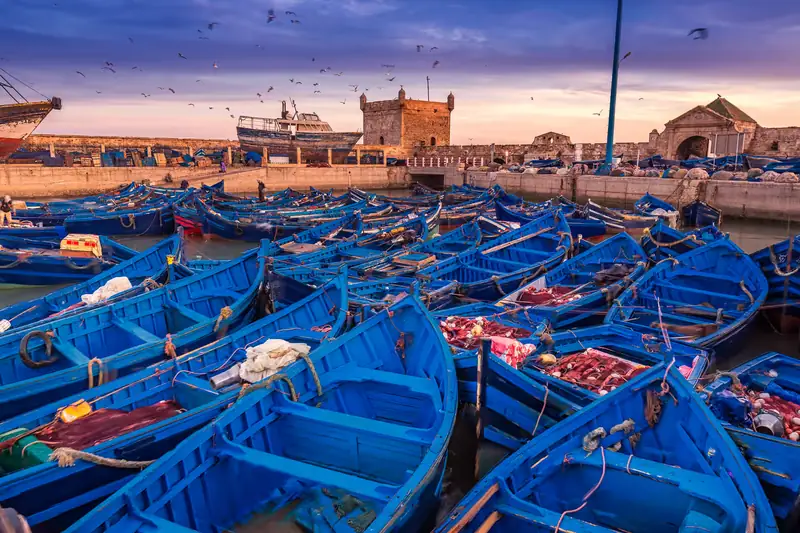
Essaouira’s ramparts and fishing port make a rewarding walk if you treat them as connected but different places. The Skala de la Ville faces the ocean beside the medina; the Skala du Port is a separate harbour fortification. The fishing quays remain a workplace, not an open-air museum. Allow a flexible half-day for views, lanes and a pause, checking entry conditions at each section rather than assuming one ticket or continuous access.
You do not need to climb every tower to enjoy the coast. Wind, spray, slippery stone and work at the port can change the route. This guide separates the sites, suggests a practical walking order and explains what to confirm before a seafood meal or return journey.
Check the entrance, not an old fee quoted online. Ask at the official entrance, follow closures and keep clear of harbour work, wave-exposed rocks and restricted quays.
At a glance
- Setting
- Essaouira medina, Atlantic walls and harbour
- Distinction
- City skala and port skala are separate
- Time
- Flexible half-day, longer with a meal
- Heritage
- Medina of Essaouira World Heritage site
- Conditions
- Wind, spray, steps and uneven stone
- Priority
- Local access rules and confirmed return
In this guide
- Which Ramparts Are You Visiting?
- Read the Defences as Part of a Trading Town
- A Practical Order for a Half-Day Walk
- The City Skala: Views Without Climbing the Walls
- The Port Skala and Its Separate Entrance
- The Fishing Harbour Is a Workplace
- Seafood: Agree the Whole Order Before It Is Cooked
- Wind, Waves and the Difference Between Views and Sea Access
- Children, Mobility and a Route You Can Shorten
- Photography, Crafts and Everyday Medina Etiquette
- Day Trip from Marrakech or Stay Overnight?
- A Flexible Finish and a Sensible Budget
Which Ramparts Are You Visiting?
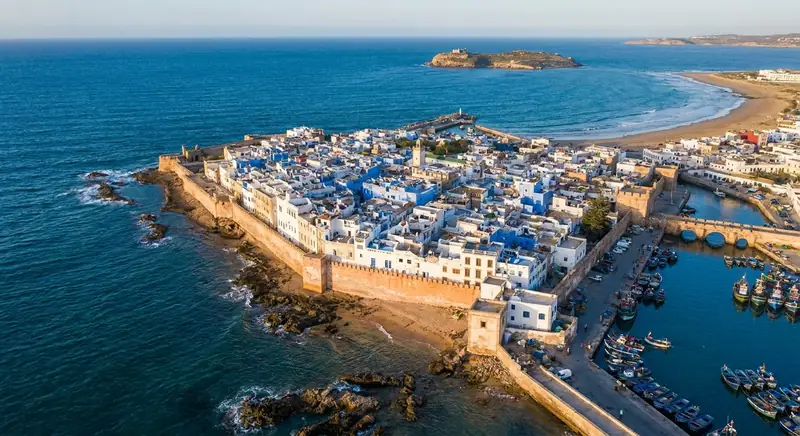
The Skala de la Ville, also associated with the kasbah fortifications, is the familiar ocean-facing wall walk beside the old town. The Skala du Port belongs to the harbour approach. Similar spellings such as Sqala and Squala can appear on signs or maps. Check which one a listing describes before comparing its entrance, views or accessibility with another.
The working port is a third part of the outing, not simply the inside of either monument. Access to a public route does not allow entry onto every quay, vessel or tower. You can link the areas through the medina and square without assuming there is an uninterrupted walkway on top of the walls. Choose suitable open sections.
| Area | Main interest | Do not assume |
|---|---|---|
| City skala | Ocean-facing defences | Continuous wall circuit |
| Port skala | Harbour fortification | Same entrance rules |
| Fishing port | Working waterfront | Every quay is public |
Read the Defences as Part of a Trading Town
UNESCO describes Essaouira, formerly Mogador, as an eighteenth-century fortified seaport that adapted European military design to a North African setting. Its significance includes trade linking the Moroccan interior and Sahara with Europe and wider routes. Walls, gates, harbour and streets make more sense together than as isolated backdrops for cannon photographs.
The World Heritage listing is for the Medina of Essaouira, not a ticket promising access to all its buildings. Notice the relationship between protective masonry, the compact town and the sea while respecting present-day residents and businesses. Avoid reducing the place to a film set or labelling every visible structure Portuguese; the story is more varied than that shorthand suggests.
A Practical Order for a Half-Day Walk
Use the Essaouira city guide to choose your arrival point and accommodation, then orient yourself around Moulay Hassan square and the harbour approach. Visit the public port-side areas where access is permitted, consider the port skala if open, and return through the square into the medina. Continue to the city skala by streets rather than seeking a shortcut over masonry.
Reverse the order if wind, queues or work make that more comfortable. Build in a drink, toilet stop and time to turn back. Half a day is a planning suggestion, not a measured duration. With a meal, shops or children, allow longer. For a less compressed stay, compare the two-day Essaouira itinerary rather than adding every sight to one arrival afternoon.
The City Skala: Views Without Climbing the Walls
Where access is open, the city skala offers a view along the defensive frontage and out towards the Atlantic. Cannons and stonework help explain the seaward defences, but the platform is also a place other people need to move through. Leave the approach and narrow sections clear, and do not climb on cannon mounts, parapets or closed masonry for a photograph.
The sea can send spray onto stone even when conditions in a sheltered lane seem mild. Take small steps on wet surfaces, secure loose belongings and turn back if wind makes standing or walking difficult. Stay inside barriers. Views are still worthwhile from an authorised lower-level position when a platform is closed or unsuitable.
| Plan | Useful for | Check first |
|---|---|---|
| Short walk | One open area and lanes | Access and weather |
| Half-day | Walls, harbour and pause | Steps and food time |
| Overnight | Flexible coastal pace | Lodging and return |
The Port Skala and Its Separate Entrance
The harbour fortification gives a different relationship between the boats, old town and water. Do not transfer the city skala’s access information to the port skala. Ask at the official entrance about the sections currently open, last admission, ticket conditions and whether any upper area is closed. An online photograph may show a viewpoint that is not available that day.
Carry a payment option and check the posted tariff before paying. If a person offers a combined ticket or special access, verify what it covers with authorised staff. A closed tower need not end your walk.
The Fishing Harbour Is a Workplace
Boats, nets, fish handling and repairs are part of the port’s activity, but there is no guaranteed arrival or auction spectacle for a visitor’s timetable. Stay on routes open to the public and give workers and vehicles priority. Keep away from ropes, equipment, loading spaces and the edge. Never board a boat or enter a workshop simply because nobody stops you immediately.
Close-up portraits require permission, and a person carrying a load should not have to interrupt work to answer a camera. Ask briefly and accept a refusal. Do not block movement to arrange a group shot or feed gulls to create a scene. Harbour surfaces may be wet, dirty or uneven; closed shoes and attention are more useful here than treating the whole area like a promenade.
Seafood: Agree the Whole Order Before It Is Cooked
A seafood stop can be part of the walk, but an attractive display is not a complete price. Ask whether the quote is per fish, per portion or by weight, and agree the amount, cooking charge, sides, bread and drinks before ordering. Clarify the total in Moroccan dirhams, especially if you choose from a display and another person does the cooking.
Choose carefully handled food served thoroughly cooked and hot, explain allergies clearly, and do not assume a busy stall is safe for every dietary need. Seeing fish landed does not establish the handling history of everything sold nearby. Use the money guide for payment planning, and keep a separate budget for food.
Wind, Waves and the Difference Between Views and Sea Access
Essaouira is exposed to Atlantic weather. A sunny day does not establish calm swell, and a low-looking tide does not make rocks or harbour structures safe to explore. Keep behind barriers, avoid wave-exposed rocks and breakwaters, and follow warnings or staff directions. Do not step down for a photograph because someone else appears to be standing there safely.
This is a walking guide, not a safe swimming, tide-pool or boat-access route. If you want water sports, arrange a separate activity with a reputable provider, assess conditions and check insurance. For the wall walk, bring a wind-resistant layer, sun protection and footwear with grip. The packing guide offers broader preparation, but local conditions should decide the exposed part of the day.
- Before entry: read signs and ask which sections are open.
- Before a meal: agree quantity, cooking and total dirham price.
- Before a photo: leave room for work and ask portrait permission.
- Before departure: check the return point and leave a time buffer.
Children, Mobility and a Route You Can Shorten
The compact medina does not make every route step-free. Ask about the exact entrance, ramps, steps, narrow passages, stone surfaces and toilets for the section you intend to visit. A ramp at one skala does not establish wheelchair access at the other. With a stroller or mobility aid, choose the route around confirmed needs rather than a generic accessible label.
Keep children close near unguarded edges, water, moving equipment and busy approaches. Plan rest and food before fatigue, and choose a lower-level alternative if a climb or gusty platform is unsuitable. Agree a meeting place if the group separates and keep your accommodation contact available offline. Neither upper area is obligatory.
Photography, Crafts and Everyday Medina Etiquette
Wide views of walls and boats can be made without turning homes or workers into props. Ask before photographing identifiable people, particularly children, and respect shopkeepers’ rules for interiors and merchandise. Sensitive or military sites should not be photographed. Drone flights require Moroccan permission; a panoramic view online does not establish permission for your own flight.
In lanes and beside workshops, keep doors and deliveries clear. Ask before touching craftwork, and agree a price before accepting a service or commissioned photograph. You can decline an unwanted offer politely with “La, shukran”. Secure money and phones without overlooking wet steps. This neighbourhood is also a home.
Day Trip from Marrakech or Stay Overnight?
Early departure and confirmed return can make a day visit possible, but the road journey takes a significant share of the day. Check the actual coach terminal, current departure and arrival, and how you reach the medina from the stop. With a driver, agree pickup, waiting time, return location and total price. Do not assume a station, taxi rank or online estimate guarantees your preferred connection.
An overnight stay gives more freedom to change the walk for wind or light and to enjoy the medina beyond a tour’s timetable. It does not guarantee a quieter harbour or a clear sunset. Do not wait for delayed transport in exposed areas. Use the transport guide to compare travel types, then confirm the current service directly rather than relying on a fixed timetable in an old article.
A Flexible Finish and a Sensible Budget
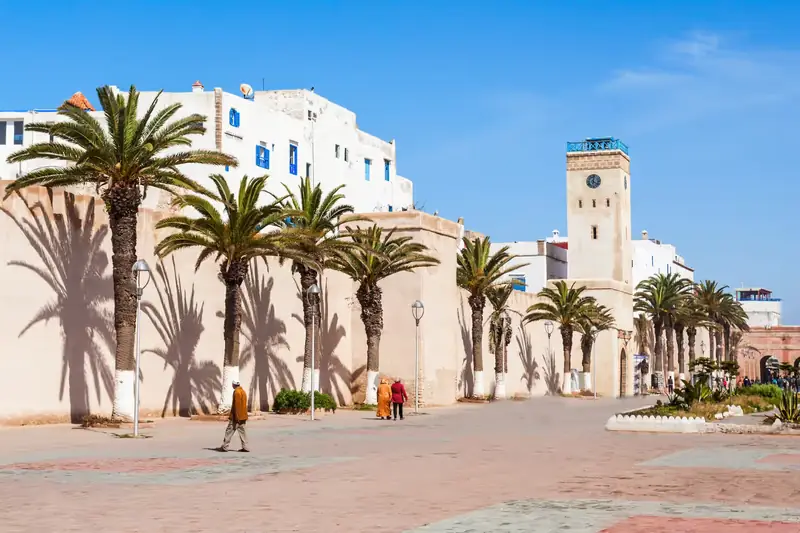
Separate transport, any verified monument ticket, meals, drinks and optional guiding in your budget. The World Heritage designation does not create one admission covering everything, and looking at boats is not a reason to pay an unofficial access demand. If uncertain, ask authorised staff or return to a clearly public area instead of arguing in a working passage.
End with time to retrieve bags and reach the agreed return point. If weather or a closure removes one section, substitute sheltered lanes, a café or an open gallery rather than an exposed rocky shortcut. The aim is to understand the coast and working town, not complete a list of towers. You can leave with a rewarding visit without a perfect sunset, a fish meal or an upper-platform photograph.
Frequently asked questions
Are the city skala and port skala the same place?
No. They are separate fortifications with different approaches and potentially different access rules. Check the named site at the entrance.
What are the opening hours and ticket price?
Check the posted information for each section and do not reuse an old online fee as a guarantee.
How long should I allow?
A flexible half-day suits the walls, public harbour areas and a pause. Allow longer for food or shops; this is a planning suggestion, not a timed trail.
Can I walk anywhere in the fishing port?
No. Stay in public areas, follow signs and staff directions, and keep clear of boats, equipment and loading work. Ask before close-up photographs.
Is it worth staying overnight?
Yes if you want a slower visit and more freedom around wind and road travel. A day trip is possible with an early start and a confirmed return, but it is not a short transfer.