Hassan Tower, Rabat: The Unfinished Mosque and a Respectful Visit
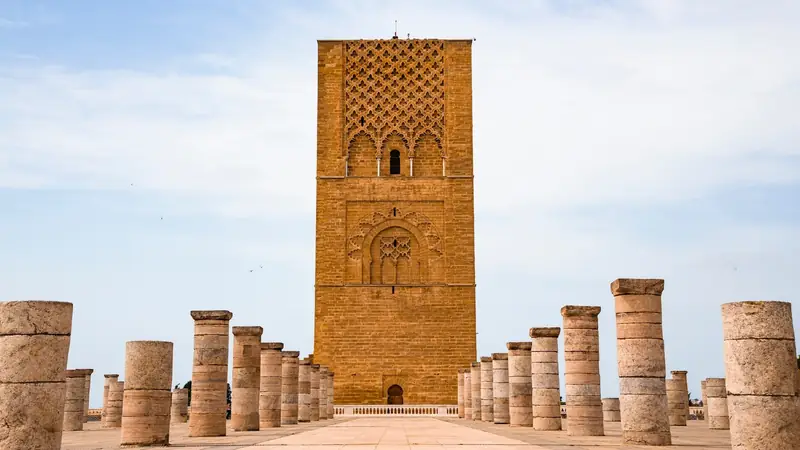
Hassan Tower is the unfinished Almohad minaret overlooking the Bou Regreg in Rabat, beside the much later Mausoleum of Mohammed V. Plan a ground-level visit to the tower, column field and permitted mausoleum areas, not a guaranteed tower climb or a single interior tour. The monuments share a setting but have different histories. They are on the Rabat side of the river; you do not cross to Salé to reach them from central Rabat.
Allow about an hour for an unhurried outdoor visit, with more time for an available mausoleum interior, questions or a rest. This is a suggestion, not an opening schedule. Check entrance arrangements before a journey; shorten the visit for heat, rain or ceremonies.
Check the grounds and mausoleum separately. Follow signs and staff instructions, do not climb columns or barriers, and do not treat a tour booking as permission to enter a restricted area.
At a glance
- Location
- Rabat bank of the Bou Regreg, not Salé
- Historic site
- Unfinished late-twelfth-century Almohad mosque
- Beside it
- Twentieth-century Mausoleum of Mohammed V
- Time
- About an hour outdoors, longer if needed
- Conditions
- Open stone space with sun, wind and possible steps
- Access
- Confirm each area; no promised tower ascent
In this guide
- Start with the Right Place and the Right Expectations
- What Was the Unfinished Mosque?
- Read the Tower from the Ground
- A Simple Order for the Esplanade
- The Mausoleum Is a Separate, Much Later Monument
- Respectful Dress, Quiet and Photography
- Hours, Fees and Closures: What to Confirm
- Sun, Wind, Rain and Practical Comfort
- Children, Steps and Mobility Questions
- Getting There from the Station or Your Accommodation
- Combine Sights Without Confusing the Riverbanks
- A Flexible Visit and a Clear Budget
Start with the Right Place and the Right Expectations
Hassan Tower, often signed Tour Hassan, stands on elevated ground on the Rabat side of the Bou Regreg. Central Rabat and its medina are on this same side of the river. Salé lies across the water. Do not follow an itinerary that sends you across a bridge merely to reach the tower from a Rabat hotel; check the actual route from your starting point.
The tower is also different from the Hassan II Mosque in Casablanca. Confirm the city and monument before booking a transfer or interior visit. Here the main experience is reading the unfinished mosque across an outdoor esplanade, with a separate enquiry about the neighbouring mausoleum.
| Place | What it is | Do not assume |
|---|---|---|
| Tower | Almohad minaret | Public climb |
| Column field | Mosque remains | Climbing allowed |
| Mausoleum | Later royal memorial | Every interior open |
What Was the Unfinished Mosque?
The Almohad ruler Yaqub al-Mansur’s ambitious mosque project belongs to the late twelfth century. Work was left incomplete after his death. The surviving square minaret, approximately 44 metres tall, and the spread of columns help you imagine a larger religious ensemble than a tower viewed alone.
Later damage, including the 1755 earthquake, and restoration also shaped what you see. The columns are not simply an untouched construction site frozen at the moment work stopped. Look at the relationship between repeated supports, open ground and minaret rather than inventing the full original building from one photograph. No planned height, exact column count or world-ranking claim is needed to appreciate the scale.
Read the Tower from the Ground
Walk only where the public route is open and look up at the changing decorative panels on the tower’s faces. Its square mass and patterned surfaces are part of the Almohad architectural story. Comparisons with Marrakech’s Koutoubia and Seville’s Giralda can help place that tradition, but they do not mean the monuments share identical plans, dates or visitor rules.
Plan around the exterior rather than expecting a climb inside the minaret. A description of internal ramps is architectural history, not proof of public ascent. Do not test a closed doorway, climb a support or follow someone behind a barrier. If any special access is advertised, verify it with authorised staff; a better photograph is not a reason to cross a restriction.
A Simple Order for the Esplanade
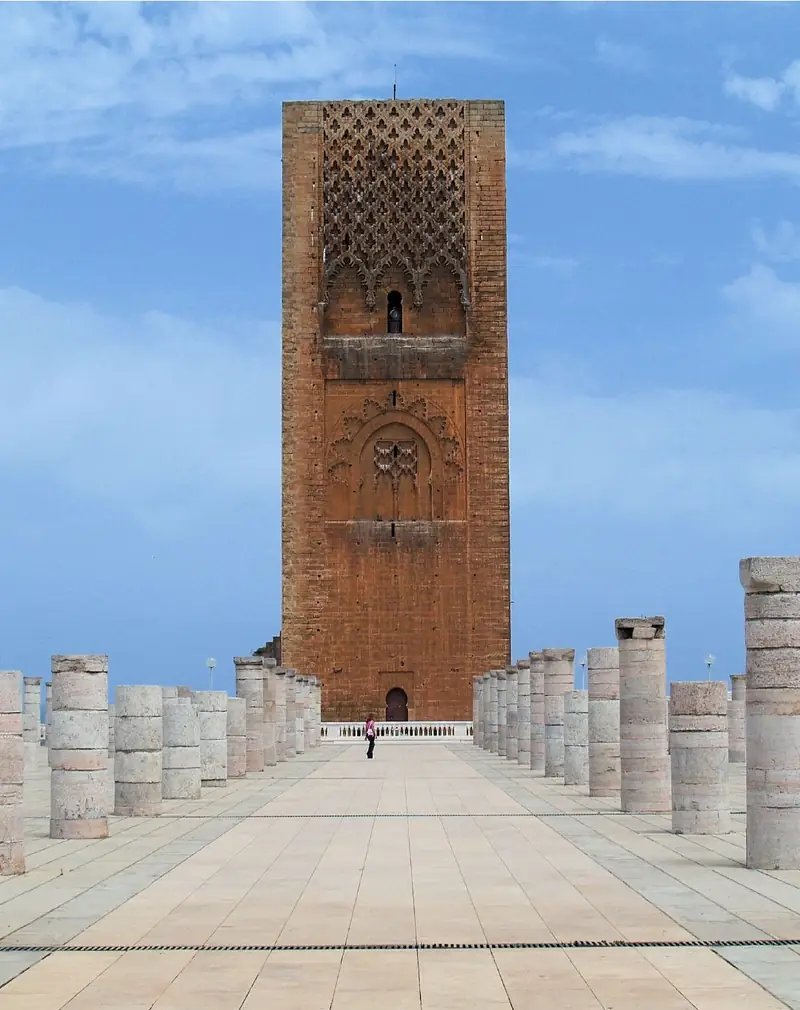
Begin at the authorised entrance, read any notices and orient yourself between tower, columns and mausoleum. Take a slow ground-level look along the rows before moving to another permitted angle. Leave room for others to pass and do not use the columns as seats, climbing frames or platforms for group photographs. Stone edges and drainage lines still need attention in a broad open space.
Then check whether the mausoleum visitor area is receiving people and decide whether it suits your time and needs. Reverse or shorten this sequence if staff, weather or a queue makes that sensible. Allow about an hour for the outdoor areas, with breaks as needed. A short respectful visit is better than staying on exposed paving simply to fill an itinerary.
| Plan | Useful for | Check first |
|---|---|---|
| Outdoor stop | Tower and columns | Entrance and weather |
| Add mausoleum | Royal memorial | Current visitor areas |
| Wider city | Medina or Udayas | Transfers and breaks |
The Mausoleum Is a Separate, Much Later Monument
The Mausoleum of Mohammed V is a twentieth-century royal memorial facing the medieval remains. It holds the tombs of Mohammed V, Hassan II and Prince Moulay Abdallah. Its pale exterior, green-tiled roof and detailed decorative work belong to a different historical chapter from the unfinished mosque. The juxtaposition is part of the interest, not evidence that both buildings were one construction project.
Travel references describe the mausoleum as admitting non-Muslim visitors, unlike many active mosque interiors in Morocco. That is not a promise of entry on your date, access to every level or permission to enter an adjoining prayer space. Ask staff which visitor areas are open and follow the current route. A general rule elsewhere about mosques should not erase this distinction, nor should this exception be applied to every mosque.
Respectful Dress, Quiet and Photography
Choose respectful clothing covering shoulders and knees and keep voices low around the mausoleum. Follow instructions about bags, footwear or photography if given rather than assuming rules from another monument apply. Do not interrupt worship, cross a controlled threshold or crowd people paying respects. If access is paused, wait only where directed or continue with the permitted exterior visit.
Ask before photographing identifiable people, particularly children, and follow staff directions about guards and ceremonial activity. Do not touch or distract mounted guards or their horses for a pose. Sensitive or military sites should not be photographed. Drone flights require Moroccan authorisation; an open esplanade or an aerial image online is not permission to fly. Quiet matters more than collecting every angle.
Hours, Fees and Closures: What to Confirm
Ask separately about the grounds, mausoleum visitor route, last admission and any temporary restrictions. An event, ceremony, maintenance or religious observance can affect one area without explaining the status of every other section. Do not turn an old report of a closed mausoleum into a claim that the whole complex is currently shut, or a past open visit into guaranteed access.
Check posted information or authorised staff before making a dedicated trip or paying for a claimed ticket. A guide may charge for interpretation even when a public area has no entry fee; distinguish that service from admission.
Sun, Wind, Rain and Practical Comfort
Much of the visit is on exposed stone. Bring safe drinking water, sun protection and a layer for wind; a pleasant breeze is not a guarantee that heat will be comfortable. Choose a gentler time of day if conditions are demanding and take breaks before fatigue. Do not assume the interior will be available as your only place to cool down.
Rain can make surfaces slippery, while glare and heat can be tiring even on a short walk. Check the forecast and adjust the outdoor portion rather than a rigid sunset plan. Ask where toilets or an appropriate resting place are available instead of assuming facilities at every entrance. The packing guide helps with broader preparation, but local conditions decide how long to stay.
- Before arrival: confirm the entrance and current restrictions.
- Before entering: ask which mausoleum areas admit visitors.
- Before a photo: respect barriers, guards and other people.
- Before leaving: allow time for the onward transfer.
Children, Steps and Mobility Questions
The wide esplanade can look easier than it is to approach. Ask about the actual entrance, slope, steps, surfaces, resting places and route to the mausoleum visitor area. A view of level paving does not establish step-free access from a taxi stop. If using a wheelchair, stroller or walking aid, get specific information rather than relying on an accessible label.
Keep children near you around columns, edges, barriers, horses and other visitors. Explain before entering that this is a historic and commemorative place, not a playground. Plan a shorter version with a rest or an exterior-only view if a queue or steps are unsuitable. Nobody needs to visit every area to make the stop worthwhile, and improvised lifting should not be the access plan.
Getting There from the Station or Your Accommodation
Check whether your train uses Rabat Ville or Rabat Agdal and allow a separate local transfer. A ticket to Rabat does not mean arrival at the monument. Your walking distance and gradient depend on the starting point, so do not reuse a published “short walk” as a universal duration. Use the Rabat city guide to place the stop within the wider city.
For a taxi, confirm the destination, a permitted drop-off, the fare arrangement and where to find the return. A marker for the tower may not show the visitor entrance. Use the transport guide to compare the options.
Combine Sights Without Confusing the Riverbanks
The Kasbah of the Udayas and Rabat medina are separate stops that pair well with the tower if you allow the linking journey and breaks. Chellah also needs its own access check and visit time; it is not another room of this complex. Pick a manageable combination rather than putting every Rabat landmark before lunch.
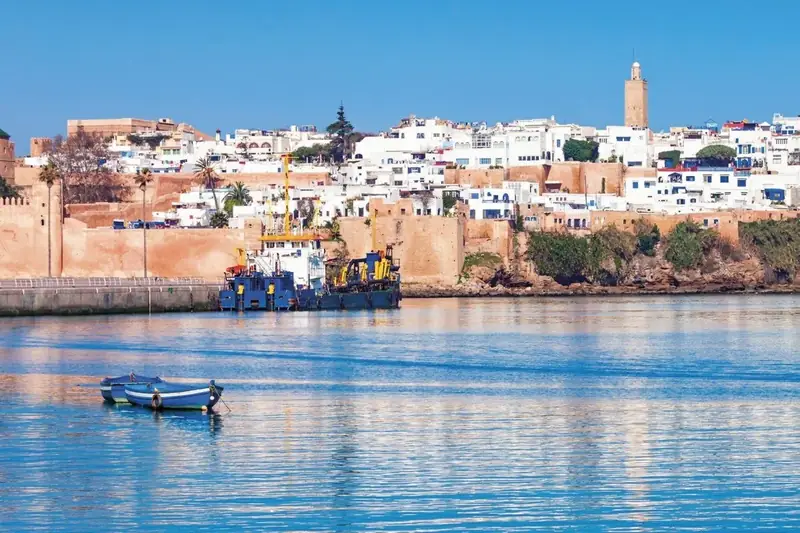
Salé is across the Bou Regreg and makes a distinct excursion. The riverside photograph below illustrates the wider setting around the Udayas, not the Hassan Tower entrance or a required river crossing. If you add a waterfront walk, assess the actual route, gradients and return transport. Looking close on a city map does not make two sites adjacent or remove the need for rest.
A Flexible Visit and a Clear Budget
A workable plan is to arrive at a confirmed entrance, explore the permitted exterior, ask about the mausoleum and leave time for a break before the next stop. If an interior is unavailable, enjoy what is open rather than seeking an unofficial way in. Keep time to reach your train or pickup; do not attach a rigid departure to the most optimistic version of the visit.
Separate local transport, any verified admission, optional guiding, water and food in your budget. Agree a guide’s language, content and total dirham fee before starting; do not assume someone offering information is included with entry. The money guide supports payment preparation.
Frequently asked questions
Is Hassan Tower across the river from central Rabat?
No. The complex is on the Rabat side of the Bou Regreg. Salé is across the water; check the entrance from your actual starting point.
Can I climb Hassan Tower?
Plan a ground-level exterior visit, not a public ascent. Respect closed doors and barriers and verify any special access with authorised staff.
Can non-Muslims visit the mausoleum?
Travel references describe non-Muslim visitor admission, but current openings and areas can change. Ask staff and do not extend that permission to adjoining prayer spaces.
What are the opening hours and price?
Check the grounds and mausoleum separately before a special trip or payment.
How much time should I allow?
About an hour outdoors is a useful planning allowance, longer for an available mausoleum interior or a rest. Weather, ceremonies and mobility needs can change the plan.