Kasbah of the Udayas, Rabat: Lanes, Gardens and River Views
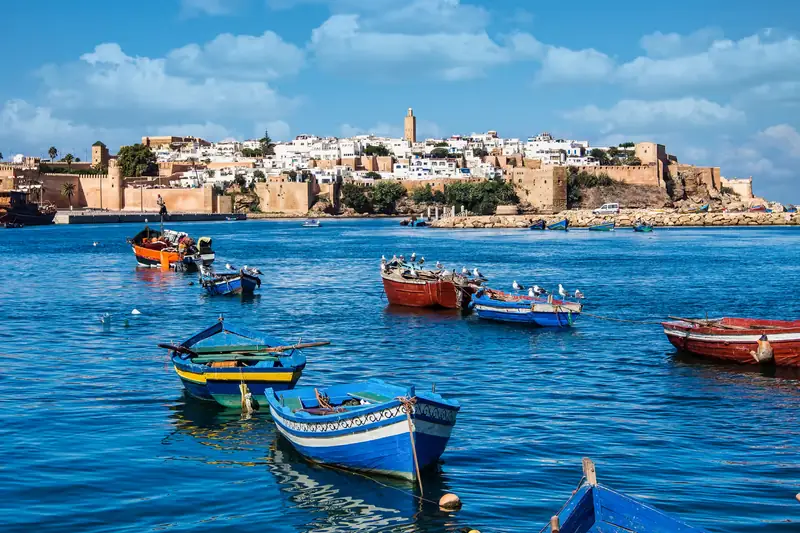
The Kasbah of the Udayas is a lived-in fortified quarter above the mouth of the Bou Regreg in Rabat, best visited on foot with time for its monumental gateway, quiet residential lanes and permitted viewpoints. Allow one to two hours for an unhurried introduction; add time for the separate museum or a café stop. The kasbah is on the Rabat bank, opposite Salé, so a river crossing is not part of arriving from central Rabat.
Plan the neighbourhood, Andalusian Garden and museum as different parts of the visit, not one ticketed attraction with a single timetable. Expect slopes and steps, respect private doors, and confirm which entrances and individual venues are open before building a tight route around them.
Look at the gate; use the entrance that is actually open. The monumental Bab Oudaia is not a guaranteed through-route. Follow authorised access beside it when directed, and check garden and museum arrangements separately.
At a glance
- Setting
- Rabat side of the Bou Regreg estuary
- Character
- Historic fortifications and a residential quarter
- Allow
- One to two hours, longer with the museum
- Terrain
- Slopes, steps and uneven paving
- Separate stops
- Andalusian Garden and National Museum of Adornment
- Nearby
- Rabat medina, riverfront and a transfer to Hassan Tower
In this guide
- Where Is the Kasbah and What Should You Expect?
- Understand the Layers Behind the Walls
- Bab Oudaia: See the Gate Without Assuming Entry
- A Flexible First Walk Through the Quarter
- The Andalusian Garden Is Its Own Stop
- Should You Add the National Museum of Adornment?
- River Views Are Not an Invitation to Cross Barriers
- Photographs, Residents and Religious Spaces
- Steps, Children and Mobility Planning
- Weather, Tea Stops and a Sensible Budget
- Getting There from a Station or Hotel
- Combine It with Rabat Without Rushing
Where Is the Kasbah and What Should You Expect?
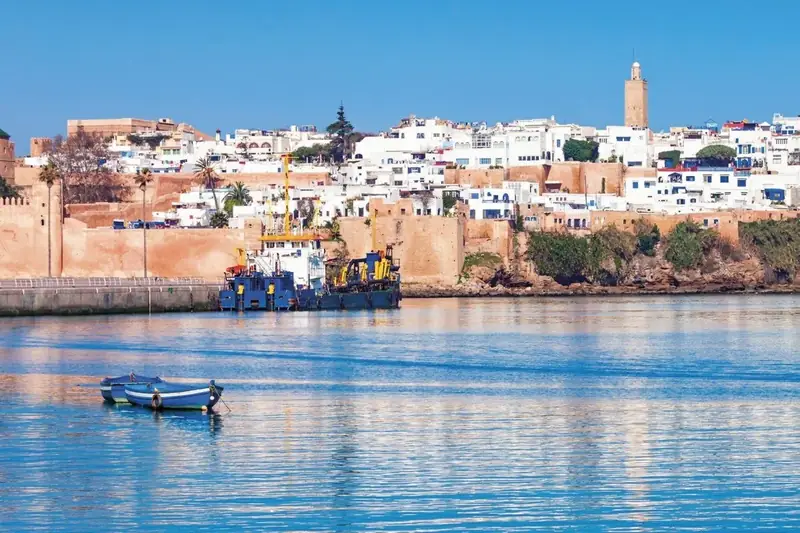
Udayas, Oudayas and Oudaias are spellings of the same kasbah, not three attractions. It occupies a headland beside Rabat’s medina, where river and Atlantic meet. Salé is across the estuary. Keep that distinction when choosing a taxi destination or walking route: a waterfront photograph taken from the opposite side is not an entrance map.
This is a small neighbourhood within fortifications rather than a palace opened room by room. Its interest lies in the contrast between carved stone, narrow domestic streets and broad water views. Use the Rabat guide to place it within the city, but leave space for residents to go about ordinary life rather than expecting every lane to function as a visitor circuit.
| Part | Main interest | Check separately |
|---|---|---|
| Gate and lanes | Fortification and lived-in streets | Current public entrance |
| Garden | Planted paths | Open gate and closing time |
| Museum | Moroccan adornment | Ticket and Tuesday closure |
Understand the Layers Behind the Walls
The kasbah has earlier fortified origins and important twelfth-century Almohad rebuilding. Later communities, including people displaced from Spain in the seventeenth century, contributed to its history; the Udayas name belongs to a later chapter. Rabat’s UNESCO inscription recognises a wider shared urban heritage, not just a photogenic blue-and-white enclave. Do not read every visible surface as unchanged medieval fabric.
The gate, houses, palace pavilion and garden also belong to different phases. The garden’s Andalusian inspiration does not make the existing layout a surviving medieval garden: it was laid out during the French Protectorate. Seeing the changes is more useful than a single founding-date story. No claim about a doorway’s age or symbolism should be invented from its colour or decoration.
Bab Oudaia: See the Gate Without Assuming Entry
Bab Oudaia, also called Bab al-Kbir, is the monumental Almohad gateway associated with the late-twelfth-century works of Yaqub al-Mansur. Stand where permitted to study the carved arches and their scale in relation to the walls. Its elaborate ceremonial presence is part of the experience even when its passage is closed.
The large gate is only occasionally a through-route; visitors may be directed to a smaller neighbouring entrance. Do not promise yourself a walk through its chambers or assume a closure means the entire residential quarter is closed. Ask which public entrance is operating, keep clear of traffic and other pedestrians, and never treat a side door or private threshold as an alternative route.
A Flexible First Walk Through the Quarter
Begin at the authorised public entrance near the monumental gate, then follow an open main lane such as Rue Jamaa towards the permitted upper viewpoints. Keep a map available but look up at junctions and signs. This is an orientation suggestion, not a surveyed step-free route or a guarantee that every passage connects on your day.
Return towards the garden area if open, or retrace a familiar public route if a gate is shut. A riverfront descent can add steps and a climb back; it is optional, not the compulsory end of a loop. Do not search private alleys for a shortcut just because a phone shows a line. Allow pauses without stopping on a doorstep or blocking a narrow junction.
| Plan | Best for | Trade-off |
|---|---|---|
| Short visit | Gate, lanes, open view | Skip separate interiors |
| Longer visit | Garden or museum as available | Add venue and rest time |
| City combination | Medina or Hassan Tower | Allow a real connection |
The Andalusian Garden Is Its Own Stop
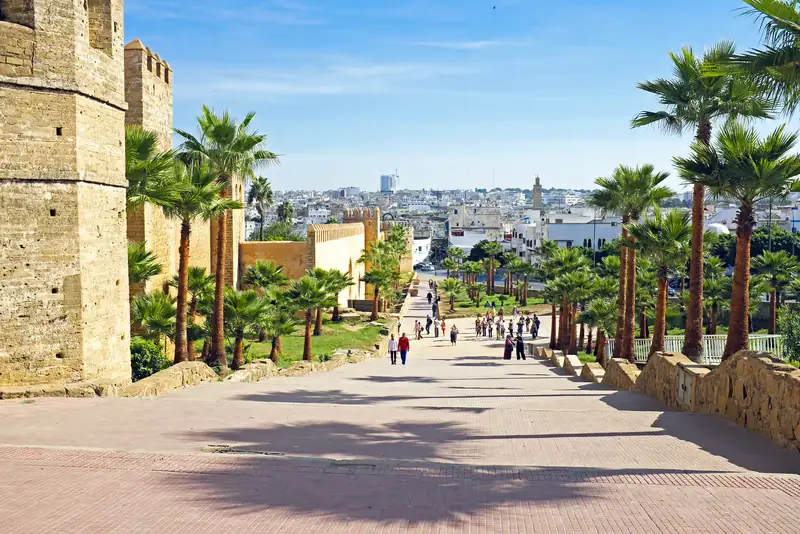
The garden offers planted paths within the historic enclosure, with citrus, palms and seasonal colour described by tourism references. It is a worthwhile change of pace from the lanes, not a guaranteed shady refuge at every hour or season. Its early-twentieth-century design draws on Andalusian traditions within an older fortified setting.
Confirm the open entrance and closing arrangements locally. The museum’s Tuesday closure does not automatically apply to the garden or streets. Stay on permitted paths, keep out of beds and do not pick fruit. If the garden is shut, enjoy the rest of the quarter rather than looking for an unofficial way in.
Should You Add the National Museum of Adornment?
Oudayas, Musée National de la Parure occupies a historic palace pavilion and presents Moroccan adornment, including jewellery and Amazigh traditions. Older references may call it the jewellery museum or an ethnographic museum. The museum foundation records its reopening in January 2023; do not mistake an old refurbishment report for a current closure of the entire kasbah.
The official museum listing gives 10:00 to 18:00, closed Tuesday, and standard tickets of 15 DH for Moroccans under 18, 30 DH for Moroccan adults and 60 DH for foreign visitors. These are published museum details, not neighbourhood entrance charges. Recheck holidays, eligibility, last admission and any special conditions before relying on them; no exchange-rate estimate or unverified discount is promised.
River Views Are Not an Invitation to Cross Barriers
Open viewpoints help explain why the fortified headland matters: the estuary, Salé and Atlantic approaches become part of the story. Use designated public areas and keep children close at edges. Walls, cannons and parapets are not climbing frames. A photograph without a barrier does not establish that the spot is safe or open today.
An upper view, the lower promenade and a beach visit are different activities with different access. Sea wind, spray and wet paving can change the appeal quickly. Do not add breakwater walking or swimming simply because water is visible from the kasbah. Follow local warnings and choose a shorter land-based visit if conditions are poor; a sunset picture is not a reason to stay exposed.
Photographs, Residents and Religious Spaces
Ask before photographing identifiable residents, especially children. Keep private doorways clear even if their paint is the image you came to see, and never enter a courtyard, roof or house without explicit permission. A door left ajar is not an invitation. Quiet conversation and small groups fit the residential setting better than amplified audio or repeated staged poses.
An old mosque belongs to the quarter, but a walk through public lanes is not permission to enter its prayer space. Follow signs and staff directions at religious or sensitive sites. If someone offers guiding or a photo service, agree the scope and total price first or decline politely with “La, shukran”. An unsolicited explanation does not mean you ordered a paid tour.
- Before arrival: choose the right bank and public entrance.
- Before entering: separate museum rules from neighbourhood access.
- Before a photograph: check consent and leave doorways clear.
- Before leaving: allow the walk or transfer to your next stop.
Steps, Children and Mobility Planning
Slopes, stairs, uneven stone and narrow turns can matter more than the kasbah’s compact size. Ask about a specific approach and the exact places you hope to reach: gate exterior, main lane, garden, museum or viewpoint. None of those labels alone establishes a continuous step-free route from a taxi stop. The broad approach in a photograph should not be confused with an easy route throughout.
If using a wheelchair, walking aid or pushchair, seek current entrance and surface information and choose a shorter out-and-back plan if needed. Do not depend on strangers carrying someone over a staircase. With children, allow water and rest breaks, keep them beside you near edges and respect people’s homes. Missing one terrace or garden is preferable to an exhausting or unsafe circuit.
Weather, Tea Stops and a Sensible Budget
Bring water, sun protection, shoes with grip and a light layer for coastal wind. Rain can make sloping paving slippery; a cool breeze does not remove sun exposure. The packing guide helps with broader preparation. Choose a gentler time if heat is demanding, and do not assume every shaded seat belongs to a public resting area.
A café is an optional paid stop, not part of a kasbah ticket or a guaranteed viewpoint. Check the menu, seating and price before ordering rather than assuming a photographed terrace is open. Budget separately for museum entry, transport, refreshments and any agreed guide. Carry useful small notes and consult the money guide; payment methods and facilities vary between businesses.
Getting There from a Station or Hotel
Check whether your train uses Rabat Ville or Rabat Agdal and allow for the city connection. Neither station is the kasbah entrance. A walk from central accommodation may suit some visitors, but distance, slope and luggage change the decision. For a taxi, confirm the destination, fare arrangement and permitted drop-off near the current public approach, not an imagined drive through the residential lanes.
Public transport also leaves a final approach on foot. Verify current stops and routes rather than copying an old bus number or assuming the tram delivers you to the gate. The transport guide compares options without replacing local route checks. Save your return meeting point and leave a buffer before a fixed train; a neighbourhood walk is not a predictable door-to-platform transfer.
Combine It with Rabat Without Rushing
The medina and Rabat riverfront can follow naturally if you still have energy, but Hassan Tower is a separate stop requiring a walk or local transfer. It is also on the Rabat bank: crossing to Salé is not required to combine the two. Check the tower grounds and neighbouring mausoleum separately if they are important to your day.
A workable outline is the gate and lanes, an open viewpoint, then either garden and museum or a quiet break before moving on. If a venue is closed or walking proves harder than expected, shorten the plan rather than adding everything. Salé and Chellah deserve their own travel and access decisions, not an assumption that they are inside this compact quarter.
Frequently asked questions
How long should I allow for the Kasbah of the Udayas?
One to two hours is a useful planning allowance for lanes and open views. Add time for the separate museum, a café or mobility needs; this is not an official circuit duration.
Is the whole kasbah a ticketed attraction?
Treat the residential quarter separately from individual venues. The National Museum of Adornment has its own published prices; check garden and entrance arrangements locally.
Can I walk through the monumental gate?
Not necessarily. Bab Oudaia is only occasionally a through-route; follow the public entrance indicated nearby rather than assuming the entire quarter is closed.
Is the museum open on Tuesday?
The museum foundation lists Tuesday as its closing day, with 10:00 to 18:00 on other days. Recheck exceptions; this is not a timetable for the garden or lanes.
Can I combine the kasbah with Hassan Tower?
Yes, but leave time for a walk or local transfer and confirm the tower and mausoleum arrangements separately. Both are on the Rabat bank; Salé is a different outing.