Moulay Idriss Zerhoun: A Practical Guide
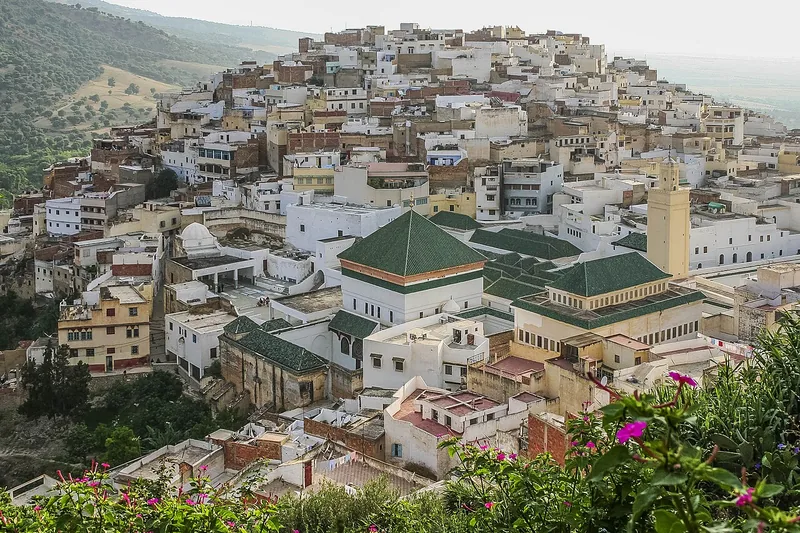
Moulay Idriss Zerhoun rises over the Zerhoun hills near Volubilis. The town is a living pilgrimage centre associated with Idris I, founder of the Idrisid dynasty. Its narrow lanes, hilltop views and everyday markets reward a respectful walk, whether you visit for an hour or stay overnight.
Respect the sanctuary. The shrine is reserved for Muslims; visitors of all backgrounds can explore public streets and viewpoints.
At a glance
- Location
- Zerhoun hills near Meknes
- Significance
- Tomb of Idris I and pilgrimage town
- Shrine
- Reserved for Muslims
- Access
- Steep lanes and steps
- Combine
- Volubilis and Meknes
- Bring
- Comfortable shoes and modest clothing
In this guide
Idris I and the town’s importance
Idris I arrived in the late eighth century and established the Idrisid dynasty with support from local Amazigh communities. His tomb became the focus of a religious complex and pilgrimage. The nearby ancient site of Volubilis, known historically as Walila, connects the region’s Roman and early Islamic histories.
What to see on foot
Begin in the central square and follow public lanes up the hillside for views of the green roofs and surrounding olive country. The mausoleum and religious sanctuary are not open to non-Muslims; admire the exterior from public areas and follow local signs. Do not assume access to mosque interiors or private rooftops.
Planning with Volubilis and Meknes
Volubilis is only a few kilometres away, while Meknes is roughly 30 kilometres by road. A driver or taxi can link the sites, but agree on fare, waiting time and return before departure; availability can vary. Allow time for the archaeological site separately and confirm its current hours and admission.
Etiquette and accessibility
This is a community and a place of worship, not an open-air museum. Dress modestly, keep voices low near the shrine and ask permission before photographing people. Some lanes are steep, narrow or stepped; arrange a nearer drop-off and ask locally for an accessible viewpoint if needed.
When to visit
Spring and autumn are often comfortable for walking; summer afternoons can be hot. Religious gatherings can bring crowds and traffic, so check locally for dates and accommodation. Water, sun protection and time for the uphill return make the visit more comfortable.
Frequently asked questions
Can non-Muslims visit the town?
Yes. Public streets and viewpoints are open, but the shrine is reserved for Muslims.
How long should I allow?
Allow at least one to two hours for a gentle walk, longer for a meal, viewpoint or overnight stay.
Can I combine the town with Volubilis?
Yes. They are a few kilometres apart; arrange transport and check the archaeological site’s hours and ticket separately.
Are the lanes accessible?
Many are steep or stepped. Ask locally about vehicle access and viewpoints before starting.
Do I need a guide?
A guide is optional for public streets. Agree on the route, language and price beforehand if you hire one.