Volubilis, Morocco: Mosaics, Roman Streets and a Realistic Visit
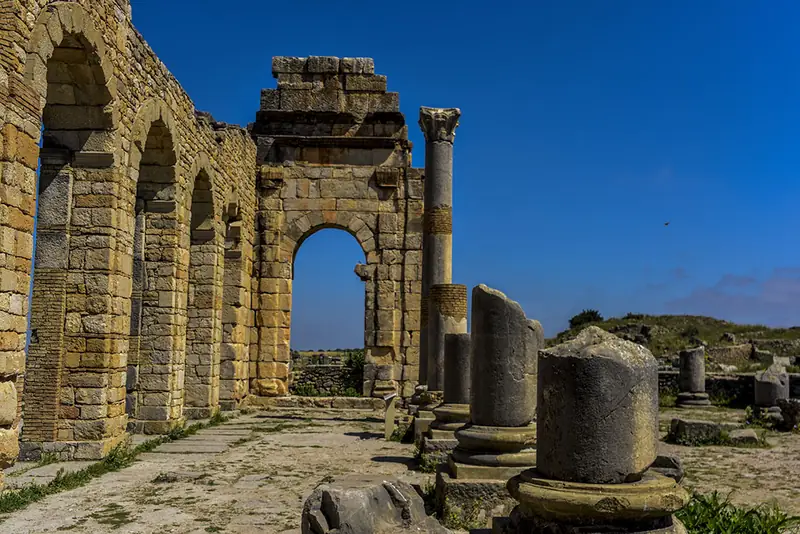
Volubilis is an open-air archaeological site near Meknes and Moulay Idriss Zerhoun, where mosaic floors, monumental buildings and streets reveal a city rather than a single isolated ruin. Come for the relationship between homes, civic spaces and the agricultural landscape, not just a photograph of the arch. Allow two to three hours for an initial visit, plus road transfers, ticketing and breaks.
The Ministry of Culture ticket portal lists foreign adult admission at 100 MAD, not the older 70 MAD still quoted elsewhere. Check your category and the current visit arrangements before travelling. Shade is limited, walking surfaces vary, and a train to Meknes does not reach the entrance. Agree the return journey before starting your walk.
Plan the return before the ruins. Confirm pickup, waiting time, current admission and closing arrangements. Carry drinking water and leave enough daylight for a slow walk back rather than chasing a sunset photograph against the gate deadline.
At a glance
- Setting
- Near Meknes and Moulay Idriss Zerhoun
- Heritage
- UNESCO World Heritage since 1997
- Allow
- Two to three hours, plus transfers
- Foreign adult
- 100 MAD on the ministry ticket portal
- Terrain
- Open air, uneven stone and limited shade
- Main decision
- Short highlights or a slower mosaic visit
In this guide
- Start with a City Plan, Not a Checklist
- Tickets: Use the Ministry Categories
- Hours and How Much Time to Leave
- Read the Forum, Basilica and Arch Together
- Give the Mosaics More Than a Quick Glance
- History Extends Beyond the Roman Moment
- Heat, Rain and Uneven Ground
- Choose a Driver, Tour or Train Plus Road Transfer
- Guides, Children and Access Needs
- Pair with Moulay Idriss or Meknes Without Rushing
Start with a City Plan, Not a Checklist
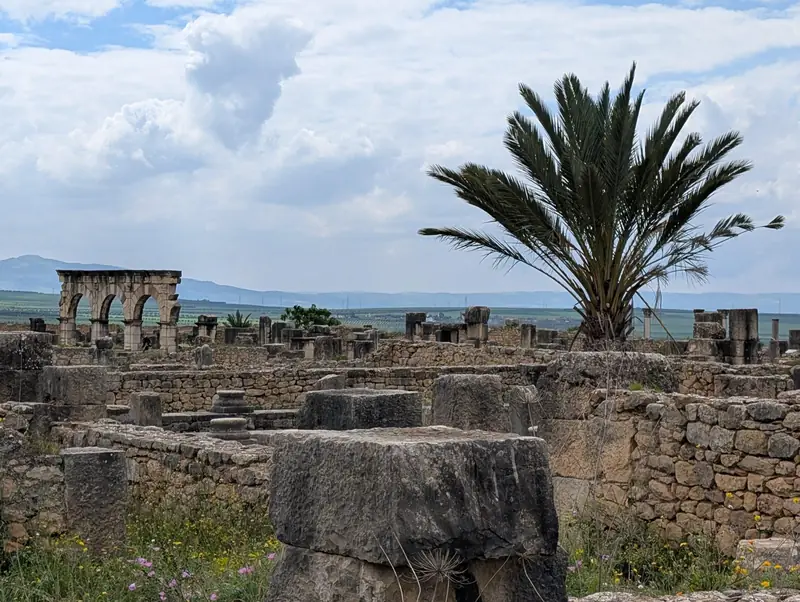
At Volubilis, low walls matter as much as standing columns. They show rooms, courtyards and the division between streets and private houses. Pause at the entrance information and identify the civic area, arch and residential streets before walking. Follow the current permitted route, since conservation work can change what is reachable.
The Meknes guide places the excursion within the surrounding region. Volubilis is separate from both modern Meknes and Moulay Idriss Zerhoun: reaching one does not finish the others. Save the actual entrance and meeting point offline, especially if your driver uses the name Walili or Oualili. These names refer to the same archaeological destination, not a second attraction.
Tickets: Use the Ministry Categories
The official ministry ticket page lists 100 MAD for a foreign adult and 50 MAD for a foreign child aged 7 to 13. Moroccan or resident adult admission is listed at 30 MAD, with 10 MAD for Moroccan or resident children aged 7 to 13. Check the exact category, eligibility and any required identification rather than applying one visitor price to everyone.
The portal also states free entry for people with reduced mobility, and for Moroccan nationals on Fridays and the first day of national and religious holidays. Confirm eligibility and arrangements directly, including ages not specified in the displayed categories. Free admission does not establish a step-free route. Carry dirhams as a practical backup, separate guide and transport costs from entry, and use the money guide rather than treating an approximate foreign-currency conversion as a fixed fare.
| Visitor | Adult | Child 7 to 13 |
|---|---|---|
| Foreign | 100 MAD | 50 MAD |
| Moroccan or resident | 30 MAD | 10 MAD |
| Exemptions | Check eligibility | Check categories |
Hours and How Much Time to Leave
Go in the morning when possible, leaving two to three hours before you need to depart. A late visit leaves less room for mosaics, rest breaks and the walk back. Confirm opening and last entry for your date, especially around holidays, and plan to finish before closing rather than arriving at sunset.
Allow two to three hours for the main remains. Mosaic enthusiasts, guided groups and slower walkers may need longer. A shorter highlights visit is possible if it suits the conditions, but should not be sold as a complete city tour. Add the drive, any ticket queue, toilets, water and a return buffer before booking a train or continuing towards another town.
Read the Forum, Basilica and Arch Together
The forum, basilica and Capitoline temple help make sense of public life. Think of the basilica as an ancient civic building rather than assuming the familiar word means a later Christian church. From permitted viewpoints, look at the relationship between open gathering space, raised buildings and streets, not only at a single column. A guide can explain where surviving fabric, restoration and interpretation differ.
The arch commonly associated with Caracalla is the obvious photographic marker, but the longer street view gives it context. The Decumanus Maximus links the monumental impression to the residential quarters. Do not climb blocks or step behind barriers to clear people from a picture. A restored outline helps visitors read the town; it should not be described as an untouched building still standing exactly as it was in antiquity.
Give the Mosaics More Than a Quick Glance
The House of Orpheus and House of Venus are well-known reference points in descriptions of the site. Mythological figures, animals and geometric borders turn floors into evidence of decoration and domestic display. Ask staff or a guide which mosaics are currently visible rather than assuming every named house is open or that an old photograph identifies the route today.
View floors from the allowed edge, never by walking across a pattern, touching loose pieces or moving a barrier. Look first at the scene, then the border and its relationship to the room. House names are archaeological labels, not proof that the named god or a particular historical ruler lived there. For children, choosing an animal or repeating shape to spot is more useful than treating ancient stone as a climbing frame.
History Extends Beyond the Roman Moment
The UNESCO listing explains Volubilis through successive cultures, including Mauretanian, Roman and Islamic phases. Its World Heritage inscription dates to 1997. The ancient Mauretanian context is a North African historical kingdom, not a reference to the borders of the modern country of Mauritania. Avoid reducing the place to an empty landscape waiting for Rome.
The fertile setting, remains of production and domestic spaces help connect monumentality to ordinary work. Olive presses are a useful subject to ask a guide about, alongside water, bathing and household life. The later association with Idris I also connects the site to nearby Moulay Idriss Zerhoun. Those overlapping histories are more informative than a story in which every wall was built at one moment and abandoned in a single dramatic event.
Heat, Rain and Uneven Ground
An open view across fields also means exposure. Earlier visiting can reduce heat, but an opening time is not a temperature guarantee. Bring enough safe drinking water, a hat, sunscreen and shoes with grip. Consult the forecast for this area, not Marrakech; a nearby-city weather widget is only regional context. The packing guide gives broader preparation without promising refreshments in every part of the ruins.
Rain can make old paving and earth slippery, while wind and cool weather change comfort even outside summer. Ask about toilets and available facilities near arrival rather than counting on them deep inside the site. If someone is tired or overheated, shorten the walk and return by a permitted known route. Resting against fragile masonry or entering a roped-off house for shade is not an acceptable solution.
Choose a Driver, Tour or Train Plus Road Transfer
Rail serves Meknes, not Volubilis. A train journey therefore needs a separate road connection and enough time on each side. With a taxi or driver, agree the full itinerary, total price or charging basis, waiting duration, exact pickup and who handles a change of plan. A shared ride to Moulay Idriss is not automatically a ride to the archaeological entrance or a guaranteed return seat.
From Fes, a driver or organized excursion can combine stops, but ask how much time is actually inside the ruins and whether site guiding and entry are included. A transport driver is not automatically your archaeological guide. Self-drivers should check current access and parking instructions. Use the transport guide to compare the options.
| Option | Benefit | Check |
|---|---|---|
| Driver | Flexible stops | Wait and return |
| Train plus road | Rail to Meknes | Last road leg |
| Group trip | Set logistics | Actual site time |
Guides, Children and Access Needs
A good guide can explain an unremarkable low wall as clearly as a mosaic. Before agreeing, establish the language you can comfortably understand, duration, group size, price and whether the route fits your interests. Guiding and admission are separate costs unless explicitly included. If exploring independently, bring a reliable offline plan and use site information; declining an optional offer politely does not require rushing past the archaeology.
For mobility needs, ask about the precise entrance, surfaces, gradients, steps, rest points and accessible toilets. A broad street or free ticket category does not establish continuous wheelchair access. With children, keep the route short enough to remain enjoyable, supervise near drops and fragile remains, and choose a few floors and public buildings rather than trying to complete every house.
Pair with Moulay Idriss or Meknes Without Rushing
Moulay Idriss Zerhoun is a living town and pilgrimage destination, not another room of the archaeological complex. Its slopes, streets and religious boundaries require their own time and respect. Do not assume a visit includes admission to sacred interiors; follow signs, ask before photographing people, and never cross a religious threshold because a tour itinerary mentions the town.
For a balanced day, prioritize Volubilis in a suitable cooler window, add a meal or town stop if time permits, and protect the return to Meknes or Fes. The imperial-cities route offers wider sequencing, not a booked connection. Meknes monuments have separate access arrangements, so an excursion and a full city tour should not be squeezed between tight trains. Leave room to enjoy what is open rather than promising every stop.
- Before departure: verify admission, gate hours and forecast.
- Before walking: save pickup, bring water and assess surfaces.
- Before paying a guide: agree language, route, duration and total.
- Before adding stops: leave road, meal and return buffers.
Frequently asked questions
How much is Volubilis admission?
The ministry portal lists 100 MAD for a foreign adult and 50 MAD for a foreign child aged 7 to 13, with different Moroccan/resident categories. Check current eligibility and terms on the official page.
How long do you need?
Allow two to three hours as an initial planning estimate, plus transport and breaks. A guided or slower mosaic visit may need more.
Can you go by train?
Not to the ruins. Take rail to Meknes if appropriate, then arrange a separate road transfer and return.
Is a guide compulsory?
Do not confuse optional guiding with admission. Check current arrangements and agree language, duration and fee before accepting a service.
Is it wheelchair accessible?
Ask about the exact entrance, paths, slopes and accessible toilets before travelling. Uneven surfaces mean not every part will suit every wheelchair user.