Ouzoud Falls: Viewpoints, the Walk Down and a Full Day from Marrakech
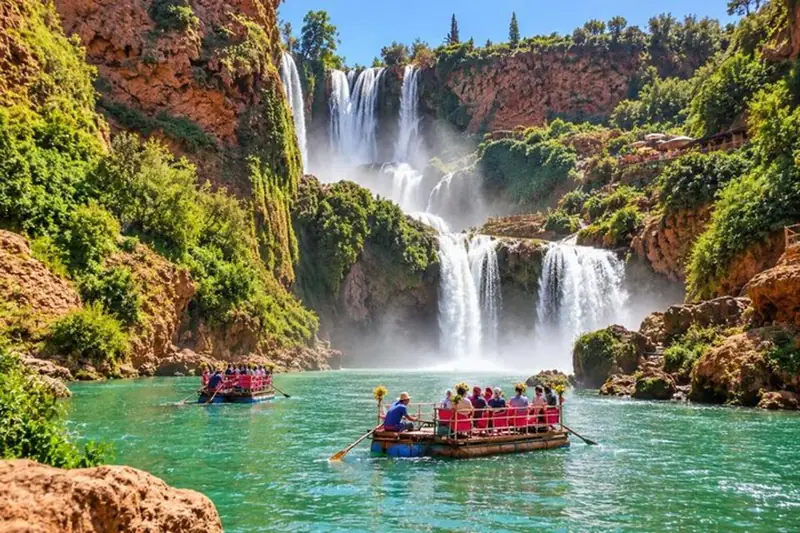
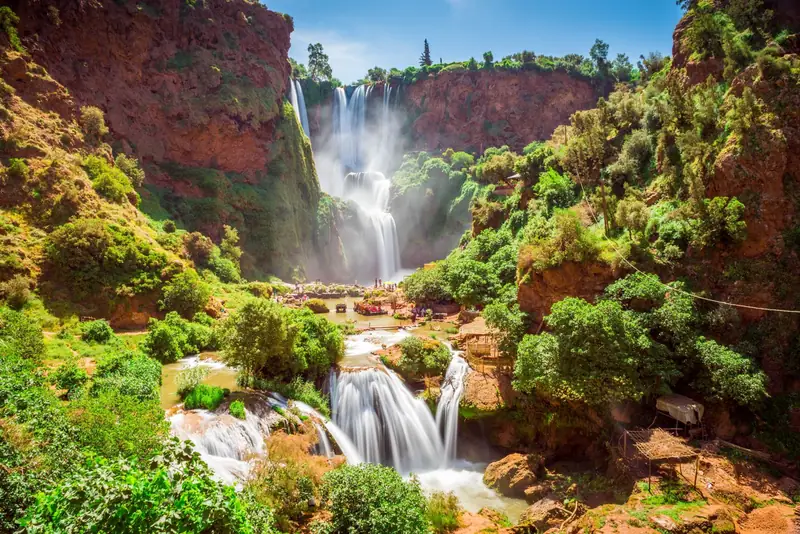
Ouzoud Falls is a series of cascades in the Azilal region, dropping into a green, rocky gorge with walking paths, café terraces and viewpoints at different levels. It works as a full-day road excursion from Marrakech, not a quick stop between city monuments. The main choice is how far to descend: every downhill step also means an uphill return unless you have explicitly arranged another suitable route.
Allow roughly two to three hours around the falls for a first visit, adding lunch, a slower pace and all transport time. You can enjoy the landscape without taking a boat, swimming or posing with monkeys. Grip shoes, water and a clear return meeting point matter more than fitting every activity into the day.
Choose the return climb before the descent. Start with an open viewpoint, assess the steps and wet ground, and turn around while you still have energy. Keep clear of exposed edges and fast water; a shorter walk is a complete visit.
At a glance
- Setting
- Ouzoud village and the Azilal region
- From Marrakech
- A full road day, with an early start
- On site
- About two to three hours, plus meals and pauses
- Walking
- Steps, slopes, uneven ground and spray
- Optional
- Boat ride and guided walking
- Wildlife
- Watch macaques without feeding or touching
In this guide
- Choose Your View Before Committing to the Whole Walk
- What Makes the Landscape Worth the Journey
- Walk Down Slowly and Save Time for the Ascent
- Boats Are an Optional Activity, Not the Entrance Ticket
- Swimming and River Conditions
- Monkeys: Watch Without Feeding or Posing
- When to Go and What to Pack
- From Marrakech: Driver, Group Trip or Overnight
- Budget, Food and Choosing a Guide
- Children, Mobility and a Realistic Marrakech Plan
Choose Your View Before Committing to the Whole Walk
The falls are not one viewing platform beside a car park. Upper views introduce the gorge; descending brings changing angles, more spray and the lower visitor area. Your best route is the one that fits the least confident walker in the group. A picture from the bottom does not make the descent essential, and the first viewpoint need not be the farthest edge you can reach.
Begin with the permitted approach from the village and look at the ground before setting a distance. Steps, sloping earth and busy passages require attention even when cafés are nearby. Decide where to turn back and keep enough strength for the climb. A loop is only useful if every section is open and appropriate: retracing a known path is better than accepting an unclear river crossing to complete a circuit.
| Visit style | Best for | Tradeoff |
|---|---|---|
| Upper views | Shorter outing | Check actual access |
| Lower walk | Changing perspectives | Climb back up |
| Boat ride | Close spray | Optional, separate safety choice |
What Makes the Landscape Worth the Journey
The appeal is the sequence of water, reddish rock, greenery and the scale of the hollow, rather than a guaranteed rainbow or a particular water colour. The official Azilal nature guide places Ouzoud within a wider mountain region. Water flow, light and recent rain change the appearance, so expect the landscape of your day rather than an exact copy of a heavily saturated photograph.
Look for a comfortable permitted place to pause and watch the different tiers. Olive trees, local businesses and the village are part of this working visitor landscape, not signs of a remote wilderness without people. Café-lined paths can be busy, especially on popular outing days. Leave space for others at narrow viewpoints, and ask before photographing residents or entering cultivated ground.
Walk Down Slowly and Save Time for the Ascent
Closed shoes with grip are more useful than beach sandals. Spray can wet stone even in sunshine, and rain can make earth muddy and steps slippery. Keep hands available rather than carrying a drink, phone and bag at once. Stop to photograph from a stable position instead of walking backwards for a wider frame; do not climb fences or scramble onto wet rocks.
Allow extra time for the return, not just the downhill photographs. Heat, stairs and waiting for other people can make the ascent feel much longer. Keep children close, take breaks away from edges and shorten the route at the first sign that someone is struggling. Do not use a donkey ride, a boat or strangers carrying a person as a substitute for a walking plan that suits the group.
Boats Are an Optional Activity, Not the Entrance Ticket
Small visitor boats or rafts may operate near the lower falls, giving a closer, wetter perspective. They are a separate choice from viewing the waterfalls. You do not need to board to appreciate Ouzoud, and a package that includes a ride should still let you decline if conditions, equipment or boarding do not suit you. Keep phones and documents in a dry pouch.
For a ride, look for a stable boarding arrangement and a properly fitting life jacket for each passenger, including children. Overcrowding, unsuitable flotation or a difficult wet step are reasons to stay ashore. Water conditions and access determine whether an outing is sensible; a paid ticket or a cheerful photograph does not settle that question. Leave time for the climb back whether you ride or not.
Swimming and River Conditions
Treat the pools as open water, not a managed swimming pool. Current, depth, slippery rock, underwater obstacles and water quality can be hard to judge from the bank. Avoid jumping from rocks or entering below a powerful cascade. Children playing at the edge still need close supervision. A photograph of people swimming on a different day is not permission or an assessment of conditions today.
Heavy rain can make rivers and narrow channels dangerous. Follow local authority instructions and closures, do not walk or drive through floodwater, and postpone a lower route if weather or rising water makes it unsuitable. The falls are worth visiting without entering the water. A view from an open land route is a better choice than testing a crossing to save a few minutes.
Monkeys: Watch Without Feeding or Posing
Barbary macaques may be seen around the trees and visitor paths. They are wild animals even when accustomed to people. Keep food zipped away, hold bags securely and allow space for them to move. Do not feed them, reach towards them or encourage one onto your shoulder for a picture. Buying food for a staged encounter changes the experience from watching wildlife to creating contact.
Keep children beside you and avoid crowding an animal against a wall or tree. If one comes close, stay calm and give it room rather than trying to touch or retrieve a snack by force. A bite or scratch needs prompt medical advice, even when the wound looks small. Wash the wound thoroughly with soap and water while arranging care; do not wait until the end of the holiday.
When to Go and What to Pack
Cooler parts of the day are often more comfortable for the climb, but early arrival does not guarantee empty paths. Spring can bring greener surroundings; summer heat increases the value of shade and water, while rain and cooler weather change grip and comfort. Check the forecast for Ouzoud and the route, not just Marrakech. The city-weather widget is departure-city context, not an on-site conditions report.
Carry drinking water, a hat, sun protection, grippy footwear and a layer for spray or a cool pause. A small backpack leaves hands free; the packing guide covers wider preparation. Bring necessary medication and a charged phone, and save your meeting point offline. Food stalls and cafés do not replace your own water supply or guarantee a suitable meal for an allergy.
From Marrakech: Driver, Group Trip or Overnight
Allow roughly three hours each way from Marrakech, with additional time for pickups, breaks and traffic. That can mean around six hours in the vehicle before the walk and meal. Avoid a tightly timed evening booking in the city.
Keep Ouzoud as the main excursion. A shared minibus follows a common departure, walking pace and return time; a private vehicle gives more control over breaks and shorter walks. Compare actual time at the falls with hours in the vehicle. A lunch stop, guide and boat may be separate extras, so a low headline price is not the same as the total cost of the day.
A train does not reach the falls. For a car or driver, agree the village meeting point, waiting arrangement and return destination before the descent. The transport guide explains the options. Staying locally can separate the walk from a long return drive, but choose accommodation by its actual road access and position relative to the steps; “near the falls” is not a promise of an easy walk.
| Transport | Advantage | Limit |
|---|---|---|
| Shared trip | Common logistics | Fixed group pace |
| Private vehicle | Flexible pauses | Higher shared cost |
| Local night | Slower visit | Check exact location |
Budget, Food and Choosing a Guide
There is no single all-inclusive price for this open visitor area. As a rough small-cash allowance, parking and a short boat ride are often quoted around 10 to 20 dirhams each, with the unit and total to be settled before using them. These are not official tariffs or a guaranteed offer; transport, guide and meals need their own budget.
Budget in separate parts: road travel, parking if applicable, optional guiding, any boat ride, food and drinks. Distinguish a service someone offers from a compulsory admission charge. Before accepting, settle the total in dirhams and whether it is per person or per group. The money guide helps with cash preparation; keep small notes for agreed purchases rather than assuming every stall takes cards.
A guide can help with the route, local context and a pace agreed for your group. Set the distance, return climb, language, duration and price at the start; someone walking alongside you is not automatically hired. For lunch, a terrace view and a set menu are different parts of the offer: choose a place to rest, check the full meal price and explain allergies clearly. Leave time for cooking, eating and the climb rather than placing lunch at the pickup deadline.
Children, Mobility and a Realistic Marrakech Plan
The lower paths are not a continuous step-free promenade. Stairs, slopes, wet surfaces and narrow sections can make a wheelchair or pushchair route difficult. For a shorter visit, establish the precise vehicle drop-off and the surface to an open upper viewpoint before committing. Carrying a child down can hide the effort of carrying them back up; choose the return as carefully as the outward walk.
The Marrakech day-trip comparison helps decide whether a long road day suits your stay. Keep the Koutoubia Mosque and Saadian Tombs for another city day rather than racing back to their gates. The Marrakech guide helps arrange those days. A useful Ouzoud plan is an early departure, views and a walk suited to conditions, a rest or meal, then the planned return with room for delays.
- Before leaving: forecast, pickup and return destination.
- Before descending: shoes, water and energy for the climb.
- Before an activity: boarding, equipment and total price.
- Around wildlife: packed food, distance and no feeding.
Frequently asked questions
How long do you need at Ouzoud Falls?
Allow about two to three hours around the falls, adding meals, a slower pace and all driving. From Marrakech, treat it as a full-day excursion.
Do you need a boat to see the falls?
No. Boat rides are optional and separate from land viewpoints. Stay ashore if boarding, equipment or water conditions are unsuitable.
Can you swim or jump into the pools?
Do not treat the pools as managed swimming water or jump from rocks. Current, depth, slippery ground and water quality vary; enjoy the falls from an open land route instead.
Can you feed the monkeys?
No. Keep food packed away and do not touch or pose with wild macaques. Seek prompt medical advice for any bite or scratch.
Is Ouzoud suitable for limited mobility?
The lower route has steps, slopes and wet uneven surfaces. Plan around a specific reachable upper viewpoint and exact drop-off rather than assuming a continuous accessible circuit.