Chellah, Rabat: Roman Sala Colonia, Marinid Tombs and Quiet Gardens
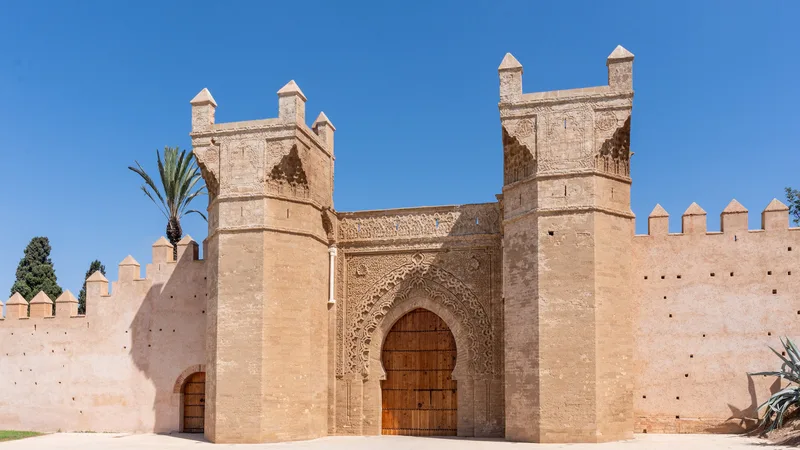
Set on a green hillside above the Bou Regreg valley just outside the Almohad walls of Rabat, Chellah compresses more than two millennia of Moroccan history into one walled enclosure. Beneath a dramatic 14th-century Marinid fortress gate, terraced gardens descend to the excavated stone streets of Roman Sala Colonia beside an Islamic royal necropolis crowned by a zellige-trimmed minaret and nesting white storks.
Part of Rabat's UNESCO World Heritage listing, Chellah feels calmer and greener than almost any urban monument in Morocco. Allow 75 to 105 minutes, wear closed walking shoes for sloped stone paths, check current ticket options at the gate, and combine it with Hassan Tower and the Kasbah of the Udayas.
Wear grippy walking shoes and check opening hours before going. Chellah's paths descend steep stone terraces from the Marinid gate to the Roman forum and funerary complex, and hours or evening access can shift during seasonal events such as Jazz au Chellah.
At a glance
- Location
- Avenue Yacoub El Mansour, just outside Bab Zaer on Rabat's southern side
- Historical layers
- Phoenician-Mauretanian port, Roman Sala Colonia and 14th-century Marinid necropolis
- UNESCO status
- Inscribed within Rabat, Modern Capital and Historic City
- Highlights
- Octagonal-tower Marinid gate, Roman forum, Abu al-Hasan sanctuary, gardens and storks
- Suggested time
- 75 to 105 minutes at an unhurried pace
- Easy transport
- 10-minute metered blue petit taxi from Rabat Ville station or Hassan Tower
In this guide
From ancient Sala to a royal necropolis
Chellah preserves more than one historical layer. The ancient settlement of Sala developed under Roman rule; its excavated streets and civic remains belong to a different era from the later Marinid enclosure. In the fourteenth century the Marinids developed a royal burial and religious complex here, with a monumental gate, mosque remains and tombs.
Chellah forms part of UNESCO's wider Rabat World Heritage property, inscribed in 2012. Follow the visitor route from ancient remains to the medieval complex and look for the contrast between stone civic structures and surviving decorative details. Restoration and archaeological work can change access; check current tickets and opening times, stay on marked paths and observe nesting birds without disturbing them.
Two Civilisations Inside One Walled Garden
Long before modern Rabat grew near the Atlantic mouth, Phoenician and Mauretanian traders used the sheltered Bou Regreg slopes below Chellah. Under Rome in the 1st and 2nd centuries CE, Sala Colonia served as a southwestern frontier municipality of Mauretania Tingitana, complete with a paved decumanus maximus, forum, triumphal arch, capitolium and public baths.
Centuries after Roman withdrawal, Marinid Sultan Abu Said Uthman II and his successor Abu al-Hasan Ali enclosed the hillside in 1339 behind monumental rammed-earth walls and an octagonal-bastioned gate, transforming the ancient ruins into a sacred royal necropolis (khalwa) with a mosque, madrasa, carved funerary chambers and irrigated gardens.
| Rabat heritage stop | Primary era | Ticket model | Typical time |
|---|---|---|---|
| Chellah Necropolis | Roman Sala Colonia + 14th-century Marinid tombs | Paid monument ticket at gate | 75 to 105 min |
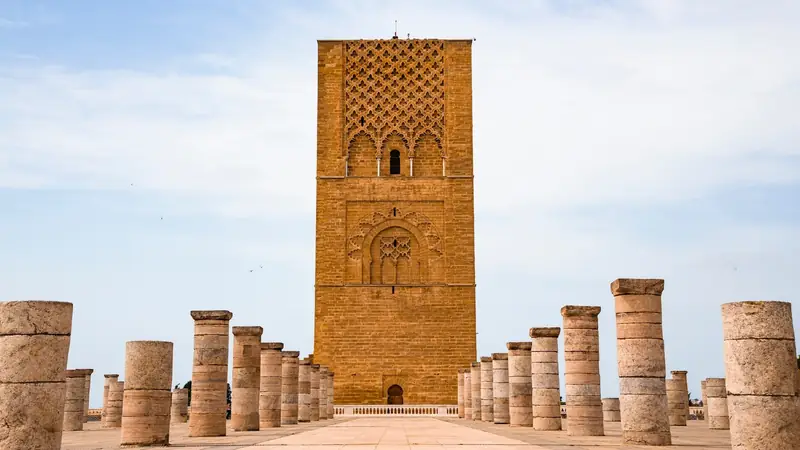
| Hassan Tower | Late 12th-century Almohad unfinished mosque esplanade | Open monument grounds (verify hours) | 45 to 60 min |
| Kasbah of the Udayas | Almohad & Alaouite river-mouth citadel and Andalusian Gardens | Streets & garden free; museum paid | 60 to 90 min |
Walking Route From the Marinid Gate to the Lower Ruins
Start by pausing outside the crenellated main portal, carved with geometric stonework and kufic inscriptions of Sultan Abu al-Hasan. Inside, a broad viewpoint overlooks the valley of fig, olive and hibiscus trees before winding steps lead down toward the archaeological floor.
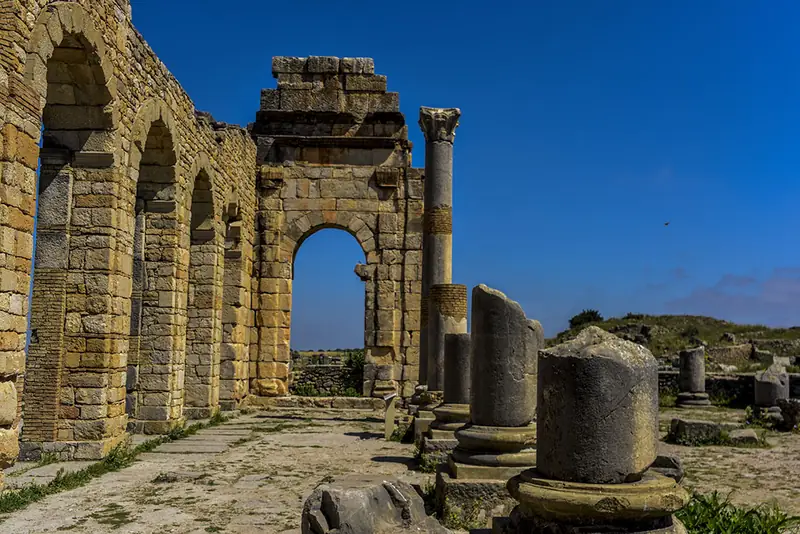
On the left sits the Roman quarter: paving slabs of the main street, shop thresholds, column bases of the capitolium and brickwork of the baths. Immediately adjacent stands the Marinid religious complex, where storks crowd the zellige-inlaid minaret, carved merlon walls frame Sultan Abu al-Hasan's tomb canopy, and spring-fed basins historically sheltered eels associated with local fertility legends.
Tickets, Audio Guides and Restoration Updates
Following major heritage conservation and visitor-route upgrades in recent years, Chellah operates with a structured ticket desk at the main gate, optional multimedia or audio guides, and clearer elevated walkways around fragile archaeological zones. Bring dirham cash as well as a card in case terminal connectivity fluctuates.
Every autumn, the site also hosts the renowned Jazz au Chellah festival amid the floodlit walls. On festival days, afternoon public closing times or stage barriers may differ slightly from standard monument hours.
Getting There and Planning a One-Day Rabat Loop
Chellah lies roughly two kilometres southeast of Rabat Ville train station along Avenue Yacoub El Mansour beside Bab Zaer. While strong walkers can cover the tree-lined ministerial avenues in 25 to 30 minutes, a metered blue petit taxi is inexpensive and saves energy for Chellah's hillside steps.
- Balanced Rabat heritage day: Start in the morning at the Kasbah of the Udayas and riverfront, continue midday to Hassan Tower, pause for lunch in Hassan or Agdal, and spend mid-afternoon in the shaded gardens of Chellah.
- Comparing Roman Morocco: If Roman archaeology is a major interest on your trip, pair Rabat with an inland stop at Volubilis between Rabat/Meknes and Fes.
- Rail day-trippers from Casablanca: ONCF trains reach Rabat Ville hourly; see our getting around Morocco guide for smooth station-to-taxi transfers.
Storks, Accessibility and Seasonal Comfort
Chellah is one of the finest places in Morocco to watch white storks at eye level from the upper garden terraces without disturbing their nests; late winter through May brings constant bill-clattering and fledglings across the Marinid minaret and broken walls.
Because the layout drops steeply into a natural amphitheatre, step-free access is mainly limited to the upper entrance terrace overlooking the ruins. Atlantic breezes keep Rabat milder than inland cities all year, though spring and autumn light are especially rewarding; see our best time to visit Morocco guide.
Frequently asked questions
How long should I allow to visit Chellah in Rabat?
Plan 75 to 105 minutes to admire the upper viewpoint, walk through the Roman Sala Colonia excavations, explore the Marinid necropolis and rest in the lower gardens.
Does Chellah charge an entrance fee?
Yes, Chellah is a ticketed archaeological and historic monument with optional audio-guide tiers. Check current posted tariffs at the official gate beside Bab Zaer.
What is the difference between Chellah and Volubilis?
Volubilis near Meknes is a much larger open-countryside Roman city famous for floor mosaics, while Chellah sits right in Rabat and pairs compact Roman Sala Colonia ruins with a 14th-century Marinid royal necropolis and lush stork-filled gardens.
When are storks at Chellah?
Many storks remain around Chellah year-round, with peak nesting numbers and chicks visible from January through late spring.
Is Chellah easy to reach from Rabat Ville train station?
Yes, it is a 5-to-10-minute ride in a metered blue petit taxi or a 25-to-30-minute walk along Avenue Mohammed V and Avenue Yacoub El Mansour.